

Wall Art for Living Room: Inspiring Ideas and Expert Tips
por Mae Osz en Aug 09, 2025
Wall Art for Living Room has the power to change an ordinary space into a striking space that feels uniquely yours. Most people hang a picture or two and leave it at that, thinking it is just about filling empty walls. But more than half of UK homeowners say that artwork is what truly makes a living room feel like home. So what if choosing and arranging your wall art not only transformed your decor but also told your story every time someone walked in?
Table of Contents
- Choosing The Perfect Wall Art For Living Room Spaces
- Creative Ways To Arrange Living Room Wall Art
- Matching Wall Art With Your Living Room Style
- Top Tips For Buying And Displaying Wall Art
Quick Summary
| Takeaway | Explanation |
|---|---|
| Select art that reflects your personality | Choose pieces that resonate with your experiences and evoke emotions. This personal touch transforms walls into narratives. |
| Hang art at eye level for best impact | Position artwork 57-60 inches from the floor to enhance visibility and create a polished look in your living room. |
| Mix styles for a dynamic arrangement | Combining different art styles, frames, and sizes creates visual interest and tells a multifaceted story about your taste. |
| Use cohesive colour palettes | Ensure your wall art complements or contrasts thoughtfully with your living room’s existing colour scheme for a harmonious aesthetic. |
| Be open to evolving your art display | Regularly rotate and refresh your artwork to keep your space feeling dynamic and reflective of your current aesthetic journey. |
Choosing the Perfect Wall Art for Living Room Spaces
Selecting the perfect wall art for living room spaces transforms ordinary rooms into extraordinary personal sanctuaries. The right artwork does more than fill empty wall space it communicates your personality, sets emotional tones, and creates visual harmony within your home environment.
Understanding Color Psychology in Wall Art Selection
Color plays a profound role in shaping room ambiance and emotional experience. According to research exploring color emotion associations, specific color combinations can evoke distinct emotional responses. For instance, green and brown tones might inspire feelings of gratitude, while yellow can spark happiness.
The study reveals that strategic color selection in wall art goes beyond aesthetic appeal. When choosing artwork, consider how different color palettes interact with your existing living room decor. A carefully selected piece can either complement or thoughtfully contrast with your current colour scheme, creating a dynamic visual narrative.
A fascinating insight from research on image color transfer suggests that colour combinations matter more than individual colours when evoking emotional responses. This means homeowners should look beyond single hues and consider how different colours interact within an artwork.

Placement and Proportion Principles
Proper wall art placement is crucial for achieving a polished, professional look. Woman & Home design experts recommend hanging artwork at eye level approximately 57 inches from the floor to the centre of the piece. This standard ensures optimal viewing and creates a balanced visual experience.
Consider the scale and proportion of your artwork in relation to your living room’s dimensions. Large statement pieces work brilliantly in spacious rooms with high ceilings, while smaller, clustered artworks can add visual interest in more compact spaces. The key is creating a sense of intentionality and balance.
When selecting wall art, think about the room’s existing architectural elements. A minimalist piece might complement modern, clean lines, whereas an ornate frame could enhance traditional or vintage-inspired interiors. Your artwork should feel like a natural extension of the room’s overall design language.

Personal Expression Through Art Selection
Ultimately, wall art is a deeply personal choice that reflects individual taste and storytelling. Consider pieces that resonate with your personal experiences, cultural background, or aesthetic preferences. Whether you’re drawn to abstract compositions, photographic landscapes, or traditional paintings, the artwork should spark joy and conversation.
Don’t be afraid to mix different styles and mediums. A curated collection of diverse artworks can create a rich, layered visual experience. Think about incorporating various textures, from canvas prints to metal installations, to add depth and intrigue to your living room walls.
Remember that wall art is not just decorative but transformative. It has the power to set moods, tell stories, and turn blank walls into captivating visual narratives that welcome and inspire those who enter your living space.
Creative Ways to Arrange Living Room Wall Art
Arranging wall art is an art form in itself a strategic process that transforms living room spaces from ordinary to extraordinary. The right arrangement can elevate your decor, create visual interest, and tell a compelling story about your personal style and experiences.
Gallery Wall Techniques
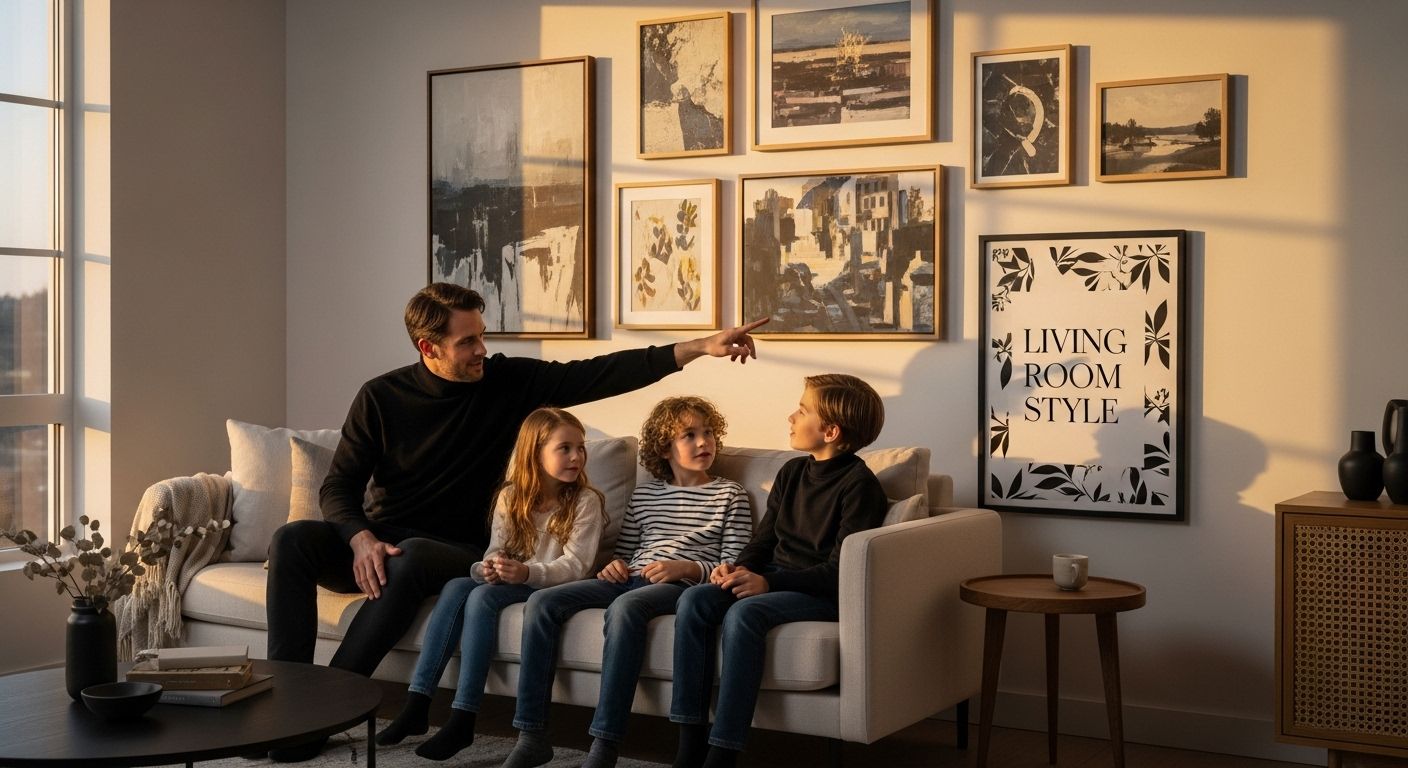
Homes & Gardens design experts recommend creating gallery walls that reflect personal taste and evolve over time. This approach allows for dynamic storytelling through art, mixing different styles and frame types to achieve an eclectic and personalized look.
Start by selecting a cohesive theme or colour palette that connects your artwork. This could be based on shared colour tones, subject matter, or artistic style. Varying artwork sizes adds visual complexity and prevents the display from feeling too uniform. Consider using a combination of large statement pieces alongside smaller complementary works to create depth and intrigue.
Before hammering any nails, lay out your artwork on the floor first. This technique allows you to experiment with different arrangements without damaging walls. Use kraft paper to trace and cut out the exact sizes of your artwork, then tape these templates on the wall to visualize the final composition. This method helps you achieve a balanced and intentional gallery wall.

Strategic Positioning and Layering
Better Homes & Gardens suggests innovative approaches to art placement beyond traditional hanging. Propping artwork on shelves or leaning pieces against furniture creates a casual, relaxed atmosphere. This technique works particularly well in living rooms with minimal architectural constraints.
When arranging art, consider creating visual lines that guide the viewer’s eye. Minted design guidance recommends using art to pull together room colour themes and create a sense of cohesion. Arrange pieces in odd numbers three or five works best to achieve a sense of balance and visual harmony.
Height is another crucial factor in art arrangement. Mix artwork at different heights to create visual movement. A combination of eye-level pieces interspersed with higher or lower placements adds dynamism to your living room walls.

Unconventional Art Display Strategies
Consider breaking traditional wall art boundaries by exploring unconventional display methods. Mix framed pieces with unframed canvases, incorporate three-dimensional art objects, or create asymmetrical arrangements that challenge conventional design rules.
Texture plays a significant role in art arrangement. Combine smooth canvas prints with textured woven pieces or metallic installations. This approach adds dimensionality and prevents your wall art from feeling flat or monotonous.
Remember that wall art arrangement is not a static concept but a fluid, evolving process. Your living room walls should tell a story that can be refreshed and reinterpreted over time. Don’t be afraid to experiment, rotate pieces, and allow your art display to grow and change with your personal aesthetic and life experiences.
Ultimately, the most compelling wall art arrangements are those that spark conversation, reflect personal journeys, and transform living spaces into vibrant, meaningful environments.
Matching Wall Art with Your Living Room Style
Selecting wall art that harmonises with your living room style is a nuanced process that requires careful consideration of design elements, personal aesthetic, and spatial dynamics. The right artwork can elevate your living space from ordinary to extraordinary, creating a cohesive and visually compelling environment.
Understanding Style Compatibility
Gregg Irby Gallery design experts suggest that art should complement rather than strictly match a room’s existing decor. This approach allows for creative juxtapositions that add visual intrigue. For instance, contemporary abstract paintings can create fascinating dialogues when placed alongside traditional furniture, generating a dynamic and stimulating atmosphere.
Consider your living room’s foundational style modern, traditional, minimalist, eclectic, or industrial. Each style presents unique opportunities for art integration. Modern spaces might benefit from clean lines and geometric abstractions, while traditional rooms could incorporate classical portraiture or landscape paintings. The key is creating a dialogue between the artwork and the surrounding design elements.
To help you quickly compare common living room styles with suitable wall art approaches, the following table summarises recommended pairings and design considerations mentioned in this article.

| Living Room Style | Recommended Wall Art | Key Design Consideration |
|---|---|---|
| Modern | Abstracts, geometric, minimal framed pieces | Clean lines, complement modern decor |
| Traditional | Classical portraits, landscapes, ornate frames | Coordinate with vintage/ornate furnishings |
| Minimalist | Single large canvas, simple colour palette | Avoid visual clutter, focus on intentionality |
| Eclectic | Mix of styles, mediums and frame types | Create layered, visually engaging story |
| Industrial | Metal installations, monochrome photography | Play with texture and contrast against raw elements |
Color and Texture Coordination
Whitecourt Art specialists emphasize the critical role of color coordination and emotional resonance in art selection. Look for artwork that either complements or thoughtfully contrasts with your existing color palette. This doesn’t mean matching colors exactly, but finding pieces that create visual harmony.
Texture plays an equally important role in art selection. Consider the tactile qualities of your living room furnishings and choose artwork that either mirrors or interestingly contrasts these textures. A room with smooth leather furniture might benefit from a textured canvas or a piece with visible brushstrokes, creating depth and visual complexity.
Proportional Considerations and Personal Expression
Pangea Maps design guidance introduces the ‘60% Rule’ a strategic approach to artwork sizing. The recommendation suggests that artwork should occupy approximately 60% of the available wall space. This principle helps prevent artwork from feeling too cramped or overwhelmingly large.
Beyond technical considerations, wall art is a powerful medium for personal expression. Select pieces that resonate with your personal narrative, cultural background, or emotional landscape. Your artwork should not just decorate a wall but tell a story, evoke memories, and reflect your unique identity.
Don’t shy away from mixing art styles and mediums. A carefully curated collection might include photography, abstract paintings, vintage prints, and three-dimensional pieces. The goal is to create a visually engaging composition that feels intentional and authentic.
Remember that wall art is not a static element but a dynamic component of your living room’s design. Be open to evolving your collection, rotating pieces, and allowing your space to grow and change with your personal aesthetic journey. The most compelling living rooms are those that feel lived-in, personal, and continuously evolving.
Top Tips for Buying and Displaying Wall Art
Buying and displaying wall art is an art form that requires thoughtful consideration, personal insight, and strategic design thinking. The right approach can transform your living space from mundane to magnificent, creating visual narratives that reflect your unique personality and aesthetic sensibilities.
Selecting Meaningful Artwork
HGTV design experts emphasize the paramount importance of purchasing art that genuinely resonates with you. The most compelling wall art collections are not about following trends but about curating pieces that spark emotion, tell stories, and create personal connections.
When selecting artwork, consider pieces that have personal significance. This might include photographs from memorable travels, local artwork that captures a specific cultural essence, or pieces that evoke powerful memories. Art should be more than a decorative element it should be a conversation starter that reflects your individual journey.
Don’t feel pressured to invest in expensive pieces. Meaningful art can come from various sources local art fairs, online platforms, emerging artists, or even personal creations. The value of artwork lies not in its price tag but in its ability to create an emotional response and enhance your living environment.
Strategic Display and Placement
Woman & Home design guidance recommends using the 2/3 rule when displaying art. This principle suggests that your art collection should occupy approximately two-thirds the size of the furniture below it, creating a visually balanced composition.
Hanging height is crucial for optimal viewing. HGTV recommends positioning artwork at eye level, typically 57 to 60 inches from the floor to the center of the piece. This standard ensures comfortable viewing and creates a natural focal point in your living room.
Here’s a concise summary table outlining practical wall art placement & arrangement rules, alongside their visual impact, as detailed by expert sources throughout the article.
| Placement/Arrangement Rule | Recommended Guideline | Visual Impact/Benefit |
|---|---|---|
| Hang at Eye Level | 57-60 inches from floor to centre | Balanced, optimal viewing height |
| 2/3 Rule | Art should be 2/3 width of furniture below | Harmonious scale and proportion |
| 60% Rule | Art covers ~60% of available wall space | Prevents under- or over-filling space |
| Odd Number Groupings | Arrange artwork in groups of 3 or 5 | Achieves visual harmony and interest |
| Mix Heights | Vary vertical placement (not all at eye level) | Creates movement & dynamic displays |
| Test with Templates | Layout with kraft paper before hanging | Enables experimentation and balance |
Consider the architectural elements and lighting when displaying art. Artwork near windows can be dramatically transformed by natural light, while pieces near ambient lighting can create stunning evening atmospheres. Experiment with different placements to discover how light interacts with your chosen pieces.
Creating Cohesive and Dynamic Displays
Homes & Gardens design experts suggest creating dynamic gallery walls by mixing art styles, frame types, and sizes. This approach prevents displays from feeling monotonous and allows for creative storytelling through visual composition.
When curating a gallery wall, start with a central piece and build around it. Mix different mediums photographs, paintings, prints, and even three-dimensional objects to add depth and intrigue. Use kraft paper templates to experiment with layouts before committing to nail holes.
Don’t be afraid to rotate your artwork periodically. This keeps your living space feeling fresh and allows you to showcase different pieces throughout the year. Consider seasonal rotations or themed displays that reflect your current aesthetic preferences or emotional state.
Remember that wall art is a dynamic, evolving aspect of your home decor. It should grow and change with you, reflecting your personal journey, experiences, and evolving aesthetic sensibilities. The most compelling wall art collections are those that tell stories, evoke emotions, and create spaces that feel authentically and wonderfully yours.

Bring Your Living Room Walls to Life Today
Are you still gazing at blank spaces or struggling with mismatched art that never quite feels personalised? If the article sparked a desire for a living room filled with wall art that truly tells your story and transforms your space, now is your chance to make that vision reality. Unlock the power of colour psychology, expert placement, and personal expression by choosing artwork that speaks to you and enhances your home. The path from inspiration to transformation is easier than ever.
Visit About Wall Art and enjoy a thoughtfully curated range of pieces designed to suit every style, mood, and room size. Discover options that help you mix, match, and evolve your collection just as recommended in the expert tips above. Every order is seamless, with fast browsing across all your devices and secure checkout. Start shopping now and turn your living room into a personal gallery reflecting your unique journey.


