Art for Offices: Inspiring Ideas for Every Workspace
by Mae Osz on Aug 11, 2025
The most effective art for offices combines mood-matching style with industry context — creative agencies benefit from bold abstracts, healthcare settings from calming botanicals, and tech firms from geometric minimalism — whilst all workspaces gain from art that reduces stress and signals company values.
By Mae Osz | Interior Design Consultant & Home Decor Expert with 12+ years of experience.
Key Takeaways:
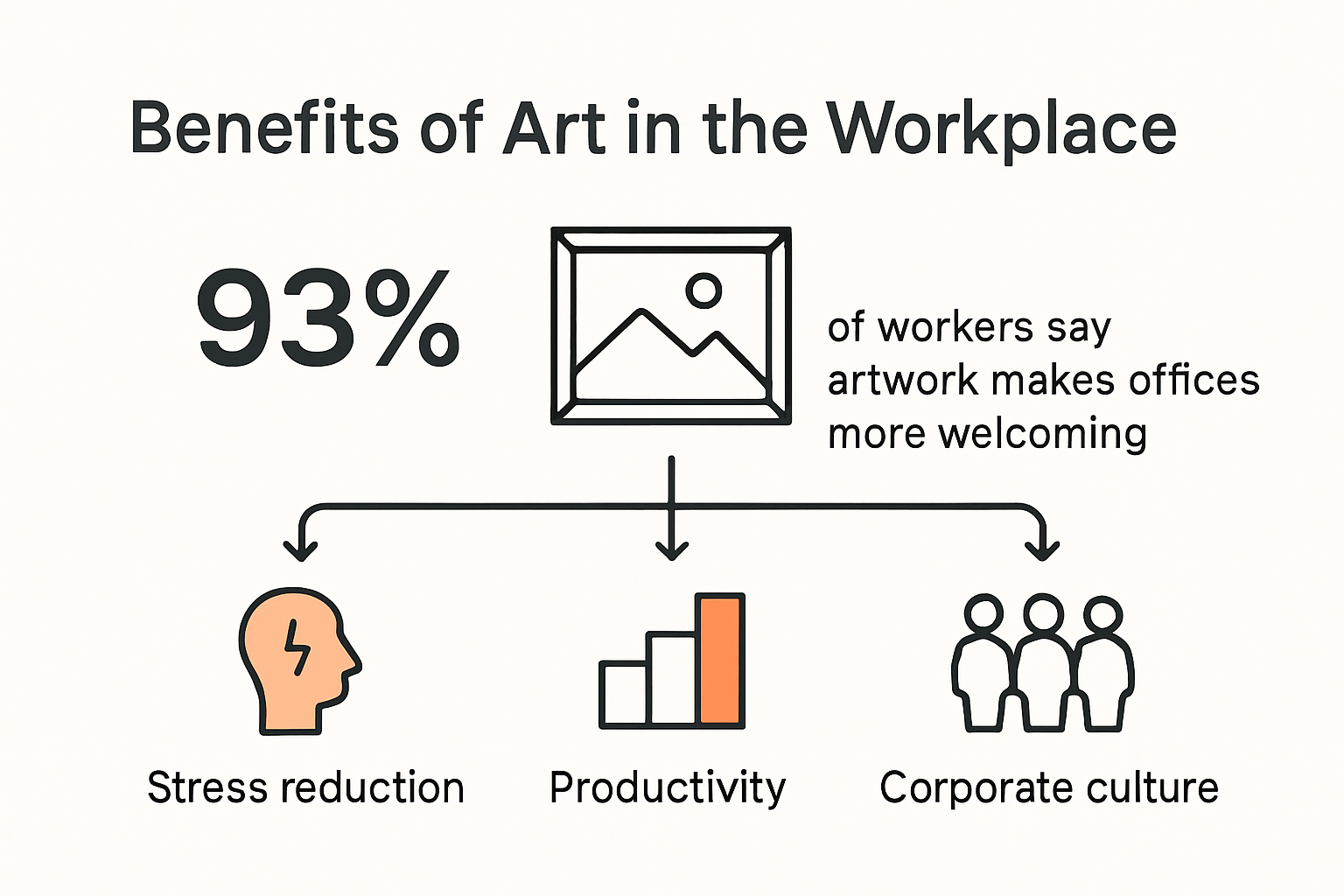
- 93% of workers say artwork makes their office feel more welcoming, according to research by the British Council for Offices.
- Art for offices is a strategic decision that influences morale, productivity, and how visitors perceive your brand — not just a decorative choice.
- Matching art style to industry context — bold abstracts for creative agencies, calming landscapes for healthcare, geometric prints for tech — makes the selection feel intentional and coherent.
- Nature-inspired art placed near desks provides micro-breaks for the brain that reduce stress without anyone leaving their seat.
- Abstract and contemporary styles are particularly effective in creative workspaces because their open-ended nature encourages the mind to make new connections.
- Protecting office art from direct sunlight, humidity fluctuations, and inadequate hanging hardware extends its lifespan and keeps it looking its best.
Have you ever noticed how the right Art for Offices can instantly change the way a workspace feels?
You're not imagining it.
The presence of Art for Offices does far more than fill empty spaces. In fact, 93% of workers say artwork makes their office feel more welcoming. That means choosing the right art isn't just about decoration — it's about creating an atmosphere that boosts creativity, lifts moods, and even improves productivity.
When I visit offices — whether it's a buzzing creative agency or a serene counselling space — I always notice the walls first. Blank walls often make a space feel cold, while poorly chosen prints can feel impersonal. But the right piece? That's where the magic happens. Thoughtful Art for Offices transforms a room, tells a story, and influences how people feel and work.
In this guide, I'm going to share how to choose and display office art that not only looks beautiful but also supports well-being and creativity. We'll look at different styles for different industries, the psychology behind art in workspaces, practical tips for display and care, and how your wall art can express your company's personality.
List of Contents
- Choosing the Right Art for Offices
- Understanding Office Art Psychology
- Matching Art to Professional Environments
- Creating Visual Narratives
- Benefits of Art in the Workplace
- Enhancing Psychological Well-being
- Stimulating Workplace Creativity
- Economic and Cultural Impact
- Top Styles and Themes for Office Art
- Tips for Displaying and Maintaining Office Art
Choosing the Right Art for Offices

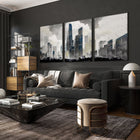
An abstract statement piece in the reception area sets the tone for visitors and staff.
Selecting Art for Offices isn't just about picking something pretty. It's a strategic decision that can influence morale, productivity, and even how visitors perceive your brand.
Think about your office as more than just desks and meeting rooms — it's a space where ideas are born, relationships grow, and people spend a huge portion of their day. The right artwork can energise, calm, or inspire, depending on what your space needs most.
Here are three golden rules I follow when helping clients choose art:
- Match the mood: Do you want your space to energise or soothe?
- Think scale: Big walls can take bold, large-scale pieces. Smaller spaces often work better with more delicate compositions.
- Reflect identity: Choose themes or colours that align with your company's values and personality.
A useful starting point is to walk through your office as a visitor would — entering the reception, moving through corridors, arriving at meeting rooms — and notice where the eye naturally lands. Those are the positions where art will have the greatest impact, and they're the places worth investing in first.
Understanding Office Art Psychology
We often underestimate just how much our surroundings influence our mental state. The British Council for Offices found that the vast majority of workers feel more welcome in spaces with art. That's not just about liking what they see — it's about feeling connected to the space.
The psychology behind office art is fascinating and deeply consequential. Research by the British Council for Offices revealed that 93% of survey participants agree that artwork makes workplaces more welcoming for both staff and visitors. This isn't just aesthetic appreciation but a fundamental psychological response.
In creative fields, art that sparks curiosity and conversation can set the tone for innovative work. In more traditional settings, calming and professional artwork can help maintain focus and order.
Art for Offices can:
- Communicate values without a single word
- Reduce stress in high-pressure environments
- Encourage a sense of belonging among employees
It's also worth considering how art affects first impressions. A client walking into a reception area with thoughtfully chosen artwork immediately receives a signal about the company's attention to detail, its values, and the kind of experience they can expect. That silent communication happens before a single word is spoken.
Matching Art for Offices to Professional Environments
One of my favourite parts of curating Art for Offices is matching styles to different industries. Here's a quick guide:
| Office Environment | Suggested Art Style | Why It Works |
|---|---|---|
| Creative Industries | Bold, colourful, and abstract | Fuels imagination and fresh thinking |
| Financial Institutions | Classic and refined | Projects stability and trust |
| Technology Firms | Geometric and minimalist | Reflects innovation and precision |
| Healthcare Settings | Calming landscapes or botanicals | Promotes relaxation and well-being |
| Education Spaces | Inspiring quotes + uplifting art | Encourages motivation and learning |
When planning, also think about:
- Colour palettes that harmonise with existing interiors
- Proportions relative to wall space
- Themes that subtly nod to your industry
- Creating visual narratives that guide people through the space
The most successful office art programmes I've seen don't treat each wall in isolation — they think about the journey through the building as a whole. Art in the entrance sets an expectation; art in corridors maintains the mood; art in meeting rooms supports the kind of thinking that happens there. When these choices are made with intention, the cumulative effect is a workplace that feels genuinely considered.
Benefits of Art in the Workplace
We all know art looks good — but its benefits go far beyond appearances. Art for Offices can influence:
- Mood — uplifting or calming the people in the space
- Collaboration — sparking conversations and shared ideas
- Brand identity — subtly reinforcing who you are and what you stand for
In high-stress industries, even a single well-chosen piece can become a daily anchor for staff. The return on investment from thoughtful office art is rarely measured in financial terms, but its effect on retention, morale, and the quality of work produced in the space is real and cumulative.
Enhancing Psychological Well-being
The National Endowment for the Arts found that creative environments can reduce stress and improve mood. In my own experience, offices that invest in mindful, calming art see fewer signs of burnout among their teams.
Tip: Place nature-inspired art where people spend long hours at their desks — it offers micro-breaks for the brain without anyone leaving their seat.
The science behind this is straightforward: looking at natural imagery — landscapes, botanicals, water scenes — activates the parasympathetic nervous system, which is responsible for the body's rest-and-digest response. Even a brief glance at a calming piece of art during a stressful moment can lower cortisol levels and help someone return to their work with a clearer head. This is why the placement of art near desks, rather than only in communal areas, matters so much.
Stimulating Workplace Creativity

Creative meeting spaces benefit from bold and colourful art choices.
According to Americans for the Arts, 85% of professionals believe creative thinking is vital for problem-solving. In my workshops, I've seen how introducing more stimulating Art for Offices can encourage people to think differently.
Abstract and contemporary styles are especially effective for encouraging new ideas — their open-ended nature allows the mind to wander into fresh possibilities.
It's also worth rotating art in creative spaces periodically. Familiarity breeds invisibility — after a few months, people stop seeing what's on the walls. Introducing a new piece, or simply moving existing works to different positions, reactivates the visual environment and gives the brain something new to engage with.
Economic and Cultural Impact
When companies invest in curated Art for Offices, they're also investing in their culture. A thoughtfully decorated space can attract talent, impress clients, and even contribute to the local creative economy by supporting artists.
Think of it this way: art is not just an expense — it's a long-term asset that works quietly every day to enhance your brand and environment.
There's also a growing body of evidence that workplaces with strong visual identities — including art programmes — perform better in employee satisfaction surveys and have lower staff turnover. When people feel proud of where they work, they bring more of themselves to the job. Art is one of the most cost-effective ways to build that sense of pride.
Top Styles and Themes for Office Art

Some popular approaches include:
- Corporate brand alignment — matching colours, themes, and style to your identity
- Nature and wellness themes — botanical prints, ocean views, and forest scenes for calming vibes
- Contemporary & innovative styles — urban art, digital media, or mixed media for dynamic settings
The most versatile choice for most offices is a combination of one or two bold statement pieces in high-traffic areas — reception, boardroom, main corridor — and quieter, more calming works in individual work areas and breakout spaces. This layered approach gives the office visual energy where it's needed and calm where it matters most.
Tips for Displaying and Maintaining Office Art

Professional hanging ensures safety, balance, and long-term display quality.
To keep your art looking its best:
- Avoid direct sunlight to prevent fading
- Keep humidity and temperature stable
- Use professional hardware suited to the artwork's weight
Displaying and caring for office wall art takes more than just picking something pretty. It calls for a thoughtful approach that keeps your artwork looking its best, protects your investment, and helps create a workspace that truly inspires and energises.
Maintenance Table:
| Task | Frequency | Purpose |
|---|---|---|
| Visual inspections | Monthly | Spot damage early |
| Gentle dusting | Regularly | Keep surfaces clean without harm |
| Climate monitoring | Ongoing | Protect against humidity or temperature changes |
| Professional cleaning | Periodically | Deep clean without damage |
Optimal Display Strategies
The Canadian Conservation Institute offers some excellent advice for displaying art professionally. They suggest keeping your office environment stable, with relative humidity between 40–60% and a consistent temperature. Where you place your wall art matters more than you might think — it's about balancing style with protection.
Here are some important things to keep in mind when choosing where to hang your art:
- Light Exposure: Keep art out of direct sunlight to avoid fading and damage.
- Temperature Stability: Choose spots with steady temperatures, away from heat sources or cold drafts.
- Wall Strength: Make sure the walls can safely hold the weight of your artwork.
As a general rule, hang the centre of each piece at approximately 145–150cm from the floor — this aligns with average eye level and is the standard used in most professional galleries. In meeting rooms where people are primarily seated, drop this slightly to around 130–135cm so the art reads well from a seated position.

Professional Hanging Techniques
Experts in art conservation recommend using sturdy hanging hardware like D-rings and strong picture hooks. This helps avoid damage and keeps your wall art securely in place.
Key tips for hanging your office art include:
- Use wall anchors rated for the weight of each piece.
- Keep even spacing between artworks to create a balanced look.
- Arrange pieces thoughtfully to bring harmony to your workspace.
- Leave a small gap between the artwork and the wall to allow air to circulate.
For larger offices with multiple pieces, it's worth creating a simple hanging plan on paper before putting anything on the wall. Mark the positions of existing furniture and doors, then map out where each piece will sit. This prevents the common mistake of hanging art in isolation and then realising the arrangement doesn't work as a whole.
Long-term Art Maintenance
Taking care of your office wall art is an ongoing task. Regular checks on humidity and temperature, dusting carefully, and having security measures in place all help keep your collection in great shape.
Here's a quick summary table with practical tips to maintain your office art over time:
| Maintenance Action | Purpose | Frequency |
|---|---|---|
| Monitor humidity & temperature | Prevent damage from fluctuations | Monthly |
| Dust artwork gently | Avoid surface buildup and damage | Weekly |
| Check hanging hardware | Ensure pieces remain securely fixed | Quarterly |
| Inspect for signs of wear | Catch any issues early | Biannually |
By following these simple yet effective steps, you'll enjoy your office art looking vibrant and inspiring for years to come.

People Also Ask…
Q: What type of art is best for an office?
A: The best art for an office depends on the industry, but nature-inspired prints, abstract works in calm tones, and geometric minimalist pieces are the most universally effective choices because they reduce stress, encourage focus, and suit a wide range of interior styles. Creative agencies benefit most from bold, colourful abstracts that fuel imagination, whilst healthcare and financial settings respond better to calming landscapes and refined, classic compositions. The single most important factor is that the art feels intentional rather than generic — a well-chosen piece that reflects the company's values will always outperform a stock print chosen purely to fill a wall.
Q: How does art in the workplace affect productivity?
A: Art in the workplace improves productivity by reducing stress, providing visual micro-breaks that help the brain reset, and creating an environment where people feel more engaged and motivated. Research by the British Council for Offices found that 93% of workers feel more welcome in spaces with art, and a more welcoming environment directly correlates with higher job satisfaction and output. Nature-inspired art near desks is particularly effective, as brief exposure to natural imagery activates the parasympathetic nervous system and lowers cortisol levels. The effect is cumulative — the longer people work in a well-curated environment, the more pronounced the benefits become.
Q: How big should art be in an office?
A: In a standard office, the artwork should fill roughly two-thirds of the available wall width in the area where it's displayed — this proportion creates a balanced, intentional look without overwhelming the space. In reception areas and boardrooms, larger statement pieces of 100cm or more in width tend to have the most impact and project confidence to visitors. In individual work areas and smaller meeting rooms, more modestly sized pieces of 50–80cm work better and feel less imposing. When hanging multiple pieces together, treat the group as a single unit and apply the two-thirds rule to the combined arrangement rather than each individual piece.
WATCH: Extreme Home Office Makeover — DIY Built-ins + Wall Moulding
More About…
For further ideas on using art to inspire creativity and productivity in workspaces, Luxury Lifestyle Magazine's guide to office wall art is worth a look.
Pro Tips…
Visit our Content Hub for home decor tips and trends to suit a variety of styles and moods.
- Creating Calming Spaces with Wall Art
- Nature-Inspired Wall Art Ideas for Every Room
- How to Choose Wall Art for Your Home Office
I hope this guide inspires you to view wall art as both a decorative element and a powerful tool for creating a sanctuary tailored to your relaxation needs.
Which style are you leaning towards?
Let me know — I'd love to hear your ideas!