

What Is Minimalist Wall Art: Simplicity That Speaks Volumes
par Mae Osz sur Dec 09, 2025
Have you ever asked yourself what is minimalist wall art and why it has become such a powerful trend in modern home decor?
It’s a question many people have as they search for ways to bring more calm, clarity, and breathing space into their homes.
Minimalist wall art goes far beyond simply having fewer things on your walls—it’s an intentional design philosophy that celebrates simplicity, balance, and meaning.
With clean lines, quiet colours, and thoughtful negative space, minimalist art creates a peaceful sanctuary, especially for our busy homes.
So let’s explore how this beautifully understated style can transform your space with elegance and ease.
List of Contents
- The Heart of Simplicity in Home Decor
- Key Characteristics of What Is Minimalist Wall Art
- Popular Styles of Minimalist Wall Art
- Choosing Materials and Frames for Minimalist Art
- Integrating Minimalist Art in Your Home
- More about…
- Pro Tips…
Key Characteristics of What Is Minimalist Wall Art
To truly appreciate this style, it helps to know its key ingredients. These visual elements are what give minimalist art its quiet power and help you build a visual vocabulary for understanding what is minimalist wall art.
 SHOP HERE
It’s all about stripping away the non-essential to let the core message shine through. This creates a sense of order and sophistication that is hard to achieve with busier styles. Let's look at the three main pillars of this aesthetic.
The Power of Clean Lines and Simple Forms
Minimalist art often relies on strong, clean lines, whether they are perfectly straight or gently curved. These lines guide your eye smoothly across the piece without any distraction. Think of a single, confident brushstroke or a crisp geometric shape. This simplicity creates a feeling of structure and calm, which is incredibly restful for the mind.
Monochromatic and Limited Colour Palettes
Colour, or the lack of it, is fundamental here. Many pieces use a monochromatic scheme, playing with shades of a single colour.
The classic combination of black and white wall art is a cornerstone of this style, offering timeless elegance that you can explore in our collection.
Earthy tones like beige, taupe, and soft greys are also very common. When colour is used, it’s often a single, subtle pop against a neutral background, which adds a touch of drama without feeling loud.
The Role of Negative Space
This is my favourite part. Negative space is the empty area around the subject of the artwork. It’s not just blank; it’s an active element of the composition. This space gives the main subject room to breathe, preventing the piece from feeling cluttered or overwhelming. It draws your focus to the essential details and adds a sense of lightness and airiness. The use of negative space is perhaps the most defining characteristic when we talk about what is minimalist wall art.
Popular Styles of Minimalist Wall Art
One of the best things about this aesthetic is its surprising variety. It’s not a one-size-fits-all style. From bold shapes to delicate lines, there’s a form of minimalist art to suit every personality and home.
This variety is a key part of understanding what is minimalist wall art. You can find many beautiful examples of these styles, from flowing line art to bold geometric shapes, in our abstract art prints collection. Here are a few of the most popular styles I see people falling in love with:
- Geometric Abstraction: This style uses simple shapes like circles, squares, and triangles to create a balanced and structured composition. It feels very modern and can bring a sense of order to a room.
 SHOP HERE
- Abstract Line Art: I have a particular fondness for single-line drawings. They can convey so much emotion and movement with incredible simplicity. A continuous line forming a face or a figure is both elegant and captivating.
 SHOP HERE
- Minimalist Nature and Landscape Prints: Instead of a detailed forest scene, think of a solitary mountain silhouette, a single wave, or the faint outline of a leaf. These pieces capture the essence of nature, bringing its tranquillity indoors without the visual clutter.
 SHOP HERE
- Typography as Art: Sometimes, a single word or a short, meaningful quote is all you need. Presented in a clean, elegant font, typography art can serve as a beautiful daily reminder or affirmation. It’s one of the most personal and direct forms of minimalist expression.
 SHOP HERE
Choosing Materials and Frames for Minimalist Art
Once you’ve found a piece you love, the next step is thinking about how it’s presented. The material and frame are crucial parts of understanding what is minimalist wall art, as they contribute to the overall clean aesthetic.
The texture of the paper or canvas can change the mood of the artwork, while the frame acts as the finishing touch. For minimalist art for home, the goal is to complement the piece, not overpower it. I’ve put together a simple table to help you compare the most common material choices.
| Material | Texture & Feel | Best For... |
|---|---|---|
| Canvas | Textured, classic art feel | Making a simple design feel substantial and painterly. |
| Fine Art Paper | Smooth, matte finish | Achieving crisp lines and a contemporary look. |
| Watercolour Paper | Slightly rough, absorbent | Soft, abstract pieces with a handmade quality. |
Note: This table compares common material choices to help you decide on the perfect finish for your minimalist piece, based on the aesthetic you wish to achieve.
When it comes to framing, simplicity is key. Thin frames in black, white, or natural wood like oak work beautifully. They provide a clean border that defines the artwork without competing for attention.
 SHOP HERE
Choosing the right frame is just as important as the art itself, and you can see some beautiful examples in our range of framed wall pictures for the living room. Alternatively, a gallery-wrapped canvas offers a frameless look that is modern, clean, and lets the art speak for itself.
 SHOP HERE
Integrating Minimalist Art in Your Home
Now for the fun part: bringing it all together in your space!
One of the most effective simple wall decor ideas is to create a single, powerful focal point. Instead of cluttering a wall with many small items, let one large piece of art command the space, for instance, above a sofa or bed.
 SHOP HERE
This is really the secret to how to choose minimalist art that works; a single piece of minimalist wall art can define an entire room. For more ideas on creating a stunning focal point, I've written about choosing prints for living room spaces here.
Consider the style of your home.
A bold, geometric piece can look fantastic against the classic architecture of a London Victorian terrace, while a soft, minimalist nature print might be perfect for the clean lines of a new-build home.
 SHOP HERE
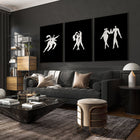
Another great technique is using a diptych (two panels) or triptych (three panels) of a single image.
 SHOP HERE
This creates a high-impact display that still feels cohesive and uncluttered. Ultimately, the most important rule is choosing a piece of minimalist wall art that brings you personal joy and calm every time you look at it.
More about…
Embark on a journey of discovering simplicity in your home. Learn how to choose art that calms the mind and delights the eye. Join us as we explore the topic of What Is Minimalist Wall Art. Click here to uncover more inspiration and tips for decorating with elegant simplicity.
Pro Tips…
I always find that seeing is believing. If you're looking for more inspiration, I encourage you to explore the styles and trends on our Content Hub
If you want to see these ideas in action, our Content hub offers plenty of visuals to guide you. Discover inspiring Home decor tips and trends to suit a variety of styles and moods.
- The fusion of Japanese Minimalism & Scandinavian Decor
- Creating calm with minimalist Living decor
- How to live a minimalist life and thrive with simplicity
I hope this guide inspires you to view wall art as both a decorative element and a powerful tool for creating a sanctuary tailored to your relaxation needs. Which style are you leaning towards? Let me know—I’d love to hear your ideas!