

10 Popular Types of Wall Art for Every Space
by Mae Osz on Aug 31, 2025
Knowing the different types of wall art available is the first step to decorating a space that truly feels like yours. From canvas prints and framed photography to textile wall hangings and three-dimensional sculptural pieces, the options are broader than most people realise — and the right choice can completely change how a room looks and feels. Whether you're starting from scratch or refreshing an existing space, this guide covers the key categories and how to use them well.
By Mae Osz | Interior Design Consultant & Home Decor Expert with 12+ years of experience.
Have you ever wondered how different types of wall art can completely change the feel of a room?
It’s not just about hanging a pretty picture—these days, wall art goes far beyond framed paintings or family photographs neatly displayed in the lounge.
From vibrant canvases to textured tapestries, there’s a whole world of creative options waiting to bring your walls to life.
In fact, design researchers have discovered that the right piece of artwork can make a space feel up to 20 percent larger and instantly more inviting. While most people focus on colours or interior styles, few realise just how much their art choices can influence the mood and atmosphere of a room.
What you put on your walls doesn’t just decorate—it transforms how you experience your home every single day.
List of Contents
- Exploring the Main Categories of Wall Art
- Three-Dimensional and Sculptural Wall Art Explained
- Popular Wall Art Styles at a Glance
- Choosing Wall Art for Different Spaces
- Creative Ways to Display Wall Art
- How to Choose the Right Wall Art for Your Space
- Choosing Wall Art for Every Room in Your Home

Exploring the Main Categories of Wall Art
Wall art is more than just a decorative element - it’s a powerful form of personal expression that transforms spaces and tells stories without uttering a single word. As someone who has spent years studying interior design, I’ve witnessed how the right piece can completely reimagine a room’s atmosphere and emotional landscape.
The Visual Language of Wall Art Styles
Every type of wall art carries its own unique narrative and aesthetic impact. Research from the Metropolitan Museum of Art suggests that art selections reflect not just personal taste, but cultural background and individual psychology. Understanding these art categories helps you curate spaces that genuinely resonate with your inner world.
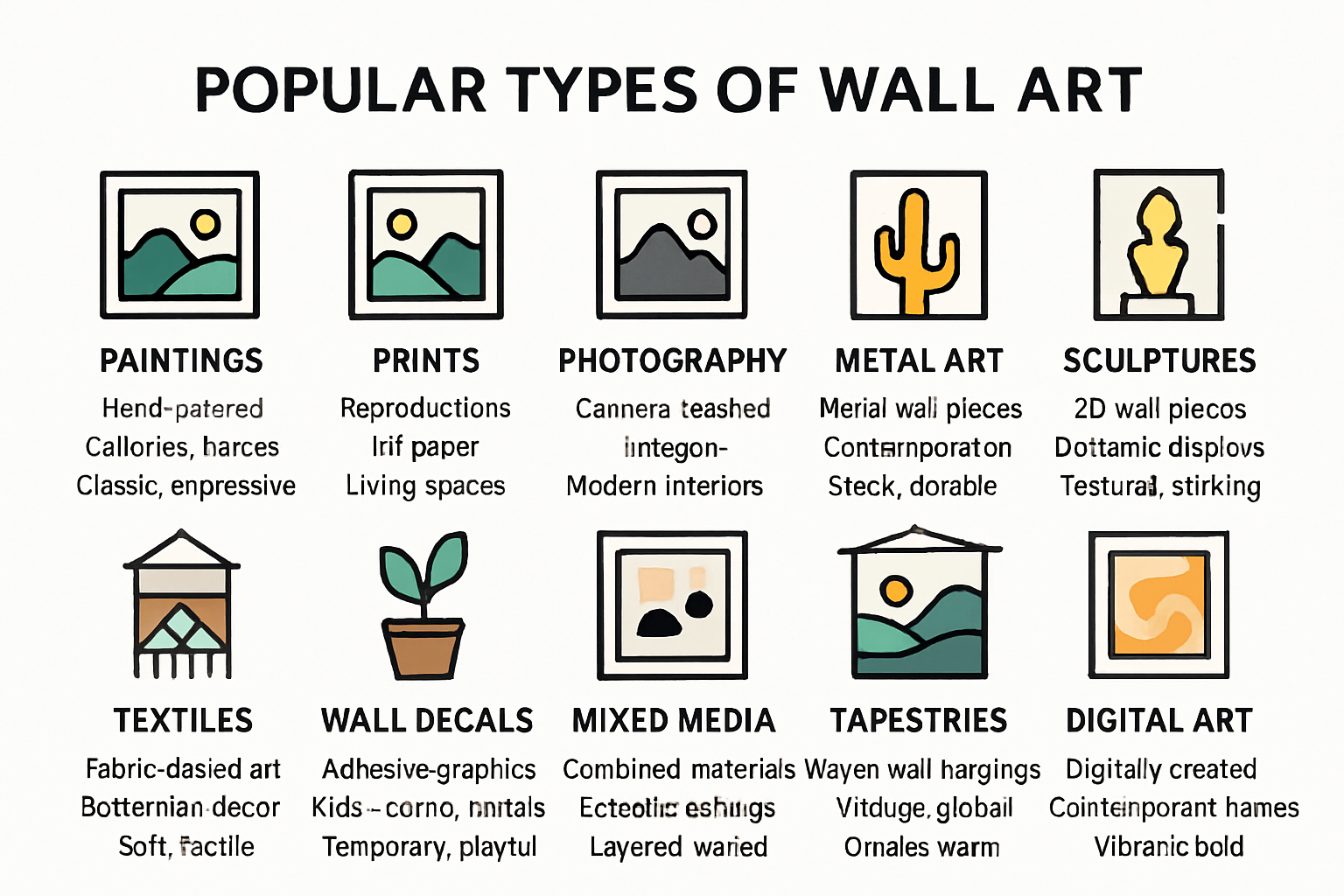
Traditional paintings represent one of the most classic forms of wall art. As established by art historians at the National Gallery, paintings involve applying pigments to surfaces to create images, designs, or decorative elements. Whether it’s an oil landscape, an abstract expressionist piece, or a contemporary minimalist work, paintings offer incredible versatility in communicating mood and style.
Three-Dimensional and Sculptural Wall Art Explained
Beyond traditional paintings, wall art has expanded into fascinating three-dimensional realms. Contemporary art researchers note that three-dimensional art encompasses height, width, and depth, created through techniques like carving, modelling, casting, or assembly.
This dimensional approach means wall art isn’t just about flat surfaces anymore. Sculptural pieces, relief works, and intricate wall installations can create stunning visual depth and texture. Imagine a delicate metal sculpture casting intricate shadows, or a wooden relief piece that changes appearance as light moves across its surface.

The Psychological Impact of Wall Art Choices
Interestingly, the types of wall art we choose are deeply personal. Andy Warhol’s revolutionary work challenged traditional art boundaries, demonstrating that art is about perception and emotional connection. When selecting wall art, you’re not just choosing a decoration - you’re curating an environment that reflects your inner landscape.
From classic paintings to modern sculptural pieces, wall art offers an incredible spectrum of expression — and if you enjoy mixing styles, it's worth reading about how eclectic interior decor uses mixed art styles to create a space that feels genuinely personal. Whether you’re drawn to minimalist prints, vibrant abstract canvases, or intricate three-dimensional installations, there’s a style that will speak directly to your aesthetic sensibilities and transform your living or working space.
Remember, the best wall art isn’t just about visual appeal - it’s about creating an environment that tells your unique story.

Choosing Wall Art for Different Spaces
Selecting wall art isn’t just about finding a beautiful piece - it’s about understanding how art interacts with specific spaces, creating unique atmospheres and transforming ordinary rooms into extraordinary environments. Each room tells a different story, and the wall art you choose can dramatically enhance or subtly complement that narrative.
Living Room Art: Creating Conversation and Connection
Research from New York University highlights the critical importance of selecting living room art that reflects both personal style and spatial dynamics. Living rooms are social spaces where art serves multiple purposes - acting as a focal point, sparking conversation, and setting the overall aesthetic tone.
Consider the scale and placement carefully. Large statement pieces work brilliantly above sofas or fireplaces, creating visual anchors that draw the eye and generate intrigue. Smaller, curated collections can create gallery walls that tell personal stories and showcase your unique journey.

Bedroom Art: Crafting Emotional Sanctuaries
Experts from MoMAA emphasise that bedroom wall art should prioritise creating a sense of calm and personal retreat. This space demands a more intimate, soothing approach compared to more public areas of the home.
Soft colour palettes, serene landscapes, abstract pieces with muted tones, or personal photographs can transform bedrooms into emotional sanctuaries. The key is selecting art that promotes relaxation and reflects your inner sense of peace. Avoid high-energy or visually complex pieces that might disrupt the room’s restful atmosphere.Soft colour palettes and serene compositions are the foundation of a restful bedroom — for practical ideas on building this look, see our guide to decorating with neutral wall decor.

Home Office and Professional Spaces: Inspiring Creativity
Wall art in workspaces goes beyond decoration - it’s a tool for motivation, creativity, and professional expression. Design psychologists suggest that strategic art selection can enhance productivity, reduce stress, and stimulate innovative thinking.
In home offices, consider art that balances professionalism with personal inspiration. Minimalist prints, motivational quotes, abstract pieces that represent growth, or landscape photographs that suggest expansive thinking can create an environment that nurtures both focus and creativity.
Remember, wall art is a deeply personal choice. While guidelines can help, the most important factor is selecting pieces that resonate with you, tell your story, and make you feel genuinely connected to your space. Whether it’s a vibrant canvas in the living room, a tranquil print in the bedroom, or an inspiring piece in your home office, the right wall art transforms rooms from mere physical spaces into meaningful personal environments.

Creative Ways to Display Wall Art
Displaying wall art is an art form in itself, offering endless opportunities to transform spaces and express your unique personality. Beyond simply hanging a piece on a wall, creative display techniques can elevate your artwork from mere decoration to a captivating visual narrative that engages and inspires.
Gallery Wall Arrangements: Storytelling Through Composition
Design experts at ArchDaily suggest that gallery walls are more than just a collection of frames - they’re a curated visual story. The key is to create a composition that feels intentional yet organic. Start by selecting pieces with a common thread - perhaps a colour palette, theme, or personal significance.
Begin your gallery wall by creating a paper template on the floor, experimenting with different arrangements before committing to nail holes. Mix frame sizes and styles for visual interest. Smaller pieces can fill gaps, while larger artworks serve as anchors. Pro tip: maintain consistent spacing between frames to create a cohesive look that feels both planned and playful.

Unconventional Display Techniques
Traditional wall hanging isn’t the only way to showcase art. Leaning artwork against walls creates a relaxed, contemporary feel that works brilliantly in modern interiors. Picture ledges offer flexibility, allowing you to easily rotate and rearrange pieces without multiple wall repairs. Consider creating depth by layering smaller frames in front of larger ones, or mixing two and three-dimensional pieces for added intrigue.
Metal wire systems or floating shelves provide another innovative approach. These allow you to display art alongside decorative objects, creating mini-vignettes that tell a more complex visual story. Imagine a delicate watercolour nestled next to a vintage ceramic vase, or a bold graphic print complemented by a sculptural object.

Integrating Art with Living Spaces
Think beyond traditional wall spaces. Artwork can transform unexpected areas - above kitchen cabinets, flanking doorways, or even in bathroom spaces. Consider the entire room’s architecture as your canvas. Floor-to-ceiling art can make rooms feel larger, while strategically placed pieces can draw the eye and create visual flow.
Lighting plays a crucial role in art display. Adjustable picture lights or carefully positioned floor lamps can dramatically enhance artwork, creating shadows and highlighting textures. Natural light can also be a powerful ally - consider how sunlight might interact with your pieces throughout the day.

Remember, the most compelling art displays are those that reflect your personal journey. Whether you’re a minimalist who loves clean lines or a maximalist who embraces eclectic collections, your wall art should feel like an authentic extension of your inner world. Don’t be afraid to experiment, break traditional rules, and create spaces that genuinely spark joy and conversation.
This table outlines several creative display techniques for wall art, along with key features and benefits as discussed in the article.
| Display Technique | Key Features | Benefits |
| Gallery Wall | Mixed sizes, intentional layout, theme | Tells a story, visual interest |
| Leaning Art | Art leaned on floor or shelf | Relaxed, contemporary feel |
| Picture Ledges | Art placed on narrow shelves | Easy to rotate or rearrange pieces |
| Layered Arrangements | Pieces overlap, mix 2D & 3D objects | Creates depth and intrigue |
| Floating Shelves | Art with decorative objects | Allows mini-vignettes and mixed displays |
How to Choose the Right Wall Art for Your Space
Selecting the perfect wall art is a nuanced journey that blends personal expression, design principles, and spatial awareness. It’s not just about finding a beautiful piece, but about discovering artwork that resonates with your unique aesthetic and transforms your living environment.
Understanding Design Fundamentals
Researchers at Florida International University emphasise the importance of understanding fundamental design elements when choosing wall art. Line, shape, colour, and composition are critical factors that determine how a piece will interact with your space.
Colour harmony is particularly crucial. New York University’s design experts recommend selecting artwork that complements or thoughtfully contrasts with your existing interior colour palette. This doesn’t mean matching exactly, but creating a cohesive visual dialogue between the artwork and your room’s existing design elements.

Size and Proportion Considerations
Proportion is a game-changer in wall art selection. Design researchers from Hostos Community College suggest that artwork should occupy approximately two-thirds to three-quarters of the wall space above furniture. This principle prevents artwork from looking disproportionately small or overwhelmingly large.
For living rooms, consider a statement piece above a sofa or fireplace. Bedrooms might benefit from softer, more intimate pieces that create a sense of calm. Home offices could use motivational or thought-provoking art that stimulates creativity.

Personal Style and Emotional Connection
Beyond technical considerations, the most important aspect of selecting wall art is its emotional resonance. Art should speak to you, tell a story, or evoke feelings that enhance your living space. This might mean choosing pieces that reflect your personal journey, cultural background, or aspirational mindset.
Here is a comparative summary of recommended wall art choices for different rooms, highlighting their main functions and desired effects.
| Room/Space | Recommended Art Characteristics | Desired Effect |
| Living Room | Large statement pieces, gallery walls, personal stories | Spark conversation, serve as focal point |
| Bedroom | Soft colours, serene landscapes, intimate imagery | Create calm, promote relaxation |
| Home Office/Professional Spaces | Minimalist prints, motivational quotes, landscapes | Inspire creativity, enhance productivity |
Don’t be afraid to mix styles and mediums. A contemporary minimalist print can sit beautifully alongside a vintage photograph. The key is maintaining an underlying visual harmony that feels intentional and curated.
Remember, wall art is more than decoration - it’s a form of personal storytelling. Whether you’re drawn to bold abstract pieces, serene landscapes, or eclectic mixed-media works, the right artwork can transform a room from merely functional to deeply meaningful. Trust your instincts, embrace your unique aesthetic, and let your walls become a canvas for your personal narrative.

Exploring Wall Art Types by Room
Different wall art types suit different rooms, and knowing which to choose can make decorating feel much more intuitive. A hallway calls for something bold and welcoming, while a bedroom benefits from softer, more calming imagery. If you're unsure where to begin, browsing our sets by room is a lovely way to narrow things down quickly. Each set contains three coordinating pieces, so the styling work is already done for you. Take a look at our room-by-room wall art collections to find a starting point that feels just right for your space.
Popular Wall Art Styles at a Glance
Beyond the physical format of a piece, the artistic style you choose has an enormous impact on how a room feels. Whether you gravitate towards clean, minimal compositions or prefer bold, expressive colour, there is a style of unique wall art to suit every taste and interior.
Abstract art suits contemporary and eclectic interiors, using shape and colour to evoke mood without depicting a literal subject. Botanical and nature-inspired prints bring calm and organic warmth, making them especially popular in living rooms and bedrooms. Black and white photography works beautifully in modern, industrial, and Scandi-style spaces, offering timeless contrast without overpowering a room. Motivational typography art is a go-to choice for home offices and children's rooms, pairing visual interest with a personal message. Mid-century and retro illustration styles add character to transitional and vintage-inspired interiors, while coastal and Mediterranean motifs bring an airy, relaxed atmosphere to any space.
Knowing which style resonates with you makes it far easier to shop with confidence — and ensures every piece you choose feels intentional rather than accidental.
Canvas Prints vs Framed Prints: Which Should You Choose?
Two of the most popular formats for wall art in UK homes are canvas prints and framed prints — and while both can look stunning, they suit different spaces and aesthetics in distinct ways.
Canvas prints are printed directly onto stretched canvas and typically displayed without a frame. They have a contemporary, gallery feel and work particularly well in modern, minimalist, or Scandi-style interiors. Because they have no reflective glass, they are easier to view from multiple angles and in rooms with varied lighting. Canvas art also tends to feel more relaxed and informal, making it ideal for living rooms and open-plan spaces.
Framed prints offer a more polished, finished look and are a natural fit for traditional, transitional, or formal interiors. A well-chosen frame can tie the artwork into the room's existing colour palette, adding a layer of considered detail. They are equally at home in dining rooms, hallways, and home offices where a neat, structured aesthetic is preferred.
For many people, the choice comes down to budget, room style, and personal preference — and there is no wrong answer. Sets of three prints work brilliantly in both formats when you want to fill a larger wall without committing to a single oversized piece.
Pro Tips
Want to take your wall art game to the next level? Visit our Content Hub for expert guides and inspiration.
You might also enjoy:
More About
Want to dive deeper into wall art styling and placement?
Check out Architectural Digest’s Guide to Decorating with Art for insider tips from top designers, covering everything from proportion and lighting to creating meaningful collections.


