

Understanding Wall Art Size Guide for Your Space
by Mae Osz on Sep 22, 2025
Getting the right wall art size is one of the most important decisions when decorating a room — yet it's one of the most commonly misjudged. Too small, and artwork disappears against a large wall; too large, and it can overwhelm a space. The good news is that a few simple rules of proportion take the guesswork out entirely, helping you create a balanced, beautifully decorated room that feels intentional from the moment you walk in.
By Mae Osz | Interior Design Consultant & Home Decor Expert with 12+ years of experience.
Looking for practical advice on choosing the right artwork dimensions to transform your space?
Wall art isn’t just a finishing touch—it’s a design element that can completely change the feel of a room.
Many people assume that choosing smaller pieces is a safe option, or that oversized art always makes the best statement. In reality, the secret lies in aligning your artwork’s dimensions with your furniture and wall space, creating harmony, balance, and visual impact.
Artwork should ideally take up about 50 to 75 percent of your wall space above furniture, yet so many people get this wrong.
You might think a smaller piece will be safe or that bigger always means better. Both ideas are misleading. The real secret lies in matching your art’s size to your room’s proportions, and that is where the magic happens.
List of Contents
- Quick Summary
- Why Artwork Proportions Matter in Interior Design
- How Artwork Dimensions Shape the Feel of a Room
- Key Principles for Choosing the Right Artwork for Your Space
- How to Effectively Use Scale and Proportion in Wall Art
- Common Mistakes to Avoid When Hanging and Sizing Art
- Elevate Your Space With Perfectly Sized Unique Wall Art
- Standard Artwork Sizes and What They Work Best For
- How to Measure Your Wall Before Buying Art
Quick Summary
| Takeaway | Explanation |
| Match art size to wall dimensions | Tailor wall art dimensions to fit wall space for visual harmony and balance. |
| Aim for 50-75% wall coverage above furniture | Artwork should fill most wall space to avoid feeling lost or overwhelming the room. |
| Consider emotional impact of artwork size | Larger pieces create focal points, while smaller ones add nuanced storytelling and intrigue. |
| Avoid common sizing mistakes | Ensure art is hung at eye level and proportionate to surrounding elements to maintain visual integrity. |
| Balance visual weight across different sizes | Create a visual dialogue by strategically placing larger and smaller artworks for a cohesive design. |
Why Artwork Proportions Matter in Interior Design
When designing an interior space, wall art is more than just a decorative afterthought—it’s a critical element that can transform your environment’s visual dynamics and emotional atmosphere. Understanding the nuanced relationship between wall art size and spatial design helps create harmonious, balanced rooms that reflect your personal style.
Visual Balance and Spatial Proportions
The size of wall art directly impacts how a room feels and functions. According to the National Kitchen & Bath Association, scale and proportion are fundamental principles in interior design that determine how elements interact within a space. Wall art that is disproportionate can disrupt the room’s visual harmony, making spaces feel cluttered or uncomfortably sparse.
Key considerations for achieving visual balance include:
-
Matching wall art size to wall dimensions
-
Maintaining proportional relationships between furniture and artwork
-
Creating visual weight that complements existing room elements

Emotional Impact and Personal Expression
Beyond technical considerations, wall art size profoundly influences a room’s emotional landscape. Large artworks can create dramatic focal points, drawing the eye and establishing a room’s character. Conversely, smaller pieces can add subtle complexity and intrigue, allowing for more nuanced storytelling within your space.
To help you understand how artwork size impacts spatial perception and emotional atmosphere, here is a comparison of large versus small wall art roles as discussed in the article:
| Artwork Size | Visual Impact | Emotional Effect | Best Used In |
| Large | Creates dramatic focal points | Establishes strong character/focus | Above sofas, in large or open spaces |
| Small | Adds nuance and complexity | Enables subtle storytelling | In gallery walls, small rooms, or as accents |
Strategic Sizing Principles
Successful wall art sizing isn’t about rigid rules but understanding spatial relationships. Generally, artwork should occupy approximately 50-75% of the wall space above furniture, creating a visually pleasing proportion.
For example, a large sofa might be complemented by a substantial piece that spans two-thirds of the sofa's width, creating a balanced, intentional arrangement — and if you're printing and framing your own artwork, our guide on choosing the right frame size for your prints explains how to ensure the frame complements rather than competes with the image.
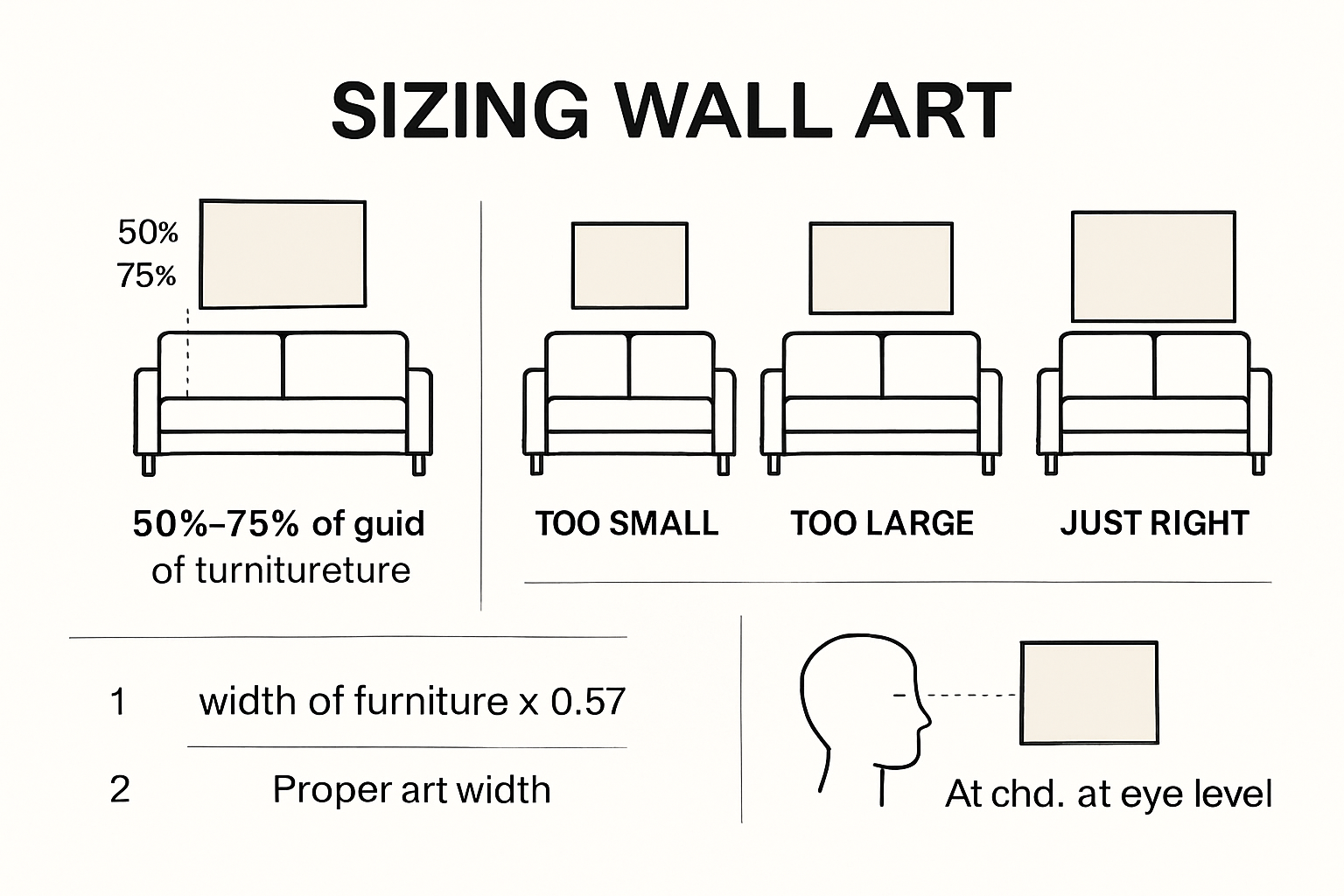

Ultimately, getting your artwork proportions right is a powerful design tool that transforms rooms from purely functional spaces into personalised, emotionally resonant environments — if you'd like to take this further, our guide on creating a cohesive home design scheme shows how to tie colour, scale, and artwork together across every room.
How Artwork Dimensions Shape the Feel of a Room
Wall art dimensions are far more than mere measurements—they are strategic design tools that profoundly shape our perception of interior spaces. By carefully selecting artwork sizes, you can manipulate visual perspectives, create emotional responses, and transform the fundamental character of a room.
Psychological Perception of Space
According to research published in the International Journal of Environmental Research and Public Health, wall texture and artwork dimensions significantly influence our psychological perception of spatial dimensions. Different artwork sizes trigger distinct psychological responses, making rooms feel more expansive, intimate, or dynamic.
Key psychological dimensions of wall art include:
-
Creating visual depth and perspective
-
Establishing emotional atmosphere
-
Directing viewers’ visual attention
-
Modulating perceived room proportions

Strategic Artwork Scaling Techniques
Effective wall art scaling involves understanding how different dimensions interact with architectural elements. Large artworks can anchor a space, making smaller rooms feel more intentional, while smaller pieces can add complexity and nuance to larger areas. The goal is not just filling wall space, but creating a harmonious visual dialogue between artwork and environment.

Dimensional Design Principles
Mastering wall art dimensions requires a holistic approach. Proportionality is key—artwork should typically occupy 50-75% of available wall space, creating balanced visual weight. Consider factors like ceiling height, furniture placement, and natural light when selecting piece sizes. A tall, narrow piece can elongate a room, while a wide, horizontal artwork can make spaces feel broader and more expansive.
By understanding how wall art dimensions interact with spatial perception, you transform your interior from a mere physical environment into a carefully curated narrative of personal style and emotional resonance.
Key Principles for Choosing the Right Artwork for Your Space
Choosing the perfect wall art size is an intricate dance between spatial dynamics, personal aesthetics, and design principles. The right artwork transforms a room from ordinary to extraordinary, creating visual narratives that reflect your unique style and emotional landscape.

Understanding Proportional Relationships
According to resources exploring design principles, scale and proportion are fundamental concepts in creating harmonious visual compositions. These principles help determine how artwork relates to surrounding elements and the overall room environment.
Key proportional considerations include:
-
Maintaining visual balance between artwork and wall space
-
Establishing hierarchical relationships between design elements
-
Creating harmonious interactions with existing furniture
-
Respecting architectural features and room dimensions
Spatial Context and Size Selection
Artwork size is not a standalone decision but a contextual choice influenced by multiple factors. Large rooms demand more substantial pieces, while smaller spaces benefit from carefully curated, appropriately scaled artworks. Consider ceiling height, furniture placement, and natural light when selecting dimensions. A piece that overwhelms a small room can feel constrictive, whereas an undersized artwork in a spacious area might appear insignificant.

Strategic Sizing Approaches
Professional designers recommend following general guidelines while maintaining flexibility. Typically, artwork should occupy approximately 50-75% of the wall space above furniture, creating a visually balanced composition. For instance, above a sofa, a single large piece or a curated gallery wall can serve as a stunning focal point. The goal is not rigid adherence to rules but creating a harmonious visual dialogue that feels intentional and personal.
By understanding these nuanced principles, you can confidently select wall art that not only fits physically but resonates emotionally, transforming your space into a reflection of your individual aesthetic vision.
How to Effectively Use Scale and Proportion in Wall Art
Scale and proportion are not just design principles, but powerful storytelling tools that transform empty walls into vibrant canvases of personal expression. By understanding how artwork dimensions interact with spatial environments, you can create visually compelling narratives that breathe life into your living spaces.
Visual Hierarchy and Spatial Dynamics
Understanding visual hierarchy is crucial in effectively using scale and proportion. Large artworks naturally command attention, serving as primary focal points that draw the eye and anchor a room’s visual composition. Smaller pieces, strategically placed, can create intricate visual conversations and add layers of complexity to your design.
Key principles of visual hierarchy include:
-
Creating primary and secondary visual focal points
-
Balancing visual weight across different artwork sizes
-
Establishing rhythmic visual flow
-
Maintaining proportional relationships between art pieces
Strategic Artwork Placement
Effective scale and proportion extend beyond individual artwork dimensions to encompass overall placement strategy. Artwork should interact harmoniously with surrounding architectural elements, whether centred above furniture or arranged in carefully curated gallery configurations. Consider ceiling height, furniture positioning, and natural light paths when determining artwork placement.

Compositional Techniques
Designers often employ sophisticated compositional techniques to maximise scale and proportion impact. According to design principle resources, successful compositions typically occupy 50-75% of available wall space, creating visual balance without overwhelming the environment.
By mastering these nuanced principles of scale and proportion, you transform wall art from mere decorative elements into powerful design instruments that reflect your unique aesthetic sensibility and emotional landscape.
Common Mistakes to Avoid When Hanging and Sizing Art
Selecting wall art is an art form in itself, fraught with potential pitfalls that can transform a potentially stunning design into a visual misadventure. Understanding common sizing mistakes helps you create spaces that feel intentional, balanced, and aesthetically sophisticated.
Proportional Placement Errors
According to research from Iowa State University Extension and Outreach, many homeowners make critical errors in artwork placement that disrupt visual harmony. Hanging art at incorrect heights can fundamentally undermine a room’s design integrity.
Common proportional placement mistakes include:
-
Hanging artwork too high above furniture
-
Positioning pieces without considering eye-level perspectives
-
Neglecting the visual relationship between art and surrounding elements
-
Ignoring the room’s architectural dimensions
To clarify frequent errors in wall art selection, the following table summarises common mistakes and how they impact your space:
| Mistake Type | Description | Impact on Room |
| Hanging too high | Art is placed well above furniture or eye level | Disrupts visual harmony |
| Artwork too large | Piece overwhelms the room and dominates the wall | Creates cluttered appearance |
| Artwork too small | Piece appears lost on the wall, especially above large furniture | Feels insignificant/underwhelming |
| Ignoring surroundings | Placement not considering furniture or architectural features | Loses proportional balance |
| Incorrect spatial relationship | Failing to match artwork size with wall and furniture proportions | Room feels awkward |

Oversizing and Undersizing Challenges
Size selection represents a delicate balance between making a statement and maintaining spatial elegance. Artwork that is disproportionately large can overwhelm a room, creating a cluttered, chaotic atmosphere. Conversely, pieces that are too small appear lost and insignificant, failing to create the desired visual impact.
Spatial Relationship Miscalculations
Successful wall art integration requires understanding nuanced spatial relationships. Professional designers recommend ensuring artwork occupies approximately 50-75% of wall space above furniture, creating a visually balanced composition. This principle helps prevent the two primary sizing mistakes: artwork that appears either apologetically timid or aggressively domineering.
By recognising and avoiding these common sizing errors, you can transform your walls from potential design disasters into compelling visual narratives that reflect your unique aesthetic sensibility.
Elevate Your Space With Perfectly Sized Wall Art
Are you struggling to choose the right-sized artwork for your home or office? Many readers find that picking the wrong size turns a vibrant design scheme into an awkward or unbalanced setting. The article explores how proportion, visual weight, and placement are crucial for harmony and emotional impact, yet translating these principles into real choices can be overwhelming.
At About Wall Art, we understand that selecting artwork is about more than simply filling empty space. Our curated collections are designed to help you solve these precise challenges, offering guidance and a rich variety of wall art in sizes that match the unique dimensions of your rooms. Let us help you move beyond guesswork and create an interior that feels harmonious and personal.
Visit our main site for inspiration and practical options that fit any wall or style. Begin transforming your space now by exploring a world of expertly sized wall art that brings both balance and emotion to every room.

Standard Artwork Sizes and What They Work Best For
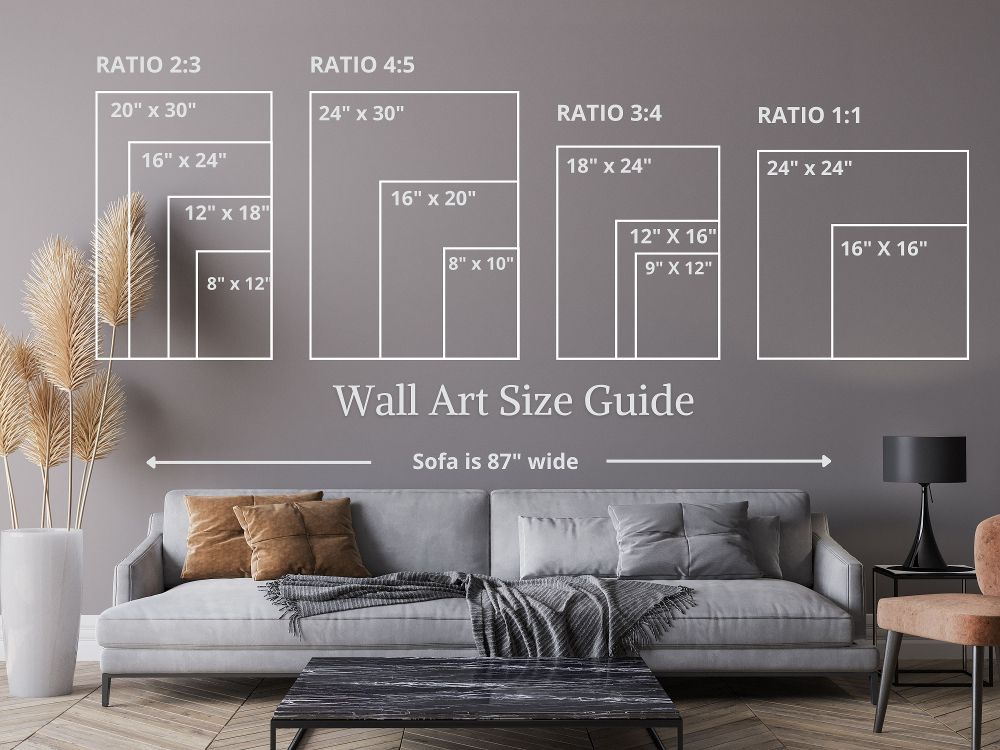
Understanding common print and canvas dimensions makes it far easier to shop with confidence. In the UK, artwork tends to follow standard metric sizes — A4 (21×30cm) suits a desk or small accent wall; A3 (30×42cm) works well in grouped gallery arrangements; A2 (42×59cm) makes a confident statement above a console or bedside table; and A1 (59×84cm) or larger suits a feature wall above a sofa or in a hallway.
For very large walls or wide sofas (180cm or more), consider oversized prints of 100cm or wider, a triptych set, or a curated gallery wall. Sets of three prints are a particularly versatile option — they allow you to cover a generous span of wall while keeping the composition balanced and easy to adjust. Browse the sets of 3 wall art prints at AboutWallArt to see how multi-panel layouts can work across different room sizes.
As a quick reference: smaller rooms (under 12m²) generally suit prints up to A2; medium rooms benefit from single large prints or pairs; and open-plan spaces give you the freedom to go bold with oversized or multi-panel arrangements.
How to Measure Your Wall Before Buying Art
Before purchasing any piece, spend two minutes measuring your wall — it removes all the guesswork. Use a tape measure to record the total wall width and height, then note the width of any furniture sitting in front of or below the intended hanging spot. Aim for your artwork (or grouping) to span roughly two-thirds of the furniture's width for a proportionate result.
It also helps to mark out the intended dimensions on your wall using masking tape or a piece of newspaper cut to size. Stepping back and living with that placeholder for a day gives you a realistic sense of how the finished piece will feel in the room — far more reliably than trying to visualise it mentally.
Finally, consider ceiling height. In rooms with standard 240cm ceilings, a single large canvas often feels more impactful than a cluster of small prints. In rooms with higher ceilings, you have more flexibility to stack prints vertically or hang art higher to draw the eye upward and make the space feel even more expansive.
Pro Tips
Want more guidance on styling artwork in your home? Visit our Content Hub for expert advice and inspiration. You might also enjoy:
More About…
For extra tips on getting proportions right, check out this guide on How to Choose the Right Size Wall Art for Your Space. It’s a practical, easy-to-follow resource that complements the principles in this article.
WATCH: The Key Rules for Hanging Art in your Home! - Interior Design Tips


