

What is the 3-5-7 rule in Decorating: A Simple Formula for Stylish Spaces
by Mae Osz on Dec 04, 2025
What is the 3-5-7 rule in decorating, and why does it make such a noticeable difference to a room? In short, it's a straightforward principle based on grouping items in odd numbers — three, five, or seven — so that your space feels naturally balanced and visually engaging rather than rigid or forced. Whether you're arranging furniture, styling a coffee table, or building a gallery wall, this simple guideline gives you a reliable framework to work from. The best part is that you can often apply it with pieces you already own.
I've certainly had those moments where a room feels "almost right" but not quite — and this simple decorating principle is often the missing piece.
The 3-5-7 rule in decorating helps you group items in odd numbers so your space feels balanced, intentional, and visually engaging. It's one of the easiest interior design tricks to bring harmony into any home, no matter your style or budget.
List of Contents
- Breaking Down the Magic Numbers: The 3-5-7 rule
- Arranging Your Lounge Room Furniture
- Creating Harmony on Your Walls
- The Finishing Touches with Accessories
- Why This Simple Rule Works So Well
- Making the Rule Your Own
- Common decorating mistakes to avoid
- QuicK decorating tips for every room
Breaking down the magic numbers: Odd Groups explained
The 3-5-7 rule in decorating is a design principle that uses odd-number groupings — three, five, or seven items — to create arrangements that feel naturally balanced and visually engaging. Odd numbers work because our brains find them more dynamic than even-numbered groupings, which can sometimes look a bit rigid or staged.
This principle of decorating with odd numbers is what makes the approach so visually effective.
- The '3' refers to your large, foundational items. Think of these as the anchors of your room: a sofa, a large area rug, or a significant piece of wall art.

- The '5' represents your medium-sized, supporting items. These pieces build upon the foundation. This could include accent chairs, a coffee table, a floor lamp, or a console table.

- The '7' covers the smallest, personality-filled details. This is where the odd-numbers principle truly lets your personal style shine. These are your cushions, photo frames, small plants, candles, and other decorative objects that tell your story.


To make it even clearer, here's how you can apply it across different areas of your room.
Applying the 3-5-7 Rule Across Your Room
| Category | The '3' (Large Anchors) | The '5' (Medium Supports) | The '7' (Small Details) |
|---|---|---|---|
| Furniture | Sofa, Large Rug, Bookcase | 2 Armchairs, Coffee Table, Side Table, Floor Lamp | Cushions, Throw Blanket, Coasters, Small Plant, Candle, Photo Frame, Decorative Bowl |
| Wall Decor | Large Canvas, Statement Mirror, Wall Hanging | Gallery wall of 5 prints, 3 Floating Shelves, 2 Sconces | Small framed photos, decorative plates, mini planters, postcards, small art objects |
| Surface Styling (e.g., Coffee Table) | A Tray, A Tall Vase, A Stack of Books | Add a Candle and a Small Dish to the '3' group | Add two more small objects like a paperweight and a decorative box to the '5' group |
This table provides concrete examples of how to group items by scale. Note that these are suggestions to guide your eye, not strict requirements.
Arranging Your Lounge Room Furniture
Now, let's get practical with how to style a lounge room using this principle.

Start with your '3' foundational pieces. This could be your three-seater sofa, a large area rug that defines the space, and your main coffee table. These three items create the core of your living area.

Next, you can layer in your '5' medium items. For instance, you might add two comfortable armchairs, a slim console table against a wall, a tall floor lamp for ambient lighting, and a large potted plant to bring in some life.

This guideline is flexible here; you could also consider your main seating (a sofa and two chairs) as your '3' group.
Here's a tip: before you buy anything new, try rearranging your existing furniture using this principle. You might discover a new sense of balance without spending a penny.
Once your furniture feels right, you can find the perfect art to complement the arrangement by browsing our collection of framed wall art sets for the living room.
Creating Harmony on Your Walls
As a wall art enthusiast, this is my favourite way to use the rule. The odd-numbers approach is absolutely perfect for creating stunning wall art arrangements, especially gallery walls.
Instead of struggling with an even number of frames, try grouping three or five pieces of varying sizes.

This immediately creates a more organic and visually interesting display. A great tip I always follow is to lay your frames on the floor first. You can play with the arrangement and spacing until it feels just right, all before you pick up a hammer.
You can also apply this to a single feature, like a mantelpiece. For example, try arranging a statement mirror, a tall vase, and a small framed photo as a group of three.
The 3-5-7 rule in decorating also helps you consider visual weight. A single large canvas can act as one anchor, with smaller items grouped around it to create balance. To get started, you can browse our beautiful art prints for the wall to find pieces that work together harmoniously.
The Finishing Touches with Accessories
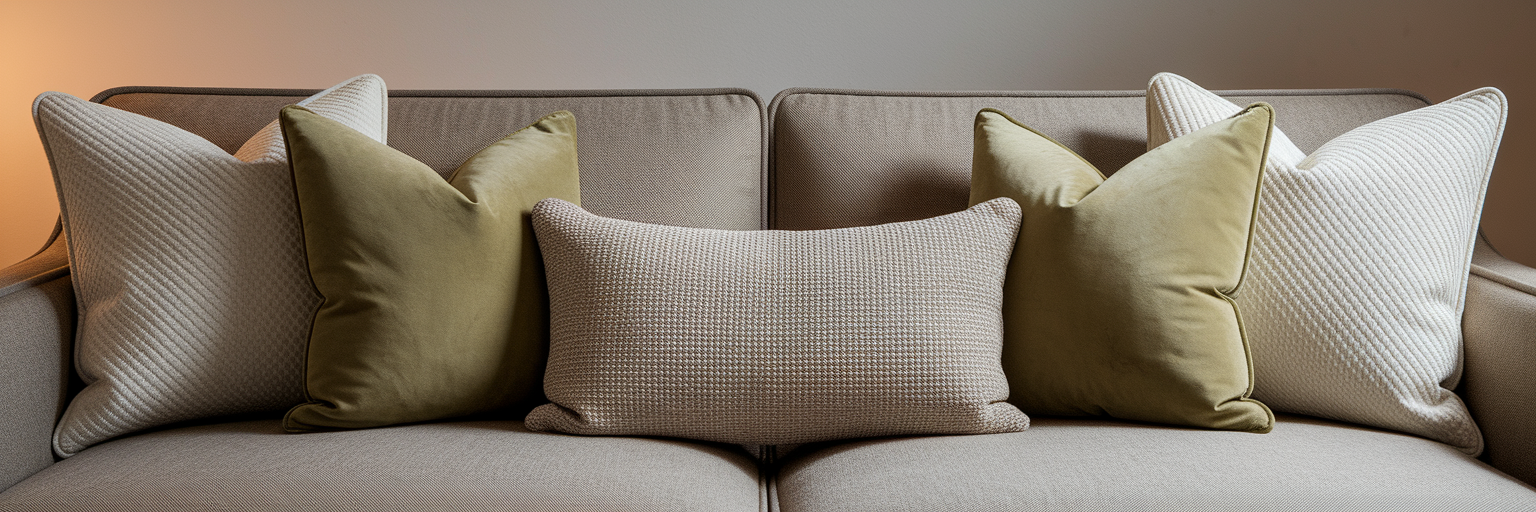
The smallest details often make the biggest impact, and this is where the '7' comes into play. You can use the 3-5-7 rule in decorating to create stylish 'vignettes' on surfaces.
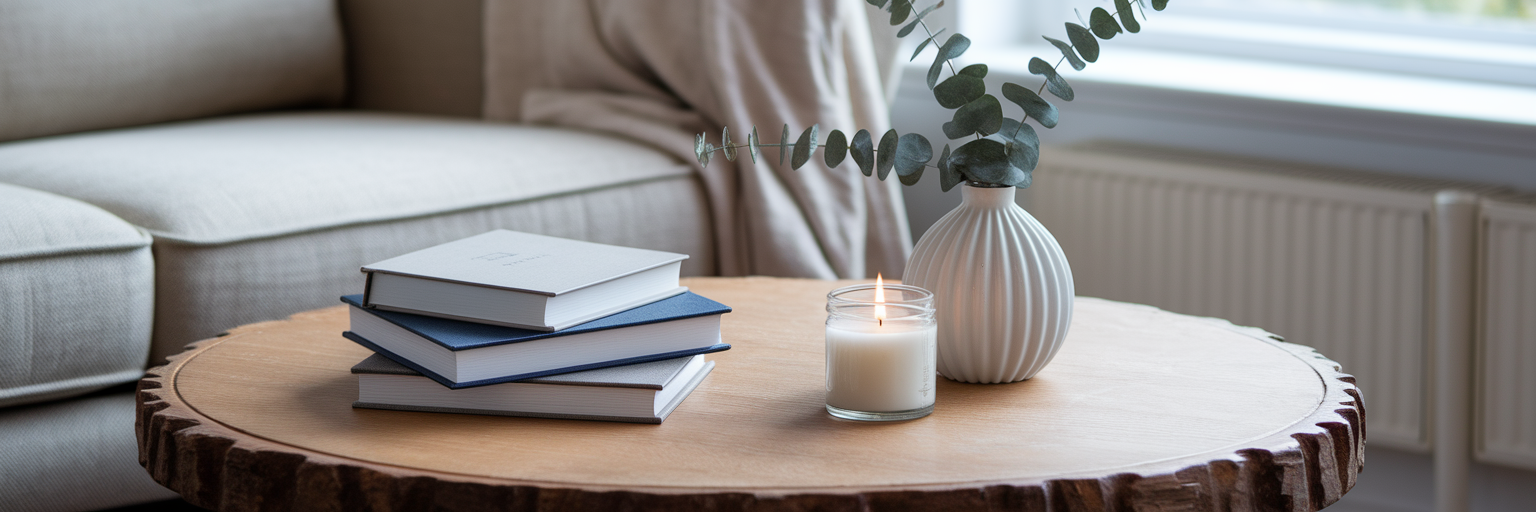
On your coffee table, for instance, group three items of varying heights: a stack of books, a decorative tray, and a small plant.

For textiles, try arranging five cushions on your sofa. A classic approach is two matching pairs and one unique feature cushion in the middle to add a pop of personality.

This method also works wonders for styling bookcases. Instead of just lining up books, create small groupings of three or five items on each shelf, mixing books with small sculptures, photos, or candles.

Using this rule for your accessories is one of the quickest ways to make a room feel professionally styled and thoughtfully curated. If you're looking for those perfect final pieces, our collection of unique home decor has plenty of inspiration.
Why This Simple Rule Works So Well
So, what's the magic behind it all? The 3-5-7 rule in decorating works because odd numbers create a sense of movement and energy, which makes a space more engaging for our eyes. It forces our gaze to move around the grouping, taking in each item.
This simple guideline naturally helps prevent clutter by encouraging you to be intentional with your choices, which is key for creating balanced room decor ideas.
Furthermore, the 3-5-7 rule in decorating promotes good proportion and scale by design, as it encourages you to mix items of different sizes. This creates a clear visual hierarchy, where your eyes know where to look first. It's a confidence-building tool that takes the guesswork out of decorating.
Adapting the Rule to Your Own Style
While it's a fantastic guideline, please remember that the 3-5-7 rule in decorating is not a rigid law. The most important tool you have is your own eye. Think of it as your starting point.
For example, in a very small space like a cosy London flat, you might find a 1-3-5 structure works better.

Your personal style also plays a huge part. A minimalist might use the rule sparingly with just a few curated groups, whilst a maximalist might layer multiple groups of three, five, and seven throughout their space.
The beauty of the 3-5-7 rule in decorating is its adaptability. Use it to build a solid foundation, then trust your intuition to add the personal touches that truly make a house a home.
For those who love a richer look, our eclectic maximalist decor collection is full of inspiration. You'll also find plenty of unique wall art to help you express your individual style.
Common Decorating Mistakes to Avoid
Even with a helpful framework like the 3-5-7 rule, a few recurring mistakes can undermine an otherwise well-styled room. The most common is defaulting to even pairings — two matching vases, four identical cushions, six uniformly spaced prints — which creates a formal rigidity that can make a space feel more like a showroom than a home.
Another frequent pitfall is scaling items incorrectly. Placing too many large anchor pieces crowds the room, while filling it entirely with small accessories leaves it feeling lightweight and unfinished. The rule's three tiers are designed specifically to prevent this — each scale of object has its own role to play.
Finally, many people overlook negative space. The gaps between grouped items are just as important as the objects themselves; they give the eye somewhere to rest and prevent a space from feeling cluttered. When in doubt, remove one item rather than add another — restraint is almost always the more confident decorating choice.
Quick Decorating Tips for Every Room
While the 3-5-7 rule provides a brilliant structural framework, a few additional principles help it work even harder across different rooms in your home.
Vary height, not just quantity. When grouping five objects on a shelf or mantelpiece, make sure they sit at different heights. A tall candlestick next to a mid-height vase and a flat tray creates movement that a row of identical objects simply cannot.
Mix textures within each tier. Within your seven small accessories, aim for a variety of materials — something ceramic, something natural (a small plant or woven coaster), and something reflective (a glass or metallic object). This layering is what separates a considered space from one that looks assembled in a hurry.
Treat your walls as a tier. Wall art is not an afterthought — your large canvas or statement mirror counts as one of your three anchor pieces. Browse our wall art collections to find anchor pieces that set the tone for the whole room.
Use a tray to anchor small groupings. On a coffee table or sideboard, placing your seven small objects on a tray or board gives the group a visual boundary, making it look deliberate rather than scattered.
More about…
Learn how professional designers use odd-number groupings to create rooms that feel effortlessly put-together. Click here to uncover more inspiration and tips for decorating your personal space.
Pro Tips…
Seeing is believing! To see how principles like the 3-5-7 rule in decorating come to life in different settings, I encourage you to explore our blog. It's packed with ideas to help you find your unique style. For more ideas, take a look at our Content Hub.
If you want to see these ideas in action, our Content Hub offers plenty of visuals to guide you. Discover inspiring home decor tips and trends to suit a variety of styles and moods.
- How to Choose the Perfect Prints for Your Living Room
- Explore Our Calming Scandinavian Wall Art Collection
- Shop Wall Art by Your Favourite Style
I hope this guide inspires you to view decorating as both a creative outlet and a practical skill. Which style are you leaning towards? Let me know — I'd love to hear your ideas!
QUICK ANSWER: WHAT IS THE 3-5-7 RULE?
The 3-5-7 rule is a simple interior design guideline that uses odd-number groupings — three, five, and seven — to make rooms feel naturally balanced and visually interesting. Three refers to your large anchor pieces, five to your medium supporting items, and seven to the smallest decorative details. Together, these tiers create a sense of rhythm and proportion that even-numbered arrangements rarely achieve.
It works across every room in the home, from living room furniture layouts to gallery wall sets and shelf styling — making it one of the most versatile tools in any decorator's kit.
Key Takeaways
- The 3-5-7 rule in decorating uses odd-number groupings to create naturally balanced, visually engaging spaces.
- The '3' anchors your room with large foundational pieces; the '5' adds medium supports; the '7' brings personality through small details.
- Apply the rule to furniture arrangements, gallery walls, coffee table vignettes, and bookcase styling.
- Odd numbers work because they create visual movement — your eye travels across the group rather than stopping at a symmetrical pair.
- The rule is a guideline, not a law — adapt it to your space, style, and what you already own.


