

A Guide to Calming Interior Design Styles for a Peaceful Home
by Mae Osz on Dec 29, 2025
Choosing a different type of interior design for your home can feel overwhelming — there are so many styles, and each one promises something slightly different. The truth is, most calm, beautiful homes do not belong to a single rigid aesthetic; they borrow the best elements from several. Understanding the key design styles available to you is the first step to making confident, intentional choices that bring genuine peace and character to your living space.
By Mae Osz | Interior Design Consultant & Home Decor Expert with 12+ years of experience.
Have you ever scrolled through beautiful homes online and wondered how to define your own style? Our interior styles list is a great place to start if you want a broader overview of every major design aesthetic. I find that understanding a different type of interior design is the first step to creating a home that feels truly and uniquely yours. It’s not about fitting into a box.
Instead, it’s about finding a language to describe what you love. This knowledge becomes the foundation for choosing a design aesthetic that makes every choice, from furniture to the final touch of wall art, feel cohesive and intentional.

Consequently, every piece works together to create the exact mood you’re hoping for. In this guide, I'll walk you through some of my favourite design aesthetics, from the clean lines of modernism to the cosy comfort of Scandinavian style.
My goal is to help you find the perfect match for your home.
List of Contents
- Traditional and Transitional Design: A Timeless Foundation
- Embracing Simplicity with Modern and Contemporary Looks
- Creating a Cosy Retreat with Scandinavian and Coastal Styles
- The Charm of Rustic and Farmhouse Aesthetics
- Eclectic and Mid-Century Modern: Design Styles That Reflect Your Personality
- Core Principles Shared by Every Calming Interior Style
- How to Choose Wall Art for a Calming Interior
- Using Lighting to Create a Restful Ambience
- Reducing Clutter and Visual Noise
- Biophilic Design: Bringing Nature Indoors
- A Brief History of Interior Design Styles in the UK
Traditional and Transitional Interior Design: A Timeless Foundation
There's a reason classic looks never fade.
They are rooted in comfort and elegance. Traditional design, for instance, draws from 18th and 19th-century European influences that feel perfectly at home in British properties, like Georgian townhouses or Victorian terraces.
It’s all about symmetry, plush comfort, and beautiful details. Think rolled-arm sofas, rich textiles like velvet or silk, and ornate wooden furniture.
The mood is ordered, familiar, and incredibly inviting.


However, if you love classic bones but want a fresher feel, Transitional style is a wonderful choice. It acts as a bridge between past and present, blending the warmth of traditional decor with the clean simplicity of contemporary design.
This creates a space that feels both timeless and current. When it comes to wall art, a traditional room welcomes classic landscape paintings or framed botanical prints.
If Scandi style appeals to you, our deeper look at the essence of Scandinavian interior design covers its principles, materials, and key decorating choices in full detail.
A large abstract canvas in a simple frame can be particularly effective.

Embracing Simplicity with Modern and Contemporary Looks
People often use 'modern' and 'contemporary' interchangeably, but they represent distinct approaches to design.
Modern design follows a firm 'less is more' philosophy. Originating in the early to mid-20th century, it prioritises clean lines, uncluttered spaces, and a strong connection to natural materials like wood, leather, and metal.
The colour palette is typically neutral, creating a calm and organised feel. This is a beautifully restrained aesthetic that offers fantastic modern interior inspiration.

Contemporary design, on the other hand, is more fluid. It reflects the trends of *right now*. This means it can incorporate curves, bold pops of colour, or innovative materials that are currently popular. It’s dynamic and always evolving.
For wall art, a Modern interior is the perfect backdrop for minimalist pieces. Think geometric prints, black-and-white photography, or a single, elegant piece of line art.

For a Contemporary room, I encourage a more playful approach. You could create a gallery wall of mixed-media pieces or choose a large, vibrant contemporary wall art canvas to act as a stunning focal point. This aesthetic suits many new-build homes across the UK beautifully.


Creating a Cosy Retreat with Scandinavian and Coastal Styles
If your goal is to create a serene, nature-inspired sanctuary, then Scandinavian and Coastal styles are wonderful places to start.
Scandinavian interior design is beautifully captured by the Danish concept of 'hygge'—the art of creating a cosy, content atmosphere. Its core features include light wood floors, walls painted in white or pale grey, and an abundance of plush textiles like wool and sheepskin.
Furniture is both functional and beautiful, celebrating craftsmanship and simplicity. This style is one of the most effective ways to bring a sense of peace and wellbeing into your home.

Similarly, Coastal style evokes the feeling of a breezy British seaside retreat, perhaps in Cornwall or Suffolk. It’s built on a light and airy palette of soft blues, sandy neutrals, and crisp whites.
Natural textures are key here, so you’ll see plenty of linen, jute, and weathered wood.

For wall art, a Scandi room is complemented by nature-inspired prints — and if you want to go deeper, our guide to Scandinavian interior design principles covers everything from colour palettes to furniture choices.

Meanwhile, a coastal vibe is enhanced with watercolour seascapes, beach photography, or abstract pieces from our coastal decor collection to deepen the tranquil atmosphere.
Although they share a love for simplicity, their distinct palettes and materials create unique moods.

| Feature | Scandinavian | Coastal |
|---|---|---|
| Colour Palette | White, pale grey, light wood tones, muted pastels | Soft blues, sandy neutrals, crisp white, sea green |
| Key Materials | Light woods (oak, ash), wool, sheepskin, felt | Weathered wood, linen, jute, rattan, cotton |
| Overall Vibe | Cosy, minimalist, functional, content ('hygge') | Airy, relaxed, natural, breezy |
| Ideal Wall Art | Nature-inspired prints, simple abstracts, line art | Watercolour seascapes, beach photography, abstract blues |
Note: This table highlights the core differences between two popular calming aesthetics. While they share a love for simplicity, their colour palettes and material choices create distinct moods.
The Charm of Rustic and Farmhouse Aesthetics
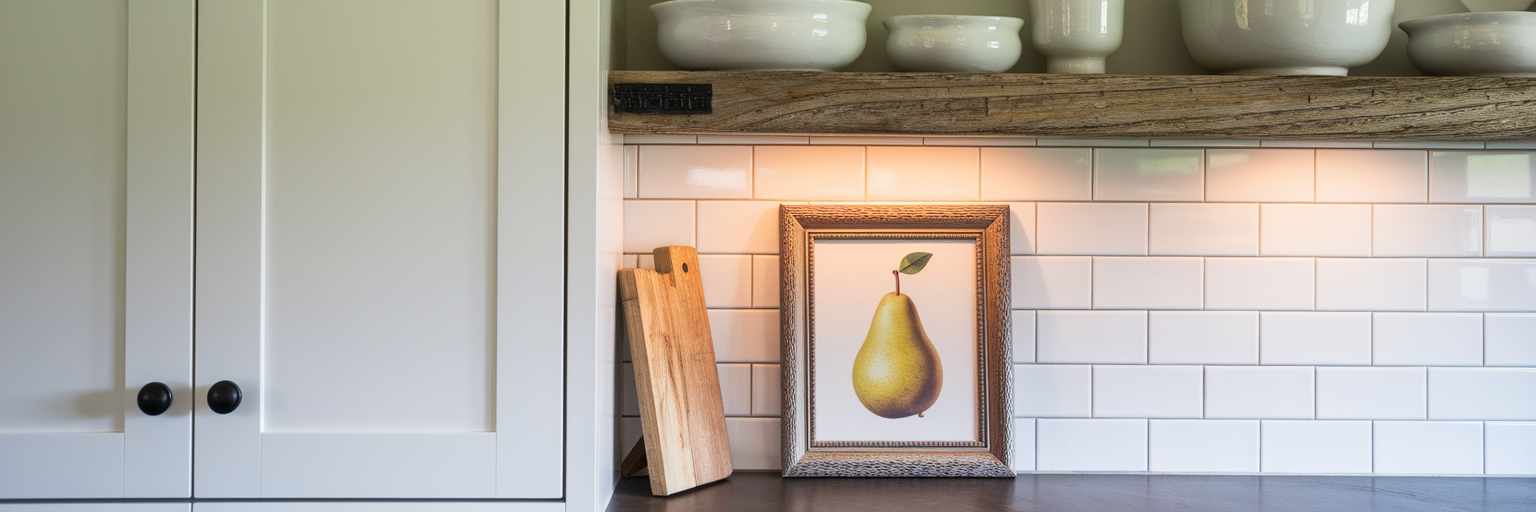 For those who crave a connection to nature and a sense of groundedness, Rustic and Farmhouse aesthetics are a perfect fit. This is a different type of interior design that feels honest and authentic.
Rustic design is all about bringing the outdoors in, using raw, unfinished materials like stone, reclaimed wood, and hammered metal. It celebrates the beauty of natural imperfections, creating a space that feels organic and deeply calming.

Farmhouse style, then, can be seen as a more refined and comfortable take on rustic living. It reminds me of a modernised Cotswolds cottage, with signature elements like apron-front sinks, open shelving displaying handmade pottery, and gently distressed wooden furniture. The feeling is warm, welcoming, and lived-in.

For these styles, wall art should echo that natural charm. Large, moody landscape photographs or vintage-style botanical charts look fantastic.

In a kitchen or dining area, simple still-life paintings of fruit or flowers from our farmhouse wall art collection can add a lovely, gentle touch.
This aesthetic truly speaks to a desire for a simpler, more connected way of life.

Eclectic and Mid-Century Modern: Design Styles That Reflect Your Personality
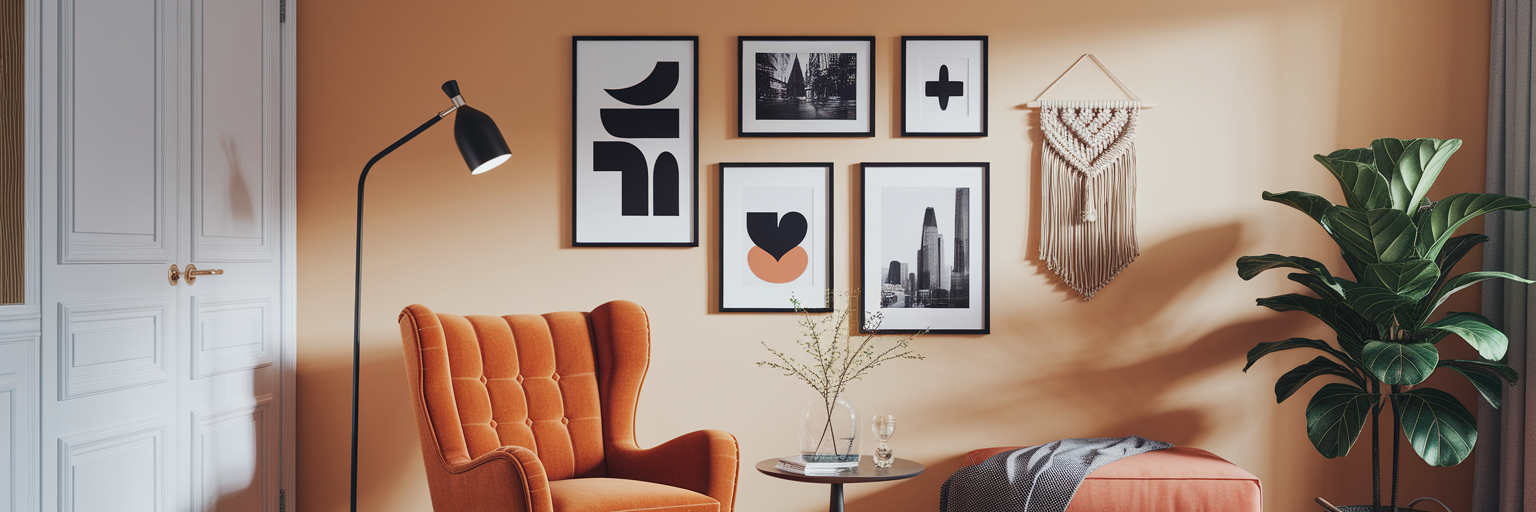 If you believe your home should be a direct reflection of your personality, then these next two styles are for you.
Eclectic design is a highly personal and curated mix of different eras, styles, and colours. It’s not about creating chaos. In fact, the most successful eclectic rooms create harmony through a common thread, such as a consistent colour palette, a repeated texture, or a particular shape that ties all the varied pieces together. It’s storytelling through objects.

Then there is the iconic Mid-Century Modern style, which was popular from the 1940s to the 1960s. It’s defined by its clean lines, organic shapes, and highly functional furniture, like a classic teak sideboard.
The colour palette is distinctive, pairing warm woods with pops of mustard yellow, orange, and teal.

For wall art, an eclectic room is the perfect canvas for a bold gallery wall from our eclectic decor collection, telling your story through a mix of paintings, photos, and textiles.

For a Mid-Century Modern space, I recommend graphic prints with bold colours and abstract shapes to complement the furniture and architecture of the period.

This is a different type of interior design that celebrates individuality.

How to Choose Wall Art for a Calming Interior
Wall art is one of the most powerful and underestimated tools in a calming interior. A single large canvas can set the entire mood of a room, while a carefully curated gallery wall tells a personal story without adding physical clutter. The key is knowing which type of art reinforces the serene atmosphere you are building.
For a calm, neutral interior, opt for prints with a limited palette — muted watercolours, soft monochromes, or abstract pieces in earthy tones all work beautifully. Avoid very busy compositions or bold, high-contrast imagery in bedrooms and living rooms where you want to unwind. Instead, let the art breathe with generous matting or a simple frame.
Subject matter matters too. Nature-inspired imagery — coastal scenes, botanical illustrations, landscape photography — has a well-documented calming effect. If you prefer abstract work, choose pieces with flowing, organic shapes rather than sharp geometric patterns, which can feel energising rather than restful. Browse our coastal wall art collection for serene, nature-inspired options that suit a range of calming interior styles.
Using Lighting to Create a Restful Ambience
Lighting is one of the most powerful — and most overlooked — tools in a serene interior. The top-ranking pages on this topic single out layered, warm lighting as essential, and for good reason: overhead fluorescent light creates visual tension, while layered warmth from floor lamps, table lamps, and candlelight signals to both the brain and the body that it is time to relax.
In practice, this means avoiding a single ceiling light as your only source. Instead, layer three types: ambient light for general visibility, task light for reading or cooking, and accent light to highlight textures or artwork. Dimmers are a low-cost upgrade that transforms the feel of any room instantly.
Natural light matters just as much. Keep window treatments sheer where privacy allows, and position mirrors to bounce daylight deeper into the room. A north-facing room can still feel bright and peaceful with the right combination of pale walls, reflective surfaces, and warm artificial light after dark.
Reducing Clutter and Visual Noise
Every object in a room competes for your attention. The fewer objects there are, the quieter the visual environment feels — and that quiet is at the heart of any truly restful interior. Position 1 on this topic dedicates an entire section to reducing clutter and visual distractions, and it is one of the clearest gaps on this page.
Start with surfaces: a clear coffee table or sideboard immediately makes a room feel larger and more ordered. Invest in closed storage — baskets, ottomans with lids, built-in shelving with doors — so everyday items are accessible but invisible. The goal is not minimalism for its own sake but a deliberate reduction of visual noise so that the pieces you do display can be properly appreciated.
Wall art plays a useful role here. A single well-chosen print or canvas gives the eye a resting place without adding clutter to your surfaces. Choosing one statement piece — rather than many small objects scattered across shelves — is one of the most effective and underrated decorating moves for a peaceful room.
Biophilic Design: Bringing Nature Indoors
Biophilic design — the practice of connecting interior spaces to the natural world — is consistently cited by interior designers as one of the most evidence-backed routes to a calmer home. Research shows that exposure to natural elements, even visual references to nature, measurably reduces cortisol levels and lowers perceived stress.
In practice, biophilic touches include houseplants, natural materials such as wood, linen, jute, and stone, views to a garden or green space, and artwork that references the natural world. Botanical prints, coastal scenes, and landscape photography all bring an element of the outdoors inside without requiring structural changes.
Even small additions make a difference. A trailing pothos on a bookshelf, a linen throw, or a set of botanical wall art prints can shift the atmosphere of a room noticeably. When combined with a soft, nature-inspired colour palette — pale sage, sandy beige, warm white — the effect is compounded.
A Brief History of Interior Design Styles in the UK
The way British homes have been decorated has shifted dramatically across the centuries, and understanding that journey helps explain why so many of today's most popular styles feel familiar and grounded. Georgian and Victorian architecture introduced symmetry, craftsmanship, and a love of natural materials that still influence traditional and transitional interiors today.
The early twentieth century brought modernism — a deliberate rejection of ornate Victorian excess in favour of clean lines and honest materials. The post-war decades of the 1950s, 1960s, and 1970s gave rise to mid-century modern, with its sculptural furniture and optimistic use of colour. By the 1980s, maximalism had its moment before Scandinavian minimalism swept in and reshaped British tastes during the 1990s and beyond.
Today, UK homeowners tend to blend across these eras rather than commit strictly to one period. Knowing where each style came from makes it far easier to mix them with intention — and to choose wall art and decor that feels coherent rather than accidental.
House Beautiful rounds up the most popular interior design styles with real-home photography to help you pinpoint your perfect aesthetic.
Embark on a journey of discovering your home's true potential. Learn how to choose a design aesthetic that brings you joy. Join us as we explore the topic of A Guide to the Different Types of Interior Design for a Calming Home. Click here to uncover more inspiration and tips for decorating your personal sanctuary.
If you're feeling inspired by these different interior design styles, I encourage you to explore more trends and tips on the Content Hub
If you want to see these ideas in action, our Content hub offers plenty of visuals to guide you. Discover inspiring Home decor tips and trends to suit a variety of styles and moods.
- Find the Perfect Prints for Your Living Room
- Current Home Decor Trends Transforming Spaces in 2026
- Home Decor Design Trends for Sustainable Living
I hope this guide to a different type of interior design styles that inspires you to view wall art for living rooms as both a decorative element and a powerful tool for creating a sanctuary tailored to your relaxation needs. Which style are you leaning towards? Let me know—I’d love to hear your ideas!


