

Canvas Paintings for Living Room: Stylish Ideas and Tips
by Mae Osz on Aug 24, 2025
Choosing canvas paintings for your living room is one of the most impactful decisions you can make in home decorating — yet it's also one of the most overlooked. The right artwork doesn't just fill empty wall space; it sets the entire mood of the room, ties your colour palette together, and reflects your personality. Whether you're drawn to bold abstracts, calming landscapes, or curated gallery walls, this guide will help you choose, size, and hang art that genuinely elevates your space.
By Mae Osz | Interior Design Consultant & Home Decor Expert with 12+ years of experience.
Whether you’re starting from scratch or giving your living space a little refresh, I’ll walk you through styles, arrangements, and design tricks that make your walls come alive.
List of Contents
- How to Choose the Right Living Room Wall Art for Your Style
- How to Arrange Wall Art in Your Living Room
- Tips for Matching Paintings with Decor
- Care and Maintenance for Canvas Artwork
- Why Canvas Is a Popular Choice for Living Room Walls
- What Size Canvas Should You Choose for a Living Room?
- Final Thoughts: Choosing Art That Makes Your Living Room Feel Complete
- Choosing a Canvas Painting for Living Room Walls
How to Choose the Right Living Room Wall Art for Your Style
Picking a canvas painting is about so much more than finding something “pretty.” It’s about creating a space that reflects you — your style, your story, and the mood you want to live in every day.

Understanding Emotional Colour Palettes
Colour can completely shift the mood of a room. In fact, studies on colour-emotion associations show that different shades affect how we feel. Green, brown, and orange are warm and comforting, while yellow lifts the spirit with its cheerful energy. If you’re looking for calm, soft blues and muted earth tones are your best friends.
Take a moment to think about what you want your living room to feel like. Is it a peaceful retreat at the end of the day? Or a lively spot for entertaining friends? Use the table below to match colours to the atmosphere you want.
| Colour | Emotional Impact | Best For |
|---|---|---|
| Green, Brown, Orange | Gratitude, warmth | Cosy evenings, reading corners |
| Yellow | Happiness | Lively entertaining spaces |
| Soft Blue | Calm, relaxation | Quiet afternoons |
| Earth Tones | Comfort, serenity | Everyday family living |
| Vibrant Hues | Energy | Social gatherings |
| Metallic Accents | Brightness | Rooms with low natural light |
Matching Art to Room Functionality
The team at Art UK Shop recommend thinking about how your room is used before you choose your art. Living rooms often need to balance relaxation with entertainment, so you might want a piece that works for both.
-
Abstracts spark conversation during social visits.
-
Landscapes bring a peaceful depth to quiet nights in.
-
Bright, sunlit pieces thrive in naturally lit rooms.
-
Lighter, reflective paintings help brighten darker spaces.
Abstract pieces can be full of energy and spark conversation, while landscapes bring a sense of calm. If you’re lucky enough to have lots of natural light, go bold with colours that will pop when the sun hits. If light is limited, choose art with lighter backgrounds or shimmering metallics to brighten the space.
The same principles apply when choosing art for any room — and if you're also considering paper-based options, our guide to prints for living room walls covers sizing, placement, and style pairing in detail.
If you're updating more than one room at a time, our guide to hallway art ideas shows how to carry your chosen style through from the entrance all the way into the living space.
Personal Style and Storytelling
The UNICEF USA art selection guide suggests choosing pieces that speak to you on a personal level. Your living room should feel like you. Maybe a painting reminds you of a special trip, or the colours make you think of home.
Don’t be afraid to mix things up — a modern abstract next to a classic landscape can look amazing. What matters most is that each piece makes you feel something when you see it.

How to Arrange Wall Art in Your Living Room
Arranging canvas art is an art form in itself - a delicate balance of creativity, spatial awareness, and personal expression. The way you display your artwork can dramatically transform your living room’s aesthetic and emotional impact.
Understanding Spatial Composition
The classic “eye-level” rule is a good starting point: hang your artwork so its centre is roughly 145–152 cm from the floor. This makes it comfortable to view and keeps it looking balanced in the room.
For multiple pieces, choose a focal point — one main artwork — and build the rest around it. Imagine your wall as your canvas and your paintings as the brush strokes that bring it to life.

Gallery Wall Techniques
A gallery wall can instantly make your space feel personal and dynamic. Design Sponge suggests starting with one central piece and then adding around it.
Top gallery wall tips:
-
Keep spacing consistent — around 5–10 cm works well
-
Mix sizes and orientations for a lively look
-
Use kraft paper cut-outs to plan before hanging
-
Stick to a colour theme or a connecting element for harmony
Balancing Art with Room Architecture
Architectural Digest advises working with your room, not against it. Large canvases look great above sofas or fireplaces. If you have tall ceilings, vertical arrangements can draw the eye upward beautifully.
A good rule is to make your painting about two-thirds the width of the furniture beneath it — it’ll feel naturally connected instead of “floating.” But remember, rules can be broken if it works for your space.

Tips for Matching Paintings with Decor
The perfect living room feels like everything belongs together — the furniture, the textures, and of course, the art.
Colour Coordination Strategies
I suggest complementing rather than perfectly matching your colours.
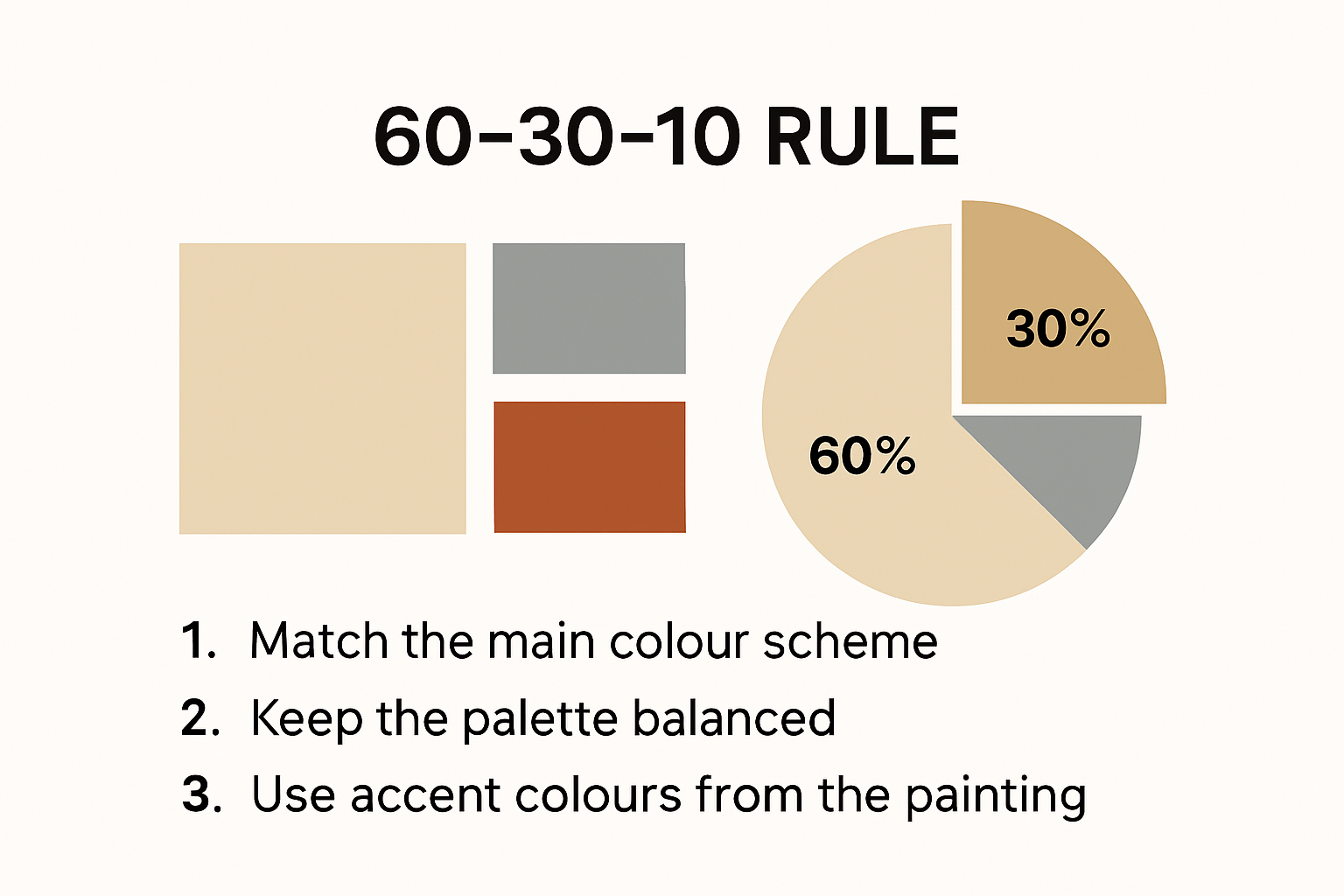
The 60-30-10 rule is brilliant for this:
-
60% main colour (walls, large furniture)
-
10% accent colour (art, cushions, accessories)
If your room is mainly neutral, your canvas can be the 10% — the “pop” that wakes up the space.
For instance, if your living room features neutral grey sofas, a painting with hints of mustard yellow, deep teal, or burnt orange can add depth and visual interest without overwhelming the space. Look for artworks that echo colours already present in your cushions, rugs, or decorative accessories.
Texture and Form Harmony
Texture and form matter just as much as colour...
Smooth, modern furniture? Go for artwork with texture and brush strokes for contrast. Lots of curves in your furniture? A piece with clean lines or geometric shapes will balance it out beautifully.
Spatial Considerations and Mood
Archeworks recommends making sure your art is the right size for your wall — too small looks lost, too big feels overpowering.
As a guide, cover two-thirds to three-quarters of the wall space above furniture. Use large statement pieces for big walls, or group smaller works for variety.


Remember, these are guidelines, not strict rules. The most important aspect is selecting artwork that resonates with you personally. Trust your instincts, be bold in your choices, and create a living room that genuinely reflects your unique style and personality.
Care and Maintenance for Canvas Artwork
Great art deserves great care. With the right protection, your paintings can look amazing for decades.
Environmental Protection Strategies
take care of direct sunlight, which can fade colours and damage canvas.
Keep paintings away from heat sources, maintain a steady temperature (18–22°C), and aim for humidity around 50–55%.
Cleaning and Handling Techniques
The safest cleaning is gentle dusting with a soft, dry paintbrush. Avoid water and cleaning products completely, and always handle by the edges.
If you see flaking paint or sagging canvas, contact a professional conservator immediately.

Long-Term Preservation Considerations
Safety guidelines suggest storing paintings vertically in cool, dry spaces, using acid-free materials, and never stacking them flat. Padded art bags are great for moving them, and if your piece is valuable, consider art insurance.
| Care Strategy | Key Actions |
|---|---|
| Environmental Protection | Avoid direct sunlight; use UV-protective glass; control temperature and humidity |
| Cleaning Techniques | Gentle dusting with soft dry brush; avoid water/cleaners; handle by edges |
| Preservation & Storage | Use acid-free materials; store vertically; keep in cool, dry area; padded storage bags |
| Professional Assistance | Consult conservators if damaged or for valuable/artistic pieces |
Your canvas artwork is more than a decorative element - it’s a personal treasure that captures moments, emotions, and memories. By investing time in proper care and maintenance, you ensure these precious pieces continue to inspire and delight for generations to come.

Final Thoughts: Choosing Art That Makes Your Living Room Feel Complete
Struggling to find the right canvas painting for your living room? The article highlighted how colour psychology, eye-level placement, and harmony with furnishings can make or break your space’s atmosphere. Many readers face frustration when their chosen artwork either feels disconnected from their décor or lacks the emotional warmth they want. Transforming these challenges into satisfaction means picking the right piece and ensuring it truly fits your home’s style and personality.
Discover a curated collection of canvas art that perfectly bridges mood, function, and style at About Wall Art. Enjoy a seamless shopping experience using secure payment options and responsive browsing on any device. Let your living room reflect your story and create the feelings you crave. Visit About Wall Art’s home page and browse our specially selected pieces made to complement every type of décor. Ready for a living space that inspires? Explore and order your ideal canvas painting today.

Why Canvas Is a Popular Choice for Living Room Walls
Canvas has become one of the most popular materials for living room wall art — and for good reason. Unlike paper prints, a stretched canvas has a natural depth and texture that adds dimension to a wall, making artwork feel like an intentional part of the room rather than an afterthought.
Canvas prints are also lightweight, frameless by design, and easy to hang, which means you can rearrange or refresh your space without much effort. They hold colour well over time and are available in a vast range of sizes — from compact accent pieces to oversized statement canvases that anchor an entire wall. For anyone decorating on a budget, canvas art also offers excellent value compared to framed prints of a similar visual impact.
Whether you prefer a single large-format piece or a multi-panel set, canvas suits almost every interior style — from minimalist Scandi rooms to rich, layered maximalist spaces.
What Size Canvas Should You Choose for a Living Room?
Getting the size right is one of the most common challenges when buying unique wall art. A canvas that is too small will look lost on a large wall, while one that is too big can overwhelm a modest space. As a general rule, your canvas should span roughly two-thirds the width of the furniture it sits above — most commonly a sofa or sideboard.
For a standard three-seater sofa (around 200–220 cm wide), a canvas between 120–150 cm wide tends to look well-proportioned. If you prefer a gallery wall, a large anchor piece of at least 60 x 80 cm works well as the centrepiece, with smaller supporting pieces arranged around it.
Ceiling height also matters. In rooms with high ceilings, taller canvases or vertically stacked arrangements help fill the visual space. In rooms with lower ceilings, wider horizontal pieces keep the room feeling open rather than cramped.
Choosing a Canvas Painting for Living Room Walls
If you're searching for a single canvas painting for living room spaces, it's worth knowing that our wall art is designed as coordinated sets of three pieces — and honestly, once you see them together, it's hard to imagine going back to a lone panel. Each set is carefully curated so the colours, tones, and composition flow beautifully across all three pieces, creating that gallery-wall look without the guesswork. Whether your living room is light and airy or rich and moody, there's a style here that will feel made for the space. If you're still finding your feet with styling, our home décor inspiration guide walks you through exactly how to arrange and hang wall art for the best effect. Browse our how to arrange wall art.
Pro Tips…
Visual Inspiration from Our Content Hub
If you want to see these ideas in action, our Content Hub offers plenty of visuals to guide you. Discover inspiring home décor tips and trends to suit a variety of styles and moods.
Here are three blogs you might enjoy:
I hope this guide inspires you to see wall art not just as decoration but as a way to create a sanctuary that feels completely yours.
Which style are you leaning towards?
I’d love to hear your ideas!
Choosing the right canvas for your living room becomes far more satisfying once you understand the colour trends shaping interiors this year — the two decisions work hand in hand.
WATCH: How To Decorate Above Your Sofa - Inspiration and Ideas


