

Understanding Landscape Art Styles: What They Are and Why They Matter
by Mae Osz on Sep 29, 2025
What makes certain landscape art feel instantly calming, and why do so many of us gravitate towards serene nature scenes when choosing unique wall art for our homes? Calm landscapes — whether sweeping countryside vistas, misty mountains, or gentle coastal scenes — have a proven effect on our mood, helping to lower stress and create a sense of quiet in even the busiest spaces. Understanding which art styles produce that feeling, and how to use them effectively in your home, is the key to choosing pieces that genuinely improve how a room feels to live in.
By Mae Osz | Interior Design Consultant & Home Decor Expert with 12+ years of experience.
Have you ever wondered how different landscape art styles can influence not just your walls, but your mood and surroundings?
These artworks are far more than just pretty paintings of nature, hills, or countryside scenes—they’ve shaped cultural perspectives and even influenced how people design their homes and cities for centuries.
But here’s something you might not expect: research shows that landscape art can have a real impact on emotional well-being, helping to reduce stress and lift your spirits.
Think of these styles as emotional maps, quietly guiding not just what we see, but how we feel about the world around us every day.
List of Contents
- Quick Summary
- Why Landscape Art Has Always Been Used to Create Calm
- Key Landscape Art Styles and the Moods They Create
- How to Use Soothing Landscape Art in Your Home
- The Emotional and Aesthetic Impact of Nature-Inspired Art
- Find the Right Peaceful Landscape Art for Your Space
- Choosing Colours in Peaceful Landscape Art for Your Home's Palette
Quick Summary
| Takeaway | Explanation |
|---|---|
| Landscape art styles reflect cultural perspectives. | They serve as visual expressions of how various societies perceive and interact with natural environments. |
| These styles function as historical documentation. | Landscape art captures environmental changes and societal transformations across different historical periods. |
| Emotional resonance is key in landscape art. | Artists convey complex psychological landscapes, evoking feelings of tranquillity, introspection, and connection with nature. |
| Artistic styles influence spatial design significantly. | Landscape art can transform how interior and exterior spaces interact, promoting visual harmony and emotional well-being. |
| Sustainability shapes modern landscape art practices. | Contemporary artists increasingly emphasise ecological sensitivity in their works, advocating for harmonious human-environment interactions. |

What Makes a Landscape Art Style Feel Calm?
A Detailed Exploration
Landscape art styles represent diverse artistic approaches to capturing natural environments, transforming scenery into compelling visual narratives that reflect human perception, cultural perspectives, and emotional experiences. These artistic expressions go beyond mere representation, serving as windows into how different cultures and artists interpret the world around them.
If you're rethinking your walls from top to bottom, our guide to high ceiling wall decor ideas shows how landscape-style prints can anchor even the tallest walls with calm, expansive compositions.
Understanding the Essence of Landscape Art Styles
Landscape art styles are visual storytelling techniques that translate physical environments into aesthetic representations. Artists use various methods to communicate landscape experiences, ranging from hyper-realistic depictions to abstract interpretations that capture emotional landscapes. According to University of Florida’s design publication, landscape design themes demonstrate how visual representations can profoundly communicate environmental and cultural nuances.
Key characteristics of landscape art styles include:
- Capturing natural environments through personal artistic lenses
- Translating geographical features into emotional and visual experiences
- Representing cultural perspectives through scenic representations
Historical and Cultural Significance
Landscape art styles have evolved dramatically across different periods and regions. From traditional Chinese landscape paintings emphasising spiritual connections with nature to European Romantic movements portraying dramatic natural scenes, these artistic styles reflect broader societal understanding and relationships with environments.
Artists approach landscape representations through multiple dimensions:
- Geographical accuracy
- Emotional interpretation
- Cultural symbolism
- Personal artistic vision
Understanding landscape art styles requires recognising them not just as visual records, but as complex cultural dialogues that communicate human experiences, emotions, and connections with natural worlds.
Why Landscape Art Has Always Been Used to Create Calm
Landscape art styles transcend mere aesthetic representation, serving as profound cultural documents that capture human relationships with natural environments, societal transformations, and collective emotional experiences. These artistic expressions provide invaluable insights into historical perspectives, environmental understanding, and cultural consciousness.
Cultural Documentation and Historical Narrative
Landscape art styles function as visual archives, recording environmental, social, and technological changes across different historical periods. Artists become documentarians, capturing landscapes that reflect economic developments, environmental shifts, and human interactions with terrain. According to UNESCO’s Cultural Heritage Research, artistic representations offer critical windows into understanding societal evolution and cultural transformations.
Key aspects of landscape art styles as cultural documentation include:
- Preserving visual records of geographical transformations
- Representing technological and industrial developments
- Reflecting social attitudes towards nature and environment
Emotional and Psychological Significance
Beyond historical documentation, landscape art styles communicate profound emotional landscapes. Artists translate geographical features into metaphorical representations of human experiences, capturing complex psychological states through natural imagery. Landscapes become powerful mediums for exploring themes of isolation, connection, tranquillity, and existential contemplation.
Emotional dimensions of landscape art styles encompass:
- Expressing collective cultural emotions
- Exploring individual psychological experiences
- Communicating spiritual and philosophical perspectives
Global Cultural Dialogue
Landscape art styles facilitate cross-cultural understanding by providing visual languages that transcend linguistic barriers. Different artistic traditions reveal unique cultural perspectives on environmental relationships, demonstrating how diverse societies perceive, interact with, and interpret natural landscapes. These artistic expressions create bridges between cultures, enabling deeper mutual comprehension and appreciation of global environmental diversity.
Key Landscape Art Styles and the Moods They Create
Landscape art styles encompass a rich tapestry of visual techniques, each representing unique approaches to capturing natural environments and human interactions with terrain. These artistic expressions reveal intricate methodologies that transform geographical scenes into compelling visual narratives, communicating far more than simple geographical representations.
Compositional and Technical Elements
Artists employ sophisticated compositional strategies to create depth, perspective, and emotional resonance in landscape art. According to the National Museum of Women in the Arts, landscape artists strategically use background and foreground elements to establish spatial relationships and narrative complexity.
Key compositional characteristics include:
- Manipulating perspective and spatial depth
- Creating visual balance through colour and form
- Utilising geometric and organic design elements
- Establishing focal points within natural scenes
Stylistic Approaches and Interpretations
Landscape art styles range from hyper-realistic representations to abstract interpretations, each offering unique insights into environmental perception. These styles reflect cultural, psychological, and technological contexts, demonstrating how artistic approaches evolve with societal transformations.
Different stylistic approaches encompass:
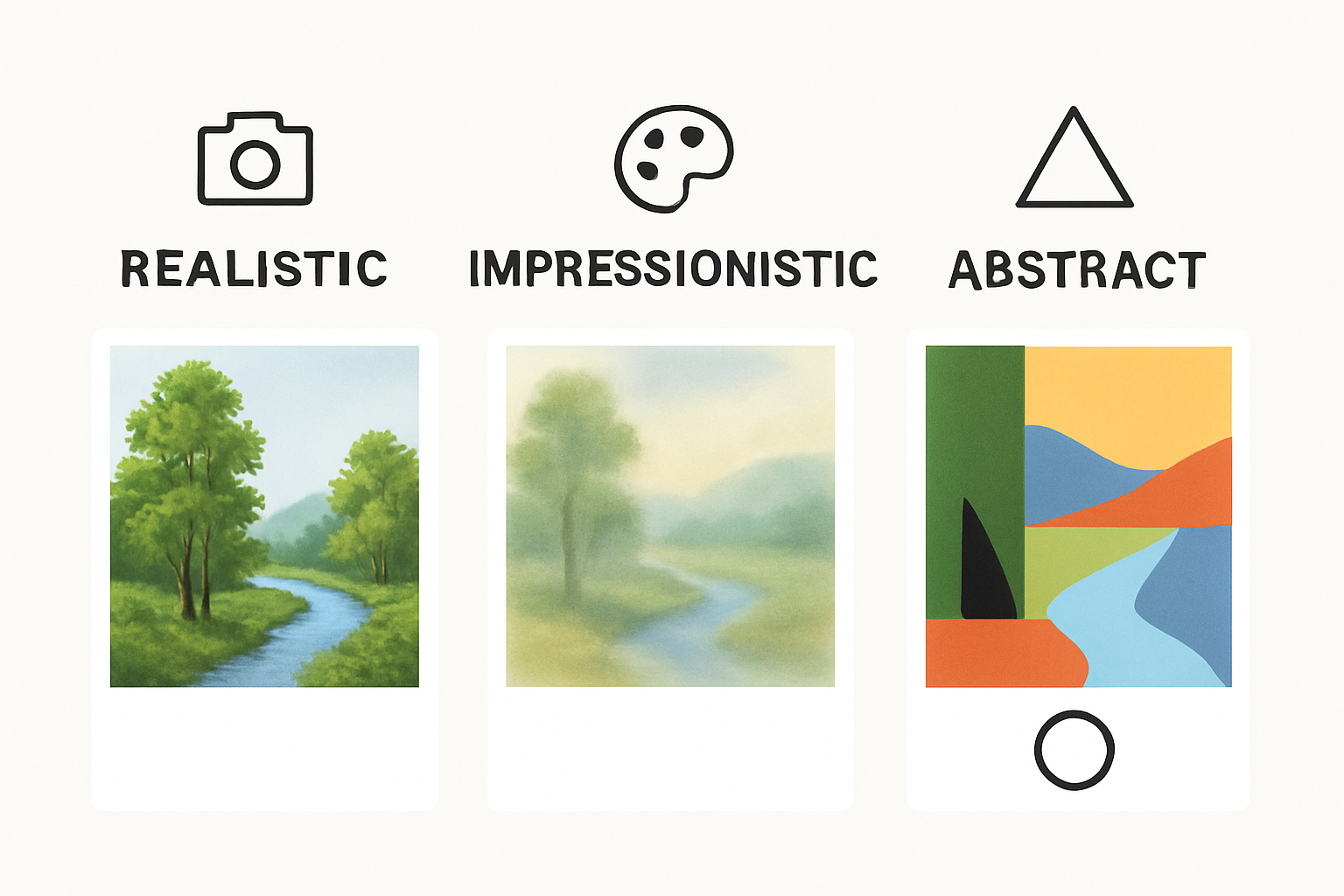
- Realistic documentary-style representations
- Impressionistic emotional interpretations
- Abstract symbolic representations
- Surrealistic reimaginings of natural environments
Below is a table comparing four key stylistic approaches mentioned in the article, highlighting their defining features and cultural relevance.
| Style | Defining Features | Cultural Relevance |
|---|---|---|
| Realistic Documentary | Accurate portrayal of natural environments | Preserves environmental information |
| Impressionistic Interpretation | Emphasises emotion and mood via colour/brushwork | Captures fleeting impressions |
| Abstract Symbolic | Uses shapes and forms to suggest landscape elements | Explores psychological landscapes |
| Surrealistic Reimagining | Transforms nature into dreamlike or imaginary scenes | Invites personal and philosophical reflection |
Technological and Cultural Influences
Landscape art styles are profoundly influenced by technological advancements, cultural perspectives, and artistic movements. From traditional watercolour techniques to digital rendering, artists continuously explore innovative methods to capture environmental experiences, reflecting broader societal changes and technological capabilities.
Technological and cultural dimensions of landscape art include:
- Integration of contemporary digital rendering techniques
- Reflection of environmental consciousness
- Exploration of cultural and geographical diversity
- Representation of human interaction with natural environments
How to Use Soothing Landscape Art in Your Home
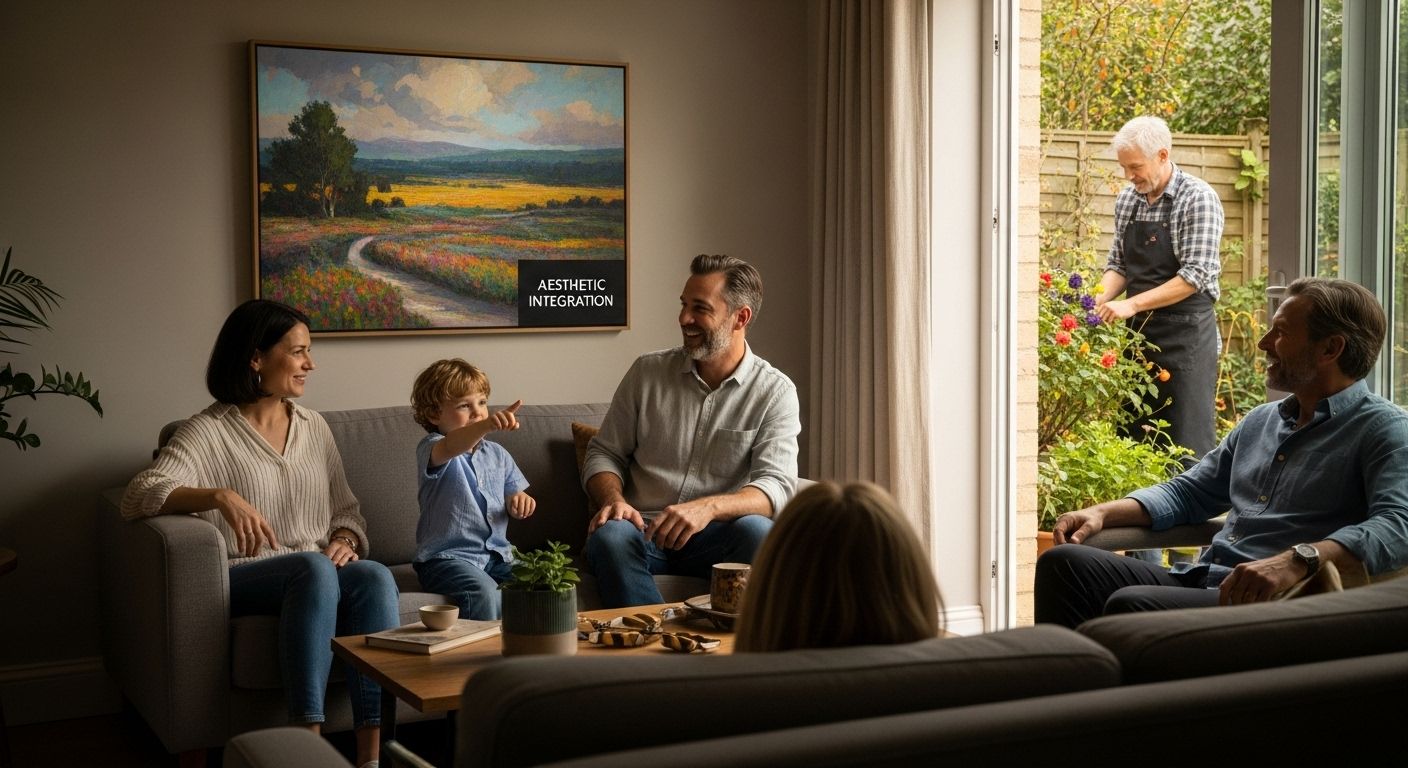
Landscape art styles extend far beyond traditional canvas representations, profoundly influencing how we design, perceive, and interact with interior and exterior environments. These artistic approaches create visual dialogues between built spaces and natural landscapes, transforming architectural and environmental design through aesthetic and conceptual innovations.
Aesthetic Integration and Visual Harmony
Landscape art styles provide powerful design frameworks for creating seamless connections between indoor and outdoor spaces. According to Frederick Law Olmsted’s design principles, landscape design should create environments that offer soothing and refreshing influences, integrating natural elements to enhance spatial experiences.
Key aesthetic integration strategies include:
- Blurring boundaries between interior and exterior spaces
- Creating visual continuity through colour and form
- Incorporating natural elements as design focal points
- Translating landscape art principles into architectural design

Functional and Psychological Impacts
Beyond visual aesthetics, landscape art styles significantly influence spatial functionality and psychological well-being. Design approaches derived from artistic traditions help create environments that support emotional comfort, reduce stress, and promote connection with natural surroundings.
Psychological design considerations encompass:
- Creating sensory-rich environments
- Promoting relaxation and mental restoration
- Establishing visual connections with natural landscapes
- Supporting emotional and cognitive well-being
Sustainable Design and Environmental Consciousness
Contemporary landscape art styles increasingly emphasise environmental sustainability, inspiring design approaches that prioritise ecological sensitivity and harmonious human-environment interactions. These artistic perspectives encourage holistic design thinking that considers environmental impact, resource efficiency, and long-term ecological balance.
Sustainable design principles influenced by landscape art include:
- Integrating native plant species
- Minimising environmental disruption
- Creating energy-efficient spatial configurations
- Promoting biodiversity through design
The Emotional and Aesthetic Impact of Nature-Inspired Art
Landscape art styles represent profound emotional cartographies, transcending visual representation to communicate complex psychological landscapes. These artistic expressions serve as powerful conduits for emotional exploration, enabling viewers to experience nuanced feelings through carefully constructed visual narratives of natural environments.

Psychological and Emotional Resonance
Landscape art styles function as emotional mirrors, reflecting intricate psychological states through visual compositions. According to groundbreaking research on art and emotional processing, different landscape categories evoke distinct emotional responses, revealing how artistic representations can profoundly influence viewers’ psychological experiences.
Emotional dimensions of landscape art include:
- Generating feelings of tranquillity and reflection
- Providing psychological distance and contemplative space
- Triggering memories and personal associations
- Facilitating emotional regulation and stress reduction
The following table summarises major psychological and emotional impacts of landscape art styles as described in the article.
| Psychological Impact | Description |
|---|---|
| Tranquillity and Reflection | Induces calm, inward focus, and relaxation |
| Psychological Distance | Offers contemplative space apart from daily concerns |
| Memory and Association | Triggers personal memories and emotional connections |
| Emotional Regulation | Helps to process and balance feelings, reducing stress |
Aesthetic Experience and Sensory Engagement
Beyond emotional communication, landscape art styles create immersive aesthetic experiences that engage multiple sensory and cognitive pathways. Artists manipulate visual elements like colour, perspective, and composition to craft landscapes that transcend simple representation, inviting viewers into rich, multilayered perceptual journeys.
Key aesthetic engagement strategies encompass:
- Creating depth through layered visual narratives
- Stimulating imagination and interpretative experiences
- Challenging perceptual expectations
- Exploring boundary between representation and abstraction
Therapeutic and Transformative Potential
Landscape art styles possess remarkable therapeutic capabilities, offering viewers opportunities for emotional healing, self-reflection, and psychological restoration. By presenting natural environments through carefully curated artistic perspectives, these visual expressions provide sanctuary, enabling individuals to process complex emotions and find moments of inner peace.

Find the Right Peaceful Landscape Art for Your Space
Are you struggling to find wall decor that genuinely captures the emotional resonance and cultural narrative described in our exploration of landscape art styles? Many readers want more than simple decoration. You want to bring home the calming, uplifting, or thought-provoking energy that meaningful landscape art can create. You also seek a way to connect personal stories and aesthetic harmony in your interior or office, making your environment truly yours.
Discover curated landscape wall art and unlock the visual power of the world’s most beautiful surroundings. Visit About Wall Art today to explore artwork that captures both the historic depth and contemporary emotion discussed in our article. Let your walls reflect your sense of beauty and wellbeing. Do not wait—bring more meaning and serenity into your space now by browsing our latest collections at About Wall Art.

Which Types of Calm Landscape Art Work Best for Different Rooms?
Not every serene nature scene suits every room, and choosing the right style is as much about function as it is about aesthetics. For a bedroom, soft Impressionist meadow prints or misty mountain scenes work especially well — their blurred edges and muted tones signal rest and relaxation. In a living room, a large-scale Romantic landscape or a sweeping coastal vista creates a focal point that encourages conversation and a sense of openness.
For a home office or study, consider minimalist landscape prints with clean horizons and restrained colour palettes; research consistently links nature imagery with improved focus and reduced fatigue. Bathrooms and hallways benefit from smaller botanical or watercolour nature prints that bring a sense of the outdoors into compact spaces without overwhelming them. Whatever the room, the principle is the same: choose a scene that genuinely evokes the feeling you want to experience in that space every day.
Choosing Colours in Peaceful Landscape Art for Your Home's Palette
The colour palette of a landscape print is often more important than the subject itself when it comes to achieving a calm, cohesive look at home. Cool greens, soft blues, warm sandy neutrals, and hazy greys are the tones most strongly associated with relaxation and visual quiet — they mimic the colours found in nature at its most serene, from early-morning fields to still water at dusk.
When selecting a print, hold it against your existing wall colour or furniture swatches if you can. A landscape dominated by sage green reads very differently against warm white than it does against a deep charcoal wall. For a foolproof approach, choose a print whose secondary or background tones echo your room's dominant colour — this creates a sense of harmony that feels intentional rather than accidental. Browse our wall art collections to find landscape prints grouped by colour palette, making it easier to match your existing scheme.
Pro Tips:
Enhance Your Space with Landscape Art
To delve deeper into the impact and integration of landscape art in your living spaces, consider exploring the following articles from the About Wall Art content hub:
-
Choosing the Right Art for Grey Walls Without Making the Room Feel Cold
Discover how to select landscape artworks that add warmth and personality to grey-toned walls, transforming them into inviting spaces. -
What to Do When Your Home Lacks Natural Light: Decorate with Living Room Wall Hangings
Learn how landscape art can simulate natural light and create a sense of openness in spaces with limited daylight.
More About:
The Influence of Landscape Art
For a broader understanding of how landscape art intersects with culture, psychology, and design, consider these external resources:
For a quick and cohesive way to bring Nordic landscape art into your bedroom, our 3 piece picture frame set pairs a Scandinavian-style teal palette across three coordinated prints that work beautifully as a single wall arrangement.
If you're looking for broader home decor inspiration ideas to complement your landscape art choices, our guide covers eight practical approaches — from colour palette planning to incorporating natural textures — that work beautifully alongside serene nature prints.


