

What is Wall Art? A Complete Guide to Transforming Your Space
by Mae Osz on Aug 17, 2025
You might be surprised to learn that what is wall art is a question I hear all the time — and for good reason. Wall art is everywhere, from cosy family homes to sleek city offices. Yet most people don’t realise that properly placed wall art can increase feelings of environmental satisfaction by up to 60 percent. That’s an impressive figure, but the truth is that wall art is about far more than matching cushions or filling empty walls. Its real magic lies in the way it tells personal stories and changes the mood of a room completely.
List of Contents
- What is Wall Art? Defining Its Role
- The Essence of Wall Art: More Than Just Decoration
- The Transformative Power of Visual Expression
- Popular Types of Wall Art Explained
- How to Choose Wall Art for Your Space
- Creative Display Ideas and Tips
What is Wall Art? Defining Its Role
When you ask what is wall art, you’re opening the door to a world of creativity, self-expression, and visual storytelling. It’s not just about decorative elements hanging on the wall; it’s about filling your living environment with pieces that add character, meaning, and atmosphere. Wall art spans countless mediums — from hand-painted canvases and fine art prints to photographic works, tapestries, and three-dimensional installations.

The Essence of Wall Art: More Than Just Decoration
At its core, what is wall art? It’s any visual artwork created to be displayed on walls, and it covers an incredible range of forms. This includes traditional paintings, prints, contemporary photography, sculptural installations, murals, and even fabric hangings. According to the National Library of Medicine, wall art influences far more than how a space looks — it affects how we feel and experience our environment.
Wall art works on both psychological and aesthetic levels. It can reflect your personal taste, tell a story, create a visual focal point, and completely shift the mood of a room. Think of a tranquil seascape in the bedroom, an abstract conversation piece in the lounge, or an inspiring quote in a home office — each has its own emotional impact.
The Transformative Power of Visual Expression
The beauty of wall art lies in its ability to transform spaces instantly. Once you understand what is wall art, you’ll see how a blank wall can become a canvas for your own personality and life experiences.
A carefully chosen print can completely change the feel of a room: a vibrant contemporary piece might energise a minimalist space, while a black-and-white photograph could bring sophistication to a modern interior. One of the reasons wall art is so versatile is that it suits any style, from rustic farmhouse to sleek industrial.

Best of all, it’s accessible. You don’t need to be a collector or spend a fortune. From affordable prints to one-of-a-kind artworks, there are endless ways to curate a space that feels authentically yours.
Popular Types of Wall Art Explained
When exploring what is wall art, it helps to know the different styles available and what they bring to a space.
Traditional Art Forms: Timeless Elegance
Traditional wall art, such as oil paintings, watercolours, and acrylic works, has been a part of human culture for centuries. Rich textures, careful brushwork, and classic techniques bring a sense of heritage and craftsmanship. Oil paintings add depth and sophistication, watercolours bring a light, airy feel, and acrylics deliver bold, vibrant statements.
Contemporary and Modern Wall Art Styles
Modern approaches include digital prints, photography, abstract compositions, and minimalist designs. Photographic wall art is incredibly versatile — from black-and-white urban shots to colourful nature landscapes — and often has a personal connection. Abstract works bring energy and intrigue, especially in pared-back interiors.
Emerging and Innovative Wall Art Techniques
Innovative styles push the boundaries of what is wall art. Think mixed media, metal wall sculptures, laser-cut designs, and 3D installations. These can add tactile elements and visual depth that traditional flat artworks can’t. Digital art has also grown in popularity, allowing artists to create intricate, reproducible designs that can be printed on various surfaces.
| Type of Wall Art | Key Characteristics | Typical Materials/Techniques |
| Traditional | Classic, timeless elegance, often technique-focused | Oil, watercolour, acrylic, canvas |
| Contemporary/Modern | Abstract, minimalist, photographic, digital | Photography, digital prints, mixed media |
| Innovative/Emerging | Experimental, textured, three-dimensional | Metal, fabric, wood, laser cut designs |
How to Choose Wall Art for Your Space
When deciding what is wall art for your own home, think about each room’s purpose and how you want it to feel.
Living rooms shine with bold, statement pieces that spark conversation.

SHOP HERE
Bedrooms benefit from serene, calming designs like soft landscapes or minimalist abstracts.

SHOP HERE
Home offices can be energised with motivational or dynamic artwork.

SHOP HERE
Proportion is key. Above furniture, aim for two-thirds to three-quarters of its width, hung about 15–20 cm above the top. And colour matters — you can choose to complement your existing palette for harmony or contrast it for impact.
| Principle | Guidance |
|---|---|
| Room-Specific Selection | Match art to the function and feel of the room |
| Proportions & Placement | Cover 2/3–3/4 of furniture width; hang 15–20 cm above |
| Gallery Wall Arrangement | Use multiple smaller pieces for large walls |
| Colour Coordination | Complement or contrast for harmony or energy |
| Personal Connection | Choose art that resonates emotionally |
Proportions and Placement Strategies
When it comes to styling a room, proportions matter just as much as the art itself. Interior design professionals often highlight that the size and placement of artwork can make or break the overall balance of a space. If you’re hanging art above a piece of furniture, a good rule of thumb is to choose artwork that spans roughly two-thirds to three-quarters of the furniture’s width. This ensures a composition that feels intentional and visually harmonious.
For the best effect, position the bottom edge of the artwork about 15–20 cm above the top of the furniture. This small but important detail creates a visual link between the artwork and the items beneath it, making everything feel like part of a unified design. On expansive walls, you might consider a gallery wall arrangement made up of multiple smaller pieces. This approach adds depth, rhythm, and personality, while allowing you to mix sizes, frames, and styles.
Colour Coordination and Aesthetic Harmony
Choosing colours for your wall art isn’t just about matching what you already have — it’s an opportunity to bring the whole space together. Colour coordination experts suggest two main approaches: complementing your current palette or creating contrast for a bolder look. For example, picking artwork that features one or two accent colours already in the room can result in a cohesive, well-thought-out design.
On the other hand, selecting pieces in shades that stand out from your existing scheme can inject energy and visual drama. This contrast can help prevent the room from feeling too uniform or predictable. Keep in mind the psychological effects of colour — warm tones such as reds and oranges often create vibrancy and warmth, while cooler tones like blues and greens can promote a sense of calm.
Most importantly, remember that wall art is personal. While design principles offer a useful starting point, the pieces you choose should speak to you and reflect your personality. Trust your instincts, experiment with arrangements, and allow your walls to tell your story through a carefully curated mix of shapes, colours, and textures.
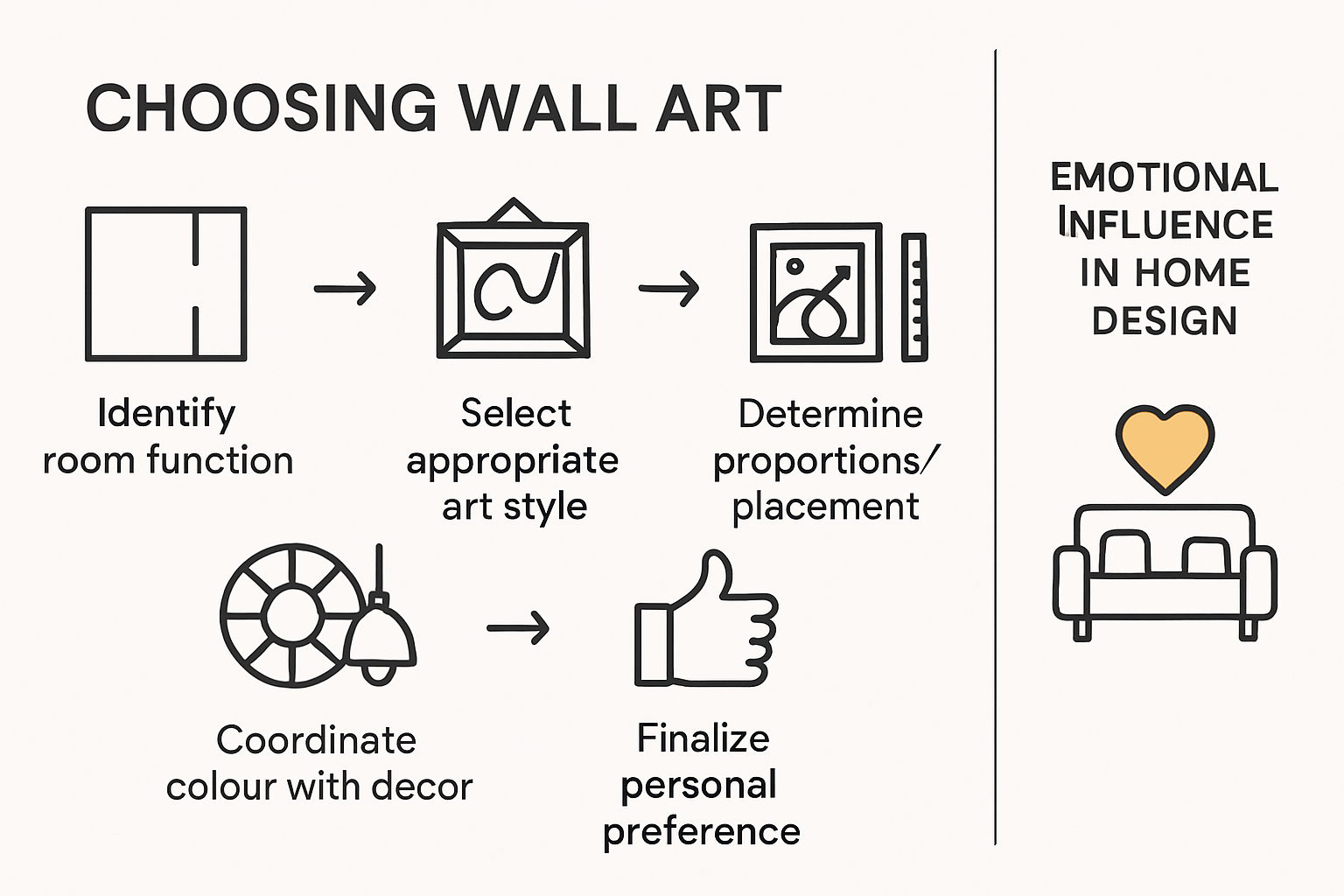
Choosing wall art involves considering several practical guidelines. The table below outlines essential tips mentioned in the article for selecting, placing, and coordinating wall art in your space.
| Principle | Key Guidance |
| Room-Specific Selection | Match art to the room’s function and emotional needs |
| Proportions & Placement | Cover 2/3 to 3/4 of furniture width; hang 15-20 cm above furniture |
| Gallery Wall Arrangement | Use multiple smaller pieces for larger walls; mix sizes and types |
| Colour Coordination | Complement or contrast with room palette for harmony or impact |
| Personal Connection | Choose art that resonates emotionally and reflects your personality |
Creative Display Ideas and Tips

Once you understand what is wall art, you can play with creative display techniques.
Gallery Wall Techniques and Strategies
If you’ve ever looked at a blank wall and thought, “It needs something…”, a gallery wall might be the perfect answer. It’s one of my favourite ways to bring personality into a room because it’s all about you — your style, your memories, and your creativity. The beauty of this approach is that there are no strict rules; it’s a chance to mix different art styles, frame types, and even unexpected objects to create a display that evolves over time.
To get started, think about variety. Play with different artwork sizes to keep the eye moving and add interest. You could mix photographs with prints, paintings, or even tactile pieces like mirrors and decorative plates. If you prefer order, a symmetrical arrangement will give you that clean, structured look. But if you’re after something more relaxed and modern, an asymmetrical layout can feel wonderfully fresh and spontaneous.
Colour plays a big part too. You might choose pieces that share a complementary palette for a soft, harmonious look. Or you could go bold and create contrast for a more energetic feel. One little trick I love is having a unifying element — perhaps the same frame colour, a recurring theme, or similar subject matter. It ties everything together without making it too matchy-matchy.
Innovative Placement and Styling Approaches
Who says art has to hang perfectly on the wall? Lean a large piece casually against it for a laid-back, modern vibe. Or use floating shelves to layer different artworks — this not only adds depth but also makes it easy to swap things around whenever you fancy a change.
And don’t overlook spaces you might usually ignore. Hallways can become inviting art walkways, staircases are brilliant for creating a sense of movement, and even kitchens and bathrooms can be unexpected but wonderful spots for a striking piece.
Thematic and Contextual Display Strategies
Themes can give your display a story. If you love travel, imagine a wall filled with maps, photos, and little treasures from your adventures. If you’re passionate about a certain art movement or colour palette, curate your wall around that idea. In workspaces, motivational quotes or industry-inspired imagery can boost the mood and set the tone for your day.
The best thing to remember? Your wall art doesn’t have to be static. Think of it as a living collection you can refresh, rotate, and add to as your life changes. The most captivating walls are the ones that tell your story — full of the moments, memories, and styles that make you feel truly at home.
Pro Tips…
Visual Inspiration from Our Content Hub
If you want to see these ideas in action, our Content hub has plenty of visuals and styling guides.
Related blogs you’ll love:
I hope this helps you see what is wall art as so much more than decoration.
It’s about making your home feel personal, intentional, and alive.


