

Zen Decor Ideas: Calm & Serenity in Your Living space
by Mae Osz on Mar 06, 2023
What would it feel like to walk into a room that instantly quietens your mind? Zen decor ideas are rooted in the Japanese philosophy of simplicity, balance, and intentional living — and the good news is you don't need to redecorate from scratch to achieve that sense of calm. A few considered changes to your colour palette, materials, and layout can transform any room into a peaceful retreat you genuinely look forward to coming home to.
By Mae Osz | Interior Design Consultant & Home Decor Expert with 12+ years of experience.
In today's fast-paced world, it's important to create a peaceful and relaxing environment in our homes. One way to achieve this is by incorporating Zen decor ideas into your interior design. Zen decor is all about creating a calming and tranquil space that will surely promote a sense of serenity and relaxation.
List of Contents
- How to create a Zen-inspired living space
- 1. Declutter Your Space
- 2. Use Neutral Colours
- 3. Incorporate Natural Materials
- 4. Serenity in Your Living Space: Create a Cosy Seating Area
- 5. Add Plants
- 6. Use Soft Lighting
- Creating a Zen living room: where to start
- Earthy colours for a Zen atmosphere
- Let natural light lead
- Smart storage for a clutter-free space
- Zen-inspired unique wall art: choosing the right pieces
How to achieve a calm and peaceful living space
1. Declutter Your Space
The first step to achieving a Zen-inspired living space is decluttering your surroundings. A cluttered space can indeed lead to a cluttered mind, hindering relaxation and promoting stress. Start by removing unnecessary items and organising your belongings — then consider anchoring the space with meaningful art such as a Japanese Sakura print, which reinforces the Zen values of simplicity and presence.
For more on how wall art choices influence the mood of a room, see our guide to calming wall art for a relaxing bedroom.
You can use storage boxes or baskets to keep things tidy and hidden. You can create a spacious and calming environment by keeping only the essentials. ( Here is a great guide on how to declutter your space to improve creativity! 🤩 )

2. Use Neutral Colours
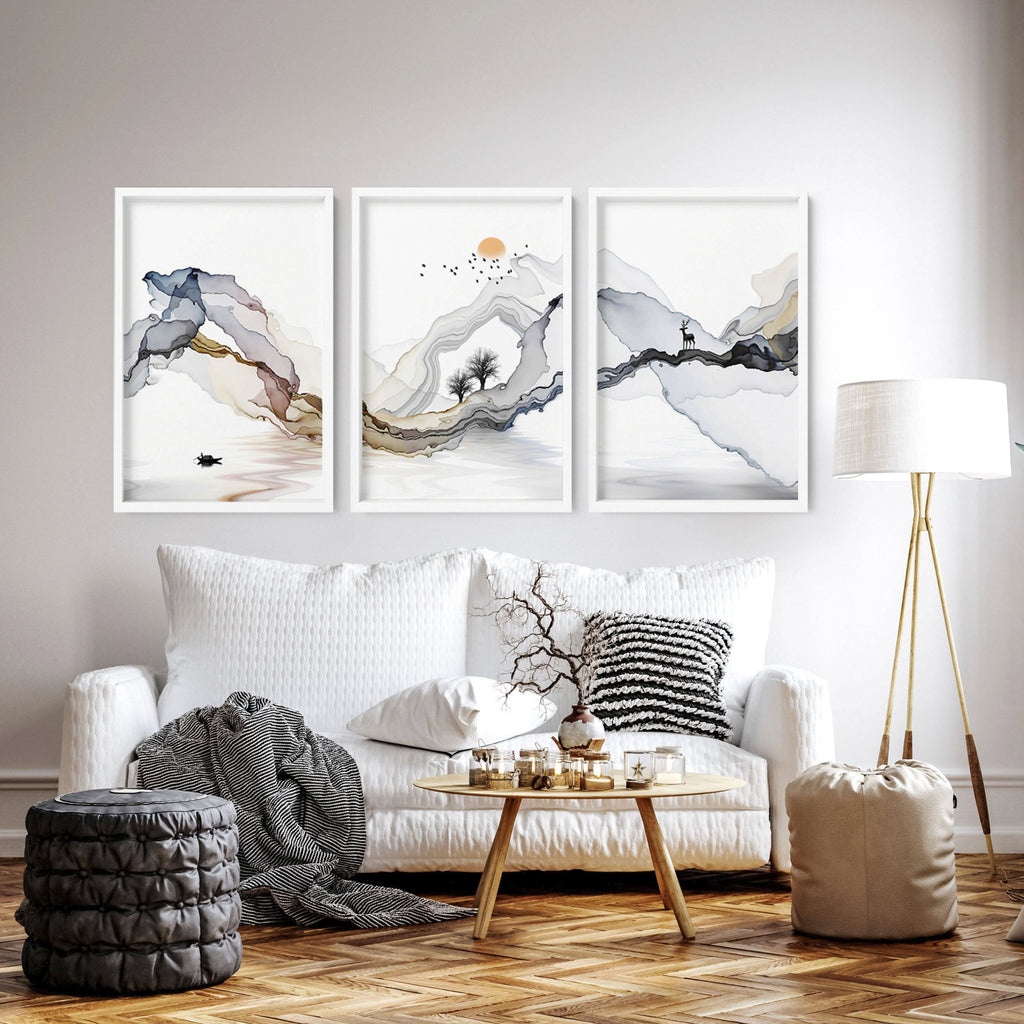
Zen home decor is all about simplicity and minimalism, and neutral colours are indeed the perfect choice for this look. Shades of white, beige, and grey can create a serene atmosphere and provide a blank canvas for adding natural elements. These colours are versatile, so you can easily change your decor without repressing your walls.
3. Incorporate Natural Materials
Nature plays a significant role in Zen home decor, so incorporating natural materials into your living space is essential. If you'd like to broaden your approach beyond Zen principles, our full guide to asian home decor ideas covers Japanese, Chinese, Korean, and Southeast Asian styles in one place. You can add natural elements such as bamboo, wood, or stone to bring the outside in. These materials can be used for furniture, flooring, or decor accessories like vases or picture frames.
4. Serenity in Your Living Space: Create a Cosy Seating Area
A cosy seating area is a vital aspect of a Zen-inspired living space. You can create a comfortable seating area with floor cushions or a low-profile sofa. Add a few throw pillows in natural colours and textures to create a warm and inviting atmosphere.
You can also use a shoji screen or room divider to create a private and intimate space for relaxation. If you want to take this further into a dedicated mindfulness space, our guide to decorating a yoga studio with spiritual home decor covers everything you need.

5. Add Plants
Plants add a touch of nature to your living space and provide health benefits such as purifying the air and reducing stress levels. You can choose low-maintenance plants such as succulents or bamboo to add a Zen-inspired look to your living space. You can also use a few larger plants as focal points in your room.

6. Use Soft Lighting
Lighting plays a crucial role in creating a relaxing atmosphere. Soft lighting can create a warm and cosy ambience, while harsh lighting can be disruptive and cause stress. Use soft lightings such as floor lamps or pendant lights to create a tranquil environment. You can also use candles or natural light to add to the Zen-inspired look.
Creating a Zen living room: where to start
The living room is usually the best place to begin when bringing Zen principles into your home. Unlike the bedroom, it is a shared space — so achieving calm here has an impact on everyone who uses it. Start by identifying the dominant source of visual noise: is it mismatched furniture, too many decorative objects, or a lack of cohesive colour? Address that single issue first before introducing new elements.
Earthy, grounded tones work especially well in a Zen living room. Think warm whites, stone greys, soft terracotta, and deep sage — colours that echo the natural world rather than compete with it. Pair these with low-profile furniture that keeps sightlines open and makes the room feel more spacious than it actually is.
Wall art plays a surprisingly important role in a Zen-inspired living room. A single, considered piece — such as a Japanese landscape or botanical print — anchors the room without adding clutter. The key is restraint: one or two meaningful pieces rather than a gallery wall.

Following these principles, you can create a serene, calming living space that genuinely reduces stress and promotes relaxation.
Earthy colours for a Zen atmosphere
Colour is one of the fastest ways to shift the mood of a room. In Zen-inspired interiors, the palette is drawn directly from nature: unbleached linen, warm sand, weathered stone, and muted forest greens. These tones share a low saturation that prevents any single surface from demanding attention — which is precisely the point.
If your walls are currently white, try warming them with an off-white or soft greige. If you already have neutral walls, introduce earthy colour through textiles — a chunky wool throw in oat, a jute rug, or terracotta cushion covers. Layering these tones adds depth without visual clutter, keeping the space feeling intentional rather than bare.

Let natural light lead
Natural light is one of the most powerful — and most underused — tools in Zen home design. Where possible, keep window treatments light and sheer so that daylight can flood in freely throughout the day. Net curtains in linen or voile diffuse harsh midday sun into a soft, even glow that feels genuinely calming.
If your room has limited natural light, position mirrors opposite or adjacent to windows to reflect what light there is. Keep windowsills clear of clutter so nothing blocks the flow. In the evenings, transition to warm-toned bulbs (2700K–3000K) in floor lamps or pendant fittings to maintain the soft, low-stimulation atmosphere that Zen interiors rely on.
Smart storage for a clutter-free space
In a Zen-inspired interior, storage is not an afterthought — it is a design decision. Visible clutter is one of the biggest barriers to achieving a calm home, yet most decluttering advice stops at removing items rather than thoughtfully housing them. The solution is storage that blends seamlessly with your decor: lidded baskets in natural rattan, low sideboards in warm oak, or built-in shelving where everything has a fixed, intentional place.
The rule of thumb is simple: if it doesn't belong on display, it belongs behind a door. This applies to cables, remote controls, magazines, and anything else that accumulates on surfaces. Keeping surfaces clear — even just one or two — immediately raises the sense of calm in any room.
Remember to keep things simple, layer in natural elements, and lean on neutral tones to achieve the perfect Zen-inspired aesthetic.
Thank you for reading. We hope these tips help you create a calm, serene living space that promotes genuine relaxation and well-being.
Zen-inspired wall art: choosing the right pieces
Wall art is one of the most personal — and most impactful — decisions in a Zen-inspired room. The goal is not decoration for decoration's sake but artwork that quietly reinforces the feeling you want the room to hold. Japanese landscape prints, botanical illustrations, abstract ink wash paintings, and Sakura art all work well because they draw the eye gently rather than demanding it.
When selecting a piece, consider the scale of your wall and resist the urge to fill every inch of it. A single large-format print or a carefully arranged set of two or three framed pieces in matching frames and a consistent tonal palette will always feel more considered than a densely hung gallery wall. Neutral or natural wood frames complement the organic quality of Zen interiors far better than ornate or metallic alternatives.
Meaningful imagery matters too. Art that reflects transience, nature, or stillness — core themes in Japanese aesthetic philosophy — deepens the atmosphere of a room in a way that purely decorative patterns cannot. Our collection of Zen and Japanese-inspired wall art prints is a good place to start if you are looking for ready-framed options that work straight out of the box.
WATCH: 13 Psychology-Backed Ideas for a Relaxing Home (Architect Explains)


