

Japandi Home Decor: A Calm and Minimal Blend of East Meets West
by Mae Osz on Dec 06, 2025
What would it feel like to come home to a space that instantly quietens your mind? Japandi home decor answers that question by marrying the restraint of Japanese minimalism with the cosy warmth of Scandinavian design — two philosophies that, together, create rooms that are beautiful precisely because they are unhurried. It is a style built on natural materials, honest craftsmanship, and a genuine respect for empty space, and it translates remarkably well to the kinds of homes most of us live in across the UK.
By Mae Osz | Interior Design Consultant & Home Decor Expert with 12+ years of experience.
Have you ever wished your home could feel like a peaceful retreat after a busy day? Japandi home decor might be exactly what you need.
This elegant fusion of Japanese minimalism and Scandinavian hygge creates spaces that are both calm and cosy.
In this blog, I’ll guide you through the principles of Japandi design and show you how to curate a serene home with intentional choices in furniture, unique wall art, colours, textures, and even lighting.
Whether you’re decorating a cosy flat in London or a spacious UK home, these tips will help you achieve that perfect balance of style and tranquility.
List of Contents
- What Is Japandi Design? The Core Principles Explained
- Crafting Your Japandi Colour Palette and Materials
- Choosing Furniture and Arranging Your Space
- The Role of Wall Art in Japandi Home Decor
- Mastering Light and Atmosphere
- Practical Steps to Introduce Japandi Style
- Pro Tips for a More Authentic Japandi Space
- Bringing Nature Indoors: Plants and Biophilic Touches

What Is Japandi Design? The Core Principles Explained
To truly appreciate this style, it helps to understand the philosophy behind it. It’s more than just a look; it’s a way of thinking about how we live in our spaces.
The beauty of Japandi interior design homes are adopting is that it feels intentional and personal, never sterile.
Simplicity and 'Wabi-Sabi'
From Japan, we borrow the concept of 'wabi-sabi', which is all about finding beauty in imperfection and transience. Think of a beautifully aged wooden bowl or a handmade ceramic mug that isn't perfectly symmetrical.

In your home, this translates to uncluttered spaces that allow each item to breathe. It’s about appreciating things that have a story, rather than striving for flawless, showroom perfection.
Our teal 3 wall art set with its Japanese landscape illustration is a natural fit for a Japandi-styled room.
Functionality and 'Hygge'
From Scandinavia, we get 'hygge'—that feeling of cosiness, comfort, and contentment. This principle ensures that a Japandi home is never cold or stark.

Every piece of furniture and decor should be functional and contribute to a feeling of well-being. A soft woollen throw, a comfortable armchair, and warm lighting are just as important as clean lines.
A great place to start is with our black and white japanese art set of three prints — they embody the wabi-sabi principle beautifully, with a stripped-back monochrome palette that sits perfectly in any Japandi scheme.

A Deep Respect for Craftsmanship
Both cultures share a profound respect for craftsmanship — something we explore in even more detail in our dedicated guide to decorating with the Japandi trend. This means choosing quality over quantity every time.

Instead of filling your home with mass-produced, disposable items, the focus is on well-made pieces that are built to last. Investing in furniture made from solid wood or decor featuring natural materials is central to an authentic Japandi interior.

Exploring pieces that embody this philosophy, like our curated Japandi collection, can be a great starting point.
Crafting Your Japandi Colour Palette and Materials

The colour palette is the secret to the style's serene atmosphere. It’s all about creating a calm backdrop that allows textures and forms to stand out. This is one of my favourite parts of creating a Japandi-inspired space because it’s so intuitive and soothing.
One of the easiest starting points for a Japandi room is a coordinated set of pictures for living room wall in black and white — they bring the balance and restraint that sits at the heart of the style.
The Neutral Foundation
The core of the palette is built on muted, natural tones. Think of colours like oatmeal, stone, cream, and warm, earthy whites.

These shades create a sense of light and space, which is especially helpful in many UK homes that might not be flooded with sunlight year-round.
These colours form a canvas for the rest of your design. If you're looking for art to match this feel, you can easily browse our gallery by colour scheme to find the perfect neutral pieces.
Introducing Contrast and Depth
A purely neutral room can sometimes feel a little flat — and if you want to go deeper on this, our minimalist living decor tips explore exactly how to add warmth without clutter. Japandi design cleverly avoids flatness by introducing subtle, rich accents drawn from nature. These are often drawn from nature, such as the deep grey of charcoal, the dark green of a forest, or a touch of earthy terracotta.
A darker wood tone or a single black metal lamp can provide a grounding contrast that adds sophistication without disrupting the calm.

The Importance of Natural Materials
Texture is everything. The tactile nature of different surfaces is what brings the space to life and adds that essential layer of warmth.

Mixing materials is encouraged, as it creates visual interest and a sensory experience. The interplay between rough and smooth, soft and hard, is vital for achieving a genuine Japandi atmosphere.
Key Materials in Japandi Design
| Material Type | Examples | How to Use in Your Home |
|---|---|---|
| Light Woods | Oak, Ash, Maple, Beech | Furniture, flooring, simple picture frames |
| Dark Woods | Walnut, Stained Oak | Accent furniture, decorative trays, statement pieces |
| Natural Textiles | Linen, Cotton, Wool, Jute | Curtains, cushions, throws, rugs |
| Raw Materials | Stone, Bamboo, Rattan, Paper | Vases, lighting fixtures, decorative objects, planters |
Choosing Furniture and Arranging Your Space
In a Japandi home, furniture isn't just for filling a room; each piece is chosen with intention and purpose. The layout is just as important as the items within it, creating a space that feels both functional and freeing. This is a core principle of Japandi home decor.


Clean Lines and Low Profiles
Furniture typically features simple, clean silhouettes without ornate details. Think of low-slung sofas, simple platform beds, and uncluttered sideboards. This lower profile helps to create a sense of openness and connection to the ground, making ceilings feel higher and rooms feel more spacious.

When looking for pieces for your main living area, focusing on this style can instantly set the tone, and you can find complementary items in collections like our living room decor.
Mindful Spacing and Negative Space
The Japanese have a concept called 'Ma', which refers to the space between things. In design, this means the empty or 'negative' space around your furniture is just as important as the furniture itself. I always advise clients to resist the urge to fill every corner. By leaving some areas open, you create a better flow and a more restful atmosphere. It allows each piece to be appreciated individually.
The Role of Wall Art in Japandi Home Decor
As someone who lives and breathes wall art, I believe this is where you can add a truly personal touch to your Japandi space.

Art isn't an afterthought; it’s a key, intentional element that should harmonise with the room's overall feeling.
These are some of my favourite minimalist home decor ideas for art. For an easy way to bring that Japandi calm into your living room walls, our set of three framed art work prints in soft lavender and green is a natural fit for the style.
A great place to start is our japanese wall art set of 3 — a contemporary triptych with a striking lime and greyscale palette that fits perfectly within the Japandi aesthetic of bold simplicity.
If you're looking for a print that embodies this perfectly, our cherry blossom wall art set of three brings that same Japandi calm — clean lines, a soft grey and coral palette, and a botanical subject that feels right at home in this style.
For the bedroom specifically, our mens bedroom art set of three monochrome Japanese-inspired prints is a strong choice for anyone building a Japandi-inspired space.
Our set of three ethereal Japanese landscape prints is a perfect example — browse our zen wall art to see how this trio can anchor a Japandi living room with real calm and intention.

The 'Less is More' Philosophy
Forget busy gallery walls. In Japandi design, the approach to art is 'less is more'. It’s better to choose one or two significant pieces that you truly love and give them the space to shine.

A single, large-scale artwork can act as a focal point, creating impact without adding clutter.
What to Look For in Japandi Wall Art
When selecting art, look for pieces that echo the core principles of the style. Here are a few things I suggest keeping an eye out for:
- Abstract prints with simple lines: Look for bold, simple shapes and brushstrokes.

- Nature-inspired motifs: Think of botanical line drawings, mountain landscapes, or water patterns.

- Pieces with subtle textures: Art printed on textured paper or canvas adds a tactile quality.

- Neutral palettes: Art featuring shades of beige, grey, black, and white will blend seamlessly. Our collection of minimalist art prints is a great place to find inspiration.
Our set of three Japanese monochrome prints is one of the simplest accent wall ideas for bedroom spaces that captures the Japandi spirit perfectly — calm, intentional, and beautifully understated.

Framing and Placement
How you frame and hang your art is crucial. Opt for simple, thin frames in natural wood or black. As for placement, don't be afraid to be unconventional. Hanging a piece slightly off-centre above a sofa or console table can create a more dynamic and interesting look. Thoughtful placement is what completes the Japandi home decor look.
Mastering Light and Atmosphere
Light is perhaps the most important decorating tool in Japandi home decor. The way a room is lit can completely change its mood, transforming it from a functional space into a warm and inviting sanctuary. It’s all about balancing brightness with softness.
Maximising Natural Light
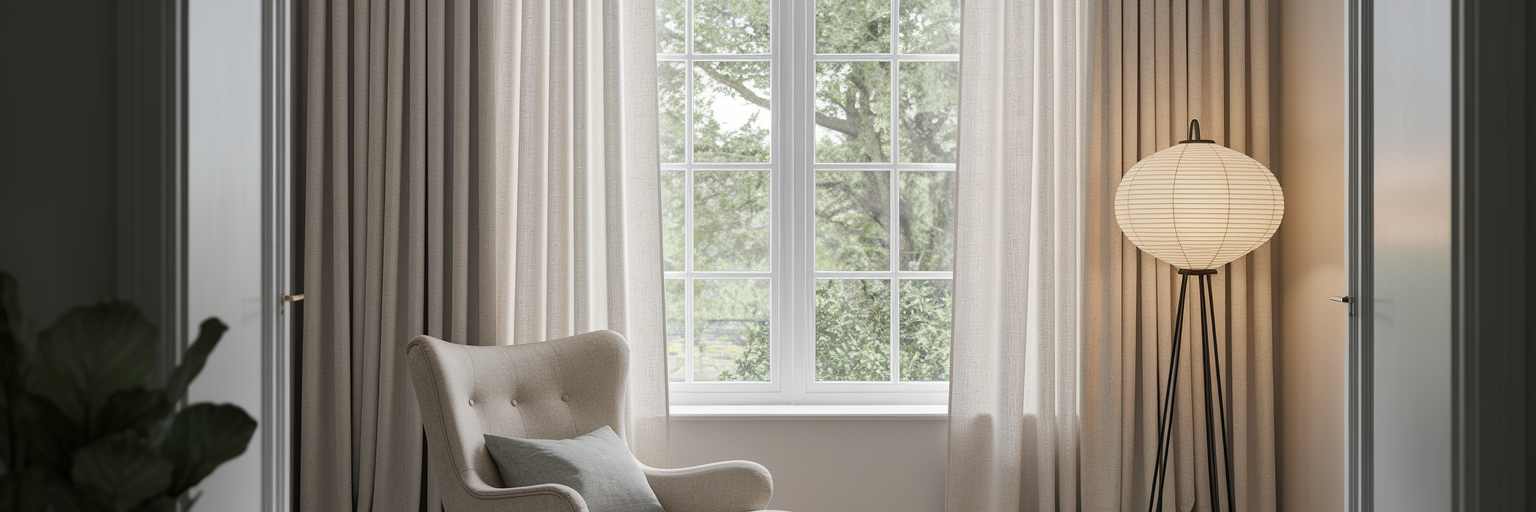
During the day, the goal is to let in as much natural light as possible. This is especially important in the UK, where daylight can be a precious commodity. I recommend swapping heavy curtains for sheer linen curtains that diffuse light beautifully without blocking it. Placing a large mirror opposite a window is another simple trick to bounce light around the room and create an illusion of more space.

Creating a Warm Glow
In the evenings, the focus shifts to creating a soft, warm atmosphere. Avoid harsh overhead lighting. Instead, use a layered approach.
Ambient light can come from beautiful paper or fabric pendant lamps.

Task lighting, like a simple floor lamp next to an armchair, provides focused light for reading.

Finally, accent lighting from small table lamps on sideboards or shelves adds a cosy, intimate glow.

Practical Steps to Introduce Japandi Style
 Adopting a new style doesn't have to be overwhelming or happen overnight. I always suggest treating it as a gradual, mindful process of making small, intentional changes. Here are a few simple steps to get you started.
- Start with Decluttering: This is the absolute foundation of Japandi home decor. Go through your space and remove anything that doesn't serve a purpose or bring you joy. A good rule to follow is the 'one in, one out' principle: for every new item you bring into your home, let one go.

- Introduce Natural Textures: This is an easy and affordable way to begin. Swap out synthetic cushion covers for ones made of linen or cotton. Add a small jute rug to your entryway or a beautiful ceramic vase to a shelf. These small touches make a big difference.

- Invest in a Single Statement Piece: Instead of trying to change everything at once, focus on one key item. This could be a beautiful piece of minimalist wall art, a well-made wooden side table, or a sculptural floor lamp. This single piece can act as an anchor for your new Japandi home decor scheme and inspire future choices.

Japandi vs Minimalism vs Scandi: What's the Difference?
If you've been browsing interiors online, you may have seen Japandi, minimalism, and Scandinavian style used almost interchangeably. They share DNA — neutral palettes, natural materials, clean lines — but they are not the same thing, and understanding the differences will help you make more confident choices for your home.
Pure minimalism pushes towards zero decoration. It values function above almost everything else and can tip into feeling sparse or even cold. There are no softening concessions to comfort for its own sake.
Scandinavian design prioritises cosiness (hygge) and practicality. It allows pattern, playful colour accents, and a slightly warmer, more relaxed atmosphere than strict minimalism.
Japandi sits at the intersection. It takes Scandi warmth and layered textures, then strips them back with Japanese restraint and the wabi-sabi acceptance of natural imperfection. The result is quieter than Scandi and warmer than minimalism — which is precisely why it works so well in everyday UK homes.

Bringing Nature Indoors: Plants and Biophilic Touches
One element that competitors consistently highlight — and that strengthens any Japandi scheme — is the deliberate use of living plants and organic forms. Both Japanese and Scandinavian design traditions value the presence of nature inside the home, and incorporating it does not require a dramatic overhaul.
Choose plants with strong, architectural silhouettes: a slender bamboo, a trailing pothos, or a single sculptural fiddle-leaf fig all sit beautifully within the style's clean geometry. Keep the vessels simple — unglazed ceramic, raw concrete, or plain white stoneware complement natural materials far better than ornate pots.
Beyond potted plants, consider dried botanicals, a branch of eucalyptus in a slim vase, or even a single pebble from a beach walk displayed on a shelf. These small, considered touches embody the wabi-sabi spirit — an appreciation of nature's own imperfect forms — and cost very little to introduce.
Embark on a journey of creating a serene and stylish sanctuary. Learn how to choose art and decor that reflects a calm, minimalist aesthetic. Join us as we explore the topic of Japandi Home Decor: A Calm and Minimal Blend of East Meets West. Click here to uncover more inspiration and tips for decorating with intention.
Pro Tips for a More Authentic Japandi Space
Feeling inspired? Sometimes seeing is believing. If you'd like to explore how different art styles can complement a calm and minimal aesthetic, have a look through our Content Hub for more ideas and trends.
If you want to see these ideas in action, our Content hub offers plenty of visuals to guide you. Discover inspiring Home decor tips and trends to suit a variety of styles and moods.
- Find the Perfect Prints for Your Living Room
- Create a Calm Sanctuary with Bedroom Wall Art
- Explore Art with Natural Earth Tones
Find the Perfect Prints for Your Living Room — or create a calm sanctuary with our Japanese-inspired bedroom wall art set of three pastel sunset prints. Explore Art with Natural Earth Tones. I hope this guide inspires you to view wall art as both a decorative element and a powerful tool for creating a sanctuary tailored to your relaxation needs.
Our teal Japanese set of 3 prints is a great example of how a coordinated triptych can bring the wabi-sabi principle to life on your walls — calm, considered, and quietly beautiful.
Which style are you leaning towards? Let me know—I’d love to hear your ideas!


