

A Journey Through The History of Wall Art
by Mae Osz on Dec 07, 2025
When you start choosing art for your home, one of the first questions you'll face is: which types of art paintings actually suit your space — and your taste? From oil paintings rich with centuries of tradition to bright, modern acrylics and delicate watercolours, the range of painting styles is vast and wonderfully varied. Understanding the main categories — by medium, subject, and style — helps you move beyond 'I'll know it when I see it' and make choices that feel genuinely considered and personal.
By Mae Osz | Interior Design Consultant & Home Decor Expert with 12+ years of experience.
From ancient cave markings to the gallery walls we lovingly curate, our desire to express ourselves on the walls around us is deeply human.
In this guide, we’ll explore the incredible journey of wall art through the ages and uncover how these timeless traditions continue to inspire the decor choices we make in our modern homes.
Let’s take a walk through history together and discover ideas that can help you create a space that feels meaningful, stylish, and beautifully you.
List of Contents
- The Enduring Allure of Decorated Walls
- Ancient Painting Styles: From Cave Walls to Egyptian Murals
- Fresco, Tempera, and the Rise of Renaissance Painting
- Oil Paintings, Decorative Prints, and the Art of the Interior
- Defining Personal Style in the Modern Home
- How Walls Tell Our Collective Story
- Pro Tips…
- The Main Types of Art Paintings: Mediums Explained
- Types of Art Paintings by Subject: Portraits, Landscapes, and More
- Painting Styles and Art Movements Through the Ages
- A Brief History of Wall Art Through the Ages
The Enduring Allure of Decorated Walls
 I often think about that fundamental human desire to make a mark, to turn a blank space into something that feels like our own. This thread connects us through time, from the first handprints on a cave wall to the carefully curated gallery wall above a modern sofa.
Decorating with art is so much more than just filling a space. It’s a reflection of our personality, our culture, and the stories we want our homes to tell.
When we choose a piece of art, we're doing more than just matching colours — understanding how wall art shapes the mood of a room can transform the way you make those decisions. We are adding a layer of our own story to our home. Understanding the history of wall art helps us make more meaningful choices, connecting our personal taste to a tradition that spans millennia. By looking back, we can find incredible home decor inspiration homes have embraced for centuries.
This journey through the history of wall art isn't just an academic exercise; it’s about discovering timeless ideas and exploring different styles to create a home that feels uniquely you.
Ancient Painting Styles: From Cave Walls to Egyptian Murals
The story of wall decoration begins long before houses had living rooms. It starts in the deep, quiet dark of caves, where our ancestors created the first masterpieces.
This early chapter in the history of wall art gives us a glimpse into a world driven by ritual and storytelling.
From Cave Paintings to Egyptian Murals
Some of the earliest murals, according to Wikipedia, date back as far as 40,000 years. These weren't just pretty pictures; they were powerful forms of communication. Fast forward to Ancient Egypt, and you see this idea on a grand scale.

The walls of tombs and temples were covered in intricate murals that told stories of gods, pharaohs, and the journey to the afterlife. They used a rich palette of colours made from ground minerals, creating art designed to last for eternity.

This part of the interior design history shows us that art has always been about telling a story.
The Frescoes of Greece and Rome
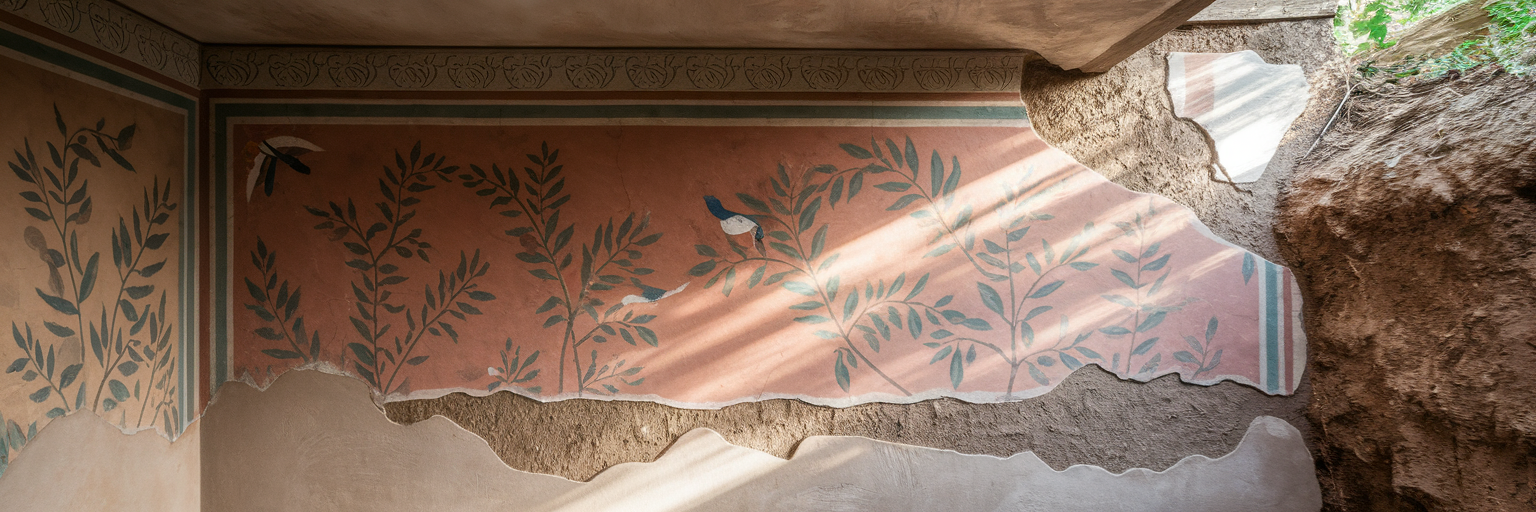
The Greeks and Romans perfected the art of the fresco, a technique where paint is applied to wet plaster. As the plaster dried, the pigment became a permanent part of the wall. This method, known as 'buon fresco', created incredibly durable and vibrant art.

Roman villas, from Pompeii to the ones we find here in Britain, were adorned with scenes of mythology, landscapes, and daily life. The colours they used—rich terracotta, earthy ochre, and deep black—are timeless.
In fact, they can still inspire a wonderfully warm and inviting atmosphere in a modern home. This part of the history of wall art provides a beautiful palette of earth tone wall decor that feels both ancient and incredibly current.
For a deeper understanding of how Sakura sits within the broader story of visual creativity across cultures, read our guide to cherry blossom art from Japan — one of the world's most enduring and philosophically rich decorative traditions.
Fresco, Tempera, and the Rise of Renaissance Painting
 As we move into the Middle Ages, the purpose of wall art shifted dramatically. It became a powerful tool for teaching and inspiration, especially within the church. This era added rich new textures and narratives to the history of wall art.
Medieval Narratives in Churches and Castles
In a time when most people couldn't read, the walls of churches became visual storybooks. Grand frescoes and shimmering stained-glass windows depicted biblical scenes, teaching lessons and inspiring awe.

In castles and grand homes, another form of wall art became popular: the tapestry. These huge, woven textiles were not just decorative. They were practical, providing insulation against the cold stone walls, and they were a major status symbol.
This textile chapter shows how function and beauty can be woven together — and if you want to explore how modern finishes carry that same principle forward, our guide to types of wall art materials covers canvas, metal, acrylic, and more.
The Renaissance Revolution
The Renaissance was a period of incredible artistic change. Artists like Michelangelo and Leonardo da Vinci transformed walls into monumental canvases. With the development of techniques like perspective, they created scenes with a new sense of realism and depth. Suddenly, a flat wall could look like a window into another world.

The focus shifted from purely religious stories to include mythology, history, and portraiture. The ambition and scale of Renaissance frescoes, like those in the Sistine Chapel, show how a single wall can hold an entire universe of ideas.

For a modern home, the deep jewel tones of medieval tapestries can inspire a wonderfully cosy and rich atmosphere, perhaps with a large fabric wall hanging or a print that echoes those colours.
Oil Paintings, Decorative Prints, and the Art of the Interior
The 18th and 19th centuries marked a significant turning point in the history of wall art. Decoration was no longer just for the church or the ultra-wealthy.
New technologies and changing tastes brought art and pattern into more homes than ever before, a key moment in the democratisation of design.
The Rise of Decorative Painting
In the grand homes of the 18th century, decorative painting reached new heights of opulence. Styles like Baroque and Rococo favoured ornate plasterwork, gilded details, and elaborate murals that created a sense of drama and movement.
Walls were seen as an integral part of the architectural design, with every surface contributing to a lavish, cohesive look. This period of the history of wall art was all about making a grand statement.
Wallpaper and Framed Art for All
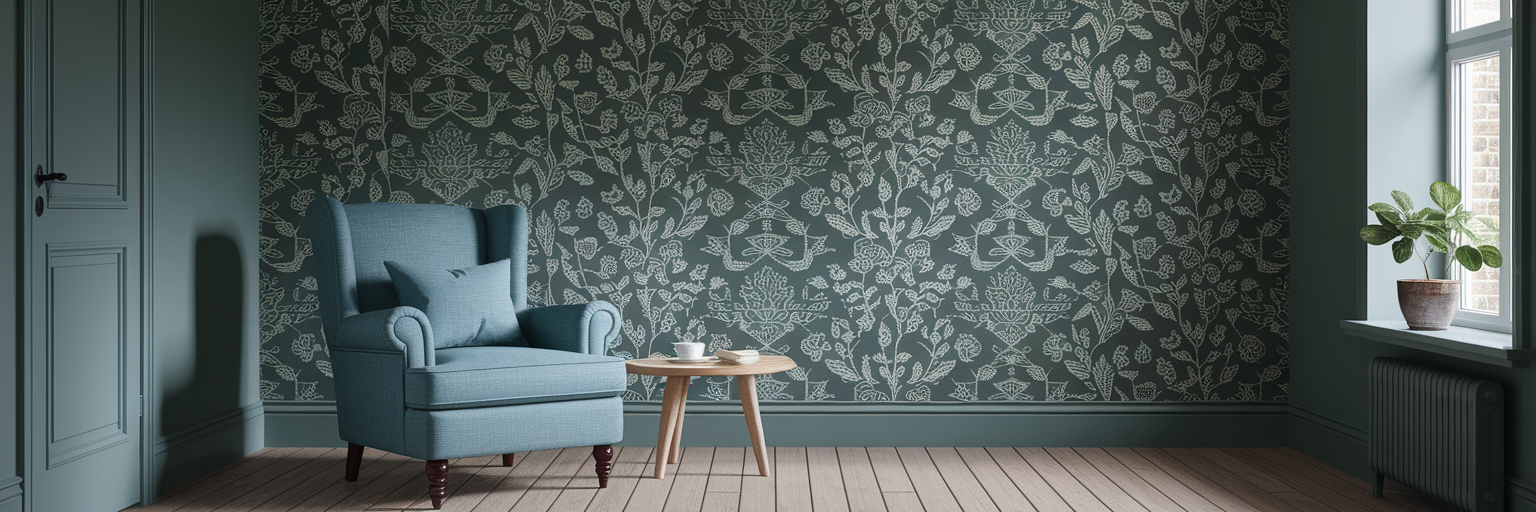
The 19th century brought two major innovations that changed everything: mass-produced wallpaper and the rise of framed art. British designer William Morris became famous for his intricate, nature-inspired wallpaper designs that brought beauty into the home.

At the same time, more people could afford to buy prints and paintings. This led to the popularity of the 'salon-style' gallery wall, where a collection of pictures was hung closely together.

This is a fantastic idea that still works beautifully today. The process of choosing art for your home became a more personal and accessible activity. A great tip is to create a classic gallery wall by mixing vintage-style frames with modern prints for a look that is both timeless and personal. This democratisation is a key moment in the history of wall art.
Defining Personal Style in the Modern Home
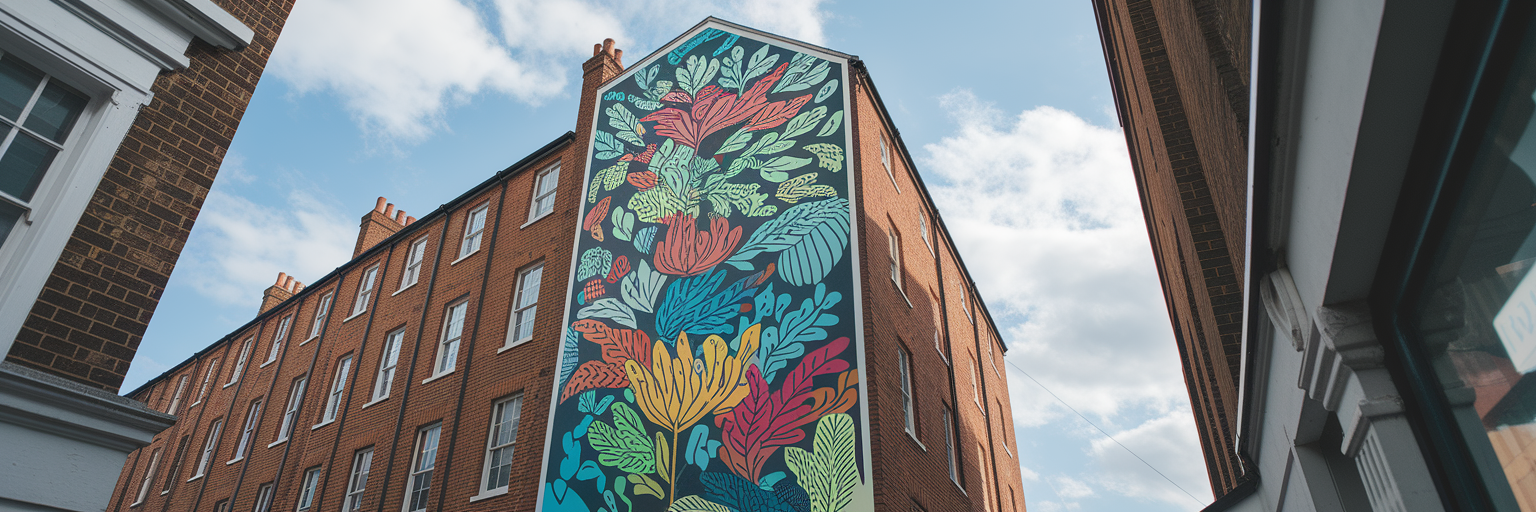
Today, we are lucky to live in an era of incredible choice. The 20th and 21st centuries have seen an explosion of artistic styles, meaning there has never been a better time to express your personality through your walls. This recent chapter in the history of wall art is all about individuality.
An Explosion of Styles
Major art movements like Abstract Expressionism and Minimalism broke all the rules, shifting the focus from realistic depiction to emotion, colour, and form. This opened the door for the huge variety of modern wall art ideas we see today. Some of the most popular trends include:
- Typographic Art: Using words and quotes for personal expression.

- Large-Scale Abstract Art: Creating a calming, emotional focal point.

- Minimalist Prints: Focusing on clean lines and simple forms.

- Digital and Mixed-Media Art: The newest chapter in the history of wall art.

Finding Your Perfect Match
The best part about modern decorating is that there are no rules. You can mix and match styles to create a look that is completely your own. A minimalist print can look fantastic next to a bohemian wall hanging. An abstract canvas can be the perfect counterpoint to a traditional piece. To help you find what resonates with you, I've put together this simple guide.
| Style | Creates a Mood of... | Best For... | Key Characteristics |
|---|---|---|---|
| Abstract | Calm, contemplation, energy | Living rooms, bedrooms | Colour, form, texture over realism |
| Minimalist | Serenity, order, simplicity | Offices, hallways, modern spaces | Clean lines, neutral palettes, negative space |
| Typographic | Inspiration, personality, humour | Kitchens, home offices, galleries | Focus on fonts, words, and phrases |
| Bohemian | Warmth, creativity, free-spirit | Bedrooms, cosy nooks | Natural textures, earthy tones, eclectic patterns |
How Walls Tell Our Collective Story
When we look at the entire history of wall art, we see more than just changing styles. We see a mirror reflecting our collective story.
Wall art has always been a powerful form of social and cultural expression. This is true whether we are looking at the political murals of Latin America, the delicate scroll paintings of Asia, or the vibrant street art that brings life to cities like Manchester and Bristol.
This global perspective enriches the history of wall art immensely. All of these traditions, from every corner of the world, contribute to the vast library of ideas we can draw from today.
When we choose art for our own four walls, we are participating in this ancient human practice. We are using colour, form, and story to turn a house into a home. The art we choose is a quiet declaration of who we are and what we value. It’s our personal contribution to the long and beautiful history of wall art.
The Main Types of Art Paintings: Mediums Explained
One of the most useful ways to understand art is by the medium the artist used — because the material shapes everything from texture and colour to longevity and mood. The major painting mediums you'll encounter are oil, acrylic, watercolour, gouache, fresco, and tempera, each with a distinct character.
Oil painting is the most celebrated of all Western painting traditions. Developed widely during the 15th century, oil paints dry slowly, allowing artists to blend and layer colours with extraordinary depth. The result is rich, luminous work that has aged beautifully for centuries — think Rembrandt, Vermeer, and the Dutch Masters. In a modern home, oil-style prints carry that same sense of warmth and gravitas.
Watercolour is prized for its translucency and delicacy. Pigment suspended in water allows light to pass through the paint layer and reflect back from the white paper beneath, creating a luminous, soft quality. Watercolour is popular for botanical art, landscapes, and loose, expressive works — it suits homes that favour a gentle, natural aesthetic.
Acrylic paint, developed in the 20th century, is water-based but dries to a flexible, plastic-like film. It can mimic the look of oil or watercolour, but it dries fast and is extremely versatile. Many contemporary artists favour acrylics for bold, graphic work. If you love vivid colour and clean edges, an acrylic-inspired print may be exactly right for your space.
Fresco, as covered earlier in this guide, involves applying pigment to wet plaster so it becomes part of the wall itself. It is one of the oldest and most durable painting techniques in history. Tempera, using egg yolk as a binder, was the dominant medium before oil painting took over and is still used by some contemporary artists for its crisp, jewel-like finish.

Types of Art Paintings by Subject: Portraits, Landscapes, and More
Beyond the medium, paintings are also categorised by what they depict — their subject matter. This is one of the clearest ways to decide what will work in your home, because subject directly affects the mood of a room.
Portrait painting is one of the oldest art forms, capturing the likeness, personality, and status of a subject. From the formal oil portraits of aristocrats to expressive modern character studies, portrait art brings a human presence into a space. It works beautifully in studies, hallways, and living rooms where you want a strong focal point.
Landscape painting depicts natural scenery — countryside, coastlines, mountains, and skies. It is consistently one of the most popular choices for the home because of its ability to bring the outside world in. Landscape art tends to create a calm, open feeling, making it ideal for living rooms, bedrooms, and bathrooms alike.
Still life painting focuses on arrangements of inanimate objects — flowers, fruit, vessels, and everyday items. It is a genre with deep roots in Dutch Golden Age painting and continues to feel relevant and elegant in contemporary interiors. Floral still life prints are particularly popular in kitchens, dining rooms, and hallways.
Abstract painting moves away from representational subjects entirely, using colour, shape, line, and form to evoke emotion rather than depict a recognisable scene. Abstract art suits modern, contemporary, and eclectic interiors especially well, and is a strong choice when you want to anchor a room with a bold, confident piece. You can browse our full collection of wall art prints to find abstract and figurative styles that suit your space.
Figure painting focuses on the human body, often in motion or at rest, and can range from classical academic nudes to expressive, gestural contemporary works. Veduta painting, a genre catalogued by Wikipedia's coverage of painting types, depicts detailed cityscapes and architectural views — a niche but increasingly popular choice for urban homes.
Painting Styles and Art Movements Through the Ages
Art history is partly a story of movements — groups of artists who shared ideas, techniques, and philosophies at a particular moment in time. Knowing the main movements helps you identify what you're drawn to and why.
Renaissance (14th–17th century): Characterised by realism, perspective, and humanist themes. Artists such as Leonardo da Vinci and Raphael brought a new naturalism to painting that transformed Western art permanently.
Baroque (17th–18th century): Known for drama, contrast, and emotional intensity. Caravaggio's use of extreme light and shadow (chiaroscuro) is one of Baroque painting's defining features.
Impressionism (1860s–1880s): French Impressionists like Monet and Renoir broke from academic tradition, painting outdoors to capture fleeting light and atmosphere. Impressionist prints remain among the most loved for home interiors because of their warmth and movement.
Modernism and Abstract Expressionism (20th century): Artists including Kandinsky, Rothko, and Pollock pushed art away from representation entirely, making colour, gesture, and form the subject itself. This era gave us the bold, graphic works that define much of contemporary wall art today.
Contemporary art (1980s–present): A broad, pluralist landscape encompassing digital art, street art, mixed media, and everything in between. Contemporary painting embraces all subjects and mediums, with no single governing style — which is precisely why it translates so beautifully to diverse modern homes.
A Brief History of Wall Art Through the Ages
The history of wall art stretches back tens of thousands of years, from the cave paintings of Lascaux to the gilded masterpieces adorning Renaissance palaces — and it's a journey that still shapes the way we decorate our homes today. Every era brought its own mood, palette, and purpose, whether that was telling stories, displaying wealth, or simply making a space feel more alive. What I find so wonderful is that those same intentions haven't changed; we're still reaching for imagery that speaks to us and reflects who we are. If you're drawn to the timeless elegance that has inspired artists across the centuries, our classic and contemporary wall art sets are a beautiful place to start. Exploring different movements and styles is one of the most enjoyable parts of finding art you'll genuinely love living with.
Embracing your own part in the history of wall art is what makes a space truly yours.
This linked resource traces the cultural history of mural painting from ancient civilisations through to the present day.
Embark on a journey of artistic expression through the ages. Learn how to choose pieces that tell your personal story. Join us as we explore the topic of The History of Wall Art: From Ancient Frescoes to Modern Masterpieces. Click here to uncover more inspiration and tips for decorating your personal sanctuary.
Pro Tips…
Feeling inspired? To see how these historical styles and modern trends come to life, I encourage you to explore our Content hub. It’s filled with visual ideas and tips to help you find the perfect pieces for your home.
Discover inspiring Home decor tips and trends to suit a variety of styles and moods.
- How to Choose the Perfect Prints for Your Living Room
- 8 Essential tips to shop online decoration for home
- 7 Accent wall art ideas for a stunning home
I hope this guide inspires you to view wall art as both a decorative element and a powerful tool for creating a sanctuary tailored to your relaxation needs. Which style are you leaning towards? Let me know—I’d love to hear your ideas!


