

How Can Current Interior Design Trends Help Create a Calmer Home?
by Mae Osz on Jan 08, 2026
What are the current interior design trends actually worth paying attention to right now — and do they genuinely make your home feel better to live in? The most exciting shift happening across UK interiors is a move away from purely aesthetic choices towards spaces that actively support mental well-being. Whether you are refreshing a single room or rethinking your whole home, understanding which trends deliver real calm (rather than just a good Instagram shot) will save you time, money and a lot of second-guessing.
By Mae Osz | Interior Design Consultant & Home Decor Expert with 12+ years of experience.
Have you ever walked into your home and felt your shoulders instantly drop, or does the space sometimes add to your stress? I’ve come to realise that our homes should be our sanctuaries, a buffer against the busyness of the outside world.
This feeling has become so much more important for many of us recently. I want to explore how some current interior design trends are shifting focus from just looking good to actually feeling good.
It’s about creating environments that genuinely support our mental well-being. This approach to calming home decor in the UK is about being intentional. It extends beyond just the walls and furniture; it’s about curating everything that surrounds us.
For instance, even thoughtful, sustainable design choices for personal accessories can contribute to an overall sense of peace. In this article, I’ll be sharing how bringing nature indoors, using thoughtful colour, harnessing the power of light, and choosing comforting textures all work together to build a tranquil atmosphere.

List of Contents
- Biophilic Design: Why Bringing Nature Indoors Is Still the Biggest Trend
- Earthy and Muted Colour Palettes: The Psychology of Calm
- Creating Ambience with Layered Lighting
- Tactile Textures and Soft Shapes: The Comfort Factor
- The Serenity of Simplicity and Space
- Pro Tips…
- 2026 Interior Trends at a Glance: What's In and What's Fading
Biophilic Design: Why Bringing Nature Indoors Is Still the Biggest Trend
I want to talk about a concept called biophilic design. It sounds technical, but it’s really just about our built-in human need to connect with nature, and how we can satisfy that need within our own four walls.
It’s one of the most enduring current interior design trends because it taps into something fundamental about us.
By weaving natural elements into our homes, we create a space that feels alive and connected to the world outside. This simple act can help ground us and genuinely reduce feelings of stress. It’s not about turning your living room into a jungle, but about making small, mindful choices that honour our connection to the natural world.


 MODERN FARMHOUSE HOME DECOR COLLECTION
Simple Ways to Introduce Biophilic Design Ideas
You can easily introduce biophilic design ideas into your home. Here are a few simple ways to start:
- Start with plants: You don’t need a green thumb! Begin with a few easy-care houseplants like a snake plant, pothos, or ZZ plant. Placing them in your line of sight can have an immediate calming effect.

- Use natural materials: Think about materials that feel good to touch. An unpolished wood side table, a rattan light shade, or even small items like slate coasters can bring an organic feel to your space.

- Incorporate nature-inspired patterns: This is where you can have some fun without overwhelming a room. Look for subtle leaf prints on cushions or a beautiful piece of wall art. A serene landscape can act as a window to the outdoors — for a curated guide to the best options, see our full article on art inspired by nature for your walls. You can find stunning examples in collections of tropical wall art that hint at nature rather than shouting about it.

Earthy and Muted Colour Palettes: The Psychology of Calm
The colours we surround ourselves with have a huge impact on our mood. One of the most powerful approaches in modern decor is the move towards palettes that actively soothe the mind.
This is one of the most effective approaches in modern home design for creating a peaceful home. Instead of bright, high-energy colours, the focus is on shades that are non-stimulating and echo the calming tones we find in nature.
Think of earthy, muted greens like sage and olive, which feel grounding and balanced. Gentle lavenders and dusty pinks can be incredibly comforting, while warm, soft beiges and taupes create a nurturing atmosphere. These colours work because they don’t demand our attention; instead, they provide a soft, gentle backdrop that allows our minds to rest and recharge.
It's a beautiful mix of calm and character — and if you want to see how these principles apply to one specific room, our guide to home interior trends for living rooms in 2026 is a great next step.
Applying Serene Colour Palettes for Home
You don’t have to repaint your entire house to benefit from these calming colours. Applying serene colour palettes for home can be done in small, impactful ways.
Consider painting a single feature wall in a soft sage green to create a focal point that is also restful. Alternatively, introduce these colours through your accessories.
A few dusty rose cushions, a warm terracotta throw, or a key piece of abstract wall art can completely change the feel of a room. This makes the trend feel much more achievable. If you need some inspiration, you can explore a variety of options when you shop by colour scheme.
I would suggest avoiding overly bold, saturated colours or stark, clinical whites in a space meant for relaxation, as they can sometimes feel jarring or cold. The goal is always warmth and softness.

Calming Colour Guide
| Colour Family | Specific Shade | Psychological Effect |
|---|---|---|
| Greens | Sage, Olive, Mint | Grounding, Balancing, Restful |
| Blues | Duck Egg, Sky Blue, Navy | Calming, Soothing, Promotes Focus |
| Earth Tones | Terracotta, Beige, Taupe | Warming, Nurturing, Connecting |
| Pinks/Purples | Dusty Rose, Lavender | Gentle, Comforting, Uplifting |
This table offers a quick guide to colours that can help create a more peaceful atmosphere. These shades are inspired by nature and are known for their non-stimulating properties.

Creating Ambience with Layered Lighting
 Let’s talk about lighting. A single, harsh overhead light is often the culprit behind a room feeling sterile or stressful. It can create glare and an institutional feeling that subtly puts us on edge.
The solution is ‘layered lighting’, and it’s a key part of how to create a tranquil home. I like to think of it as a simple formula: using multiple light sources at different heights.
This means having your main ceiling light (ideally on a dimmer switch!), a floor lamp to illuminate a dark corner, and a table lamp for a cosy reading nook.

This combination eliminates harsh shadows and creates a soft, inviting glow. The warmth of the light is also important. I always recommend looking for bulbs with a colour temperature around 2700K to 3000K. This creates that lovely, almost candle-like glow that helps our bodies and minds wind down in the evening.

A 2024 study in the journal Building and Environment highlighted how warm-toned lighting can positively influence emotional responses. Smart lighting can be a great tool here, allowing you to easily adjust the brightness and warmth throughout the day.

This technique is especially effective for setting the mood, and the right prints for a living room can also complement this layered lighting effect beautifully.
Tactile Textures and Soft Shapes: The Comfort Factor
Have you ever noticed how the shape of furniture can affect how you feel?
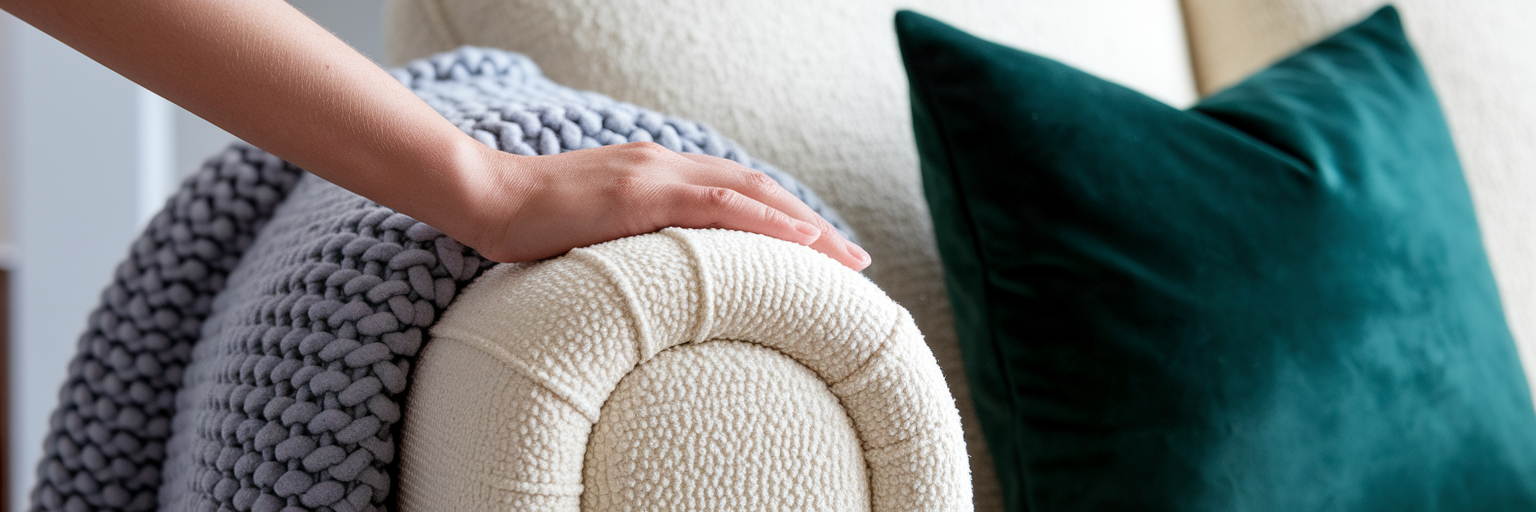
Many current interior design trends favour furniture with soft, rounded silhouettes—like curved sofas, circular coffee tables, or arched headboards. This is because, subconsciously, these shapes feel more welcoming and less threatening than items with sharp, aggressive angles.
They invite you to relax and let your guard down. Beyond shape, our sense of touch is a powerful tool for grounding us in the present moment.

A room that invites touch is a room that invites relaxation. It’s about creating a rich, comforting experience that gives you a metaphorical hug the moment you walk in.
Here are some textures to layer in your space:
- The soft, nubby feel of bouclé on an armchair.


- The gentle, breathable drape of linen curtains.
- The comforting weight of a chunky throw on the sofa.

- The plush, warm feel of a wool rug underfoot.

In contrast, materials like large panes of glass or high-gloss, reflective surfaces can sometimes feel cold and impersonal. While stylish, they are best used sparingly in a space designed for calm.
The Serenity of Simplicity and Space
A cluttered room often leads to a cluttered mind. That’s why the concept of ‘negative space’ is so vital for creating a calm home.
Leaving some areas intentionally empty—a bare corner, a clear surface, or a wall with just one piece of art—gives our eyes, and our thoughts, a place to rest.
This idea is a core principle in minimalist interior design, drawing inspiration from the thoughtful simplicity of Scandinavian and Japanese wabi-sabi styles.
 SCANDI HOME DECOR COLLECTION
 JAPANDI HOME DECOR COLLECTION
 MINIMALISM HOME DECOR COLLECTION
These styles aren’t about having nothing, but about being intentional with our possessions and finding beauty in imperfection. This is a core principle behind many contemporary decor styles. It’s not about extreme minimalism, but about ensuring every object in your space has a purpose or brings you genuine joy.
A simple rule I try to follow is ‘one in, one out’ for new purchases to help maintain that peaceful balance. The right artwork, like simple minimalist art prints, can enhance this feeling of calm without adding clutter.


2026 Interior Trends at a Glance: What's In and What's Fading
One question we hear constantly is: which trends are genuinely worth investing in right now, and which are already on their way out? Based on what leading UK interiors editors and design consultants are reporting for 2026, the direction is clear — comfort, authenticity, and a sense of handmade warmth are replacing the clinical minimalism and overly curated looks of recent years.
Trending in 2026: Lived-in, layered interiors with a relaxed, collected feel; unfitted natural wood kitchens; textile wall hangings and oversized statement art; mixed wood tones; earthy paint colours in terracotta, sage, and warm ochre; tactile metalwork with a handmade quality; and pattern-on-pattern combinations that feel personal rather than matchy.
Fading out: Cold grey palettes, overly symmetrical gallery walls, all-white kitchens, and single-material rooms that feel more like showrooms than homes.
The overriding theme is that your home should feel genuinely yours — layered with pieces that have meaning, textures that invite touch, and colours that make you feel settled the moment you walk in. Wall art plays a central role here: a single large-scale piece or a carefully grouped set can anchor a room's mood more powerfully than any paint colour alone. Browse our wall art collections to find pieces that suit your personal style and the mood you want to create.
Get more ideas on how intentional design choices can transform your home into a genuinely peaceful and restorative space.
Embark on a journey of transforming your home into a sanctuary. Learn how to choose colours and textures that soothe the soul. Join us as we explore the topic of How Can Current Interior Design Trends Help Create a Calmer Home? Click here to uncover more inspiration and tips for decorating for your well-being.
Pro Tips…
If you’d like to see more of these ideas in action, I encourage you to explore our Content Hub. It’s filled with visual inspiration and tips to help you find the perfect style for your sanctuary.
Discover inspiring Home decor tips and trends to suit a variety of styles and moods.
- Colour Psychology in Art: How Shades Shape Emotion at Home
- Why Art Placement Is Important for Your Home's Vibe?
- Home Decor Styles: Discover Your Perfect Match
I hope this guide inspires you to view wall art as both a decorative element and a powerful tool for creating a sanctuary tailored to your relaxation needs. Which style are you leaning towards? Let me know—I’d love to hear your ideas!


