

7 Creative Ideas for Decorating the Home
by Mae Osz on Oct 12, 2025
Searching for ideas for decorating the home that actually work — not just in glossy magazines but in real, lived-in spaces? The best interiors aren't built on trends or big budgets; they're shaped by thoughtful choices around colour, texture, light, and the personal pieces that tell your story. Whether you're refreshing a single room or rethinking your whole home, these seven practical tips will help you create a space that feels genuinely welcoming and completely your own.
By Mae Osz | Interior Design Consultant & Home Decor Expert with 12+ years of experience.
Ever wondered which ideas for decorating the home can make your space feel both beautiful and truly uplifting?
Decorating goes far beyond picking paint colours or arranging furniture—it’s about creating an environment that positively affects how you feel every day.
Research shows that the right combination of interior colours, textures, and artwork can boost your well-being and even reduce stress.
While many people assume perfect design means following the latest trends or splurging on expensive pieces, the real secret lies in blending personal touches, layered textures, and practical elements. That’s how you create a home that feels as good as it looks—welcoming, inspiring, and completely yours.
List of Contents
- Quick Summary
- 1: Assess Your Space and Needs Before You Start Decorating
- 2: Embrace a Cohesive Colour Scheme
- 3: Mix Textures for Visual Interest
- 4: Incorporate Functional Furniture
- 5: Use Artwork to Personalise Your Space
- 6: Add Plants for a Fresh Touch
- 7: Experiment with Lighting for Atmosphere
- Transform Your Home Into a Unique Work of Art
- Home Decorating Ideas by Room
- Design Ideas for Every Style
Quick Summary
| Takeaway | Explanation |
|---|---|
| Assess your space carefully before selecting art | Measure wall dimensions, consider lighting and existing decor for effective art placement. |
| Develop a cohesive colour scheme | Choose a primary colour and complementary tones to enhance the emotional ambiance of your home. |
| Mix textures for engaging visual interest | Combine various textures to create depth and character in your living spaces, balancing soft and hard elements. |
| Choose functional furniture with style | Opt for multi-purpose and ergonomic furniture that reflects your aesthetic while enhancing room utility. |
| Incorporate plants for a fresh, vibrant touch | Use low-maintenance plants to add life and wellness to your space, creating a calming atmosphere. |
1: Assess Your Space and Needs Before You Start Decorating
Every successful decorating project begins with a thoughtful assessment of your living space and personal requirements. Before diving into decorating, understanding your home’s unique characteristics is crucial for creating a harmonious and visually appealing environment.
According to the National Design Guide, well-designed homes are functional, accessible, and adaptable. This principle applies perfectly to wall art selection and placement. Your goal is to transform blank walls into dynamic, meaningful canvases that reflect your personality while complementing your existing interior design.
Start by conducting a comprehensive space evaluation. Consider these key factors:
- Room dimensions: Measure wall spaces accurately

- Natural lighting: Assess how sunlight impacts wall colours and art visibility

- Existing colour palette: Note dominant colours in furniture and decor

- Room functionality: Understand the purpose of each space

When assessing your needs, think beyond aesthetics. Wall art is more than decoration—it’s a form of personal expression. Your chosen pieces should resonate with your lifestyle, evoke emotions, and create the desired atmosphere in each room.
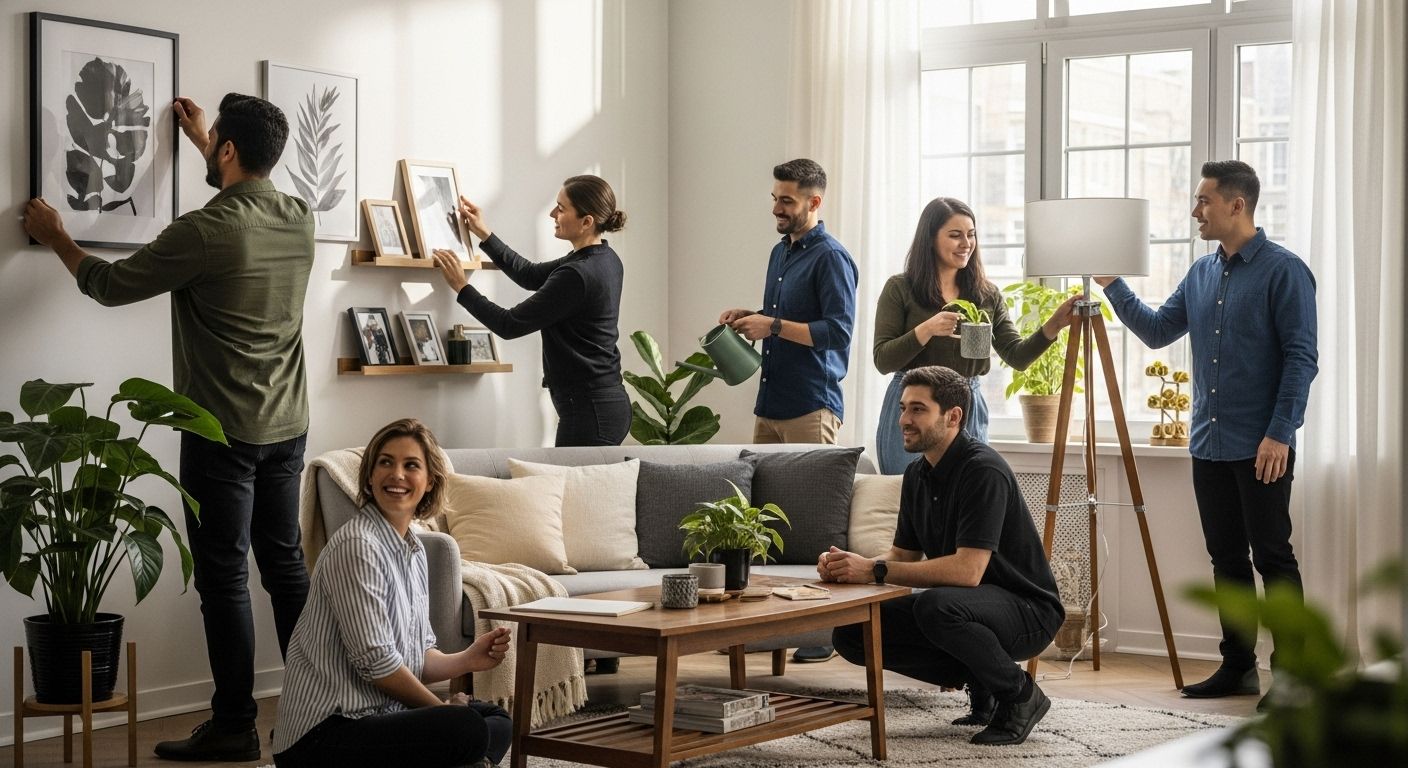
Pay attention to scale and proportion. A small artwork might feel lost on a large wall, while an oversized piece could overwhelm a compact space. Consider creating visual balance by mixing different sizes and styles of wall art — or try one of our accent wall art ideas for a stunning home — ensuring each piece contributes to the overall harmony of your home.
Remember, successful wall art decoration is about creating a narrative. Each piece should tell a story, whether it’s a cherished memory, an inspiring landscape, or an abstract representation of your inner world. By carefully assessing your space and needs, you’ll curate a collection that transforms your house into a truly personal sanctuary.
2: Embrace a Cohesive Colour Scheme
Creating a harmonious colour scheme is fundamental to successful home decoration. Colours have profound psychological impacts, transforming spaces from mere rooms into vibrant, emotionally resonant environments.
According to research published in Frontiers in Psychology, interior colours significantly affect residents’ psychological functioning and overall satisfaction. Understanding colour theory is therefore essential when selecting wall art and designing your living spaces.
When developing a cohesive colour palette, consider these strategic approaches:
- Select a primary colour that represents the room’s mood
- Choose complementary accent colours that enhance the primary tone
- Balance warm and cool hues to create visual harmony

Colour psychology plays a crucial role in home decoration. Soft blues and greens can create calming atmospheres, while warmer tones like terracotta and mustard yellow introduce energy and warmth. Your wall art should either complement or intentionally contrast with these foundational colour choices — and understanding how landscape art styles influence the mood of a room can help you make that call with confidence.

For those struggling with neutral palettes, our guide on balancing neutral tones offers expert insights. The key is creating depth and interest through subtle variations and thoughtful art selections.
Remember that cohesion doesn’t mean monotony. Introduce visual intrigue by incorporating artworks that feature unexpected colour combinations or gradient effects. A carefully curated colour scheme transforms your home from a simple living space into a personalised sanctuary that reflects your unique aesthetic sensibilities.
3: Mix Textures for Visual Interest
Texture transforms a room from flat and lifeless to rich and engaging. By strategically combining different tactile qualities, you can create depth, dimension, and visual intrigue in your living spaces.
According to research on interior design techniques, incorporating varied textures helps define zones, guide movement, and create focal points within a room. Texture is more than just touch—it’s a visual language that speaks volumes about your aesthetic sensibilities.
Consider these approaches to introducing textural variety:
- Soft textiles: Introduce plush cushions, woollen throws, or velvet art pieces

- Hard surfaces: Incorporate ceramic, metal, or glass wall art elements

- Natural materials: Use wooden frames, woven tapestries, or stone-inspired artwork

When mixing textures, aim for a balanced interplay between smooth and rough surfaces. Smooth, reflective textures like glass or metallic frames can create luminosity, while rough, matte textures like canvas or burlap add depth and warmth. The key is creating visual dialogue between different textural elements.
For those looking to refine their approach to neutral palettes, our guide on balancing tonal variations offers additional insights into creating visual interest.
Remember that texture isn’t just about wall art—it’s about creating a holistic sensory experience. By thoughtfully layering different textural elements, you can transform your home into a dynamic, inviting space that tells a rich, tactile story.
4: Incorporate Functional Furniture
Functional furniture transforms living spaces from mere rooms into intelligent, adaptable environments that support your lifestyle and aesthetic preferences. Smart furniture design isn’t just about appearance—it’s about creating spaces that work seamlessly with your daily routines.
According to research from the Modern Interiors Research Centre, interiors are complex interfaces between architectural design and purposeful objects. This perspective emphasizes furniture’s role beyond mere decoration.
Consider these strategies for integrating functional furniture:
- Multi-purpose pieces: Select furniture that offers storage and seating
- Modular designs: Choose items that can be reconfigured as needs change
- Ergonomic considerations: Prioritise comfort alongside aesthetic appeal
Thoughtful furniture selection can dramatically enhance your living space’s efficiency. Look for pieces that offer hidden storage, convertible configurations, or built-in technological integrations. A console table with drawers, for instance, provides both display space for wall art and practical storage solutions.

When selecting furniture, consider how each piece contributes to the room’s overall functionality. A slim console behind a sofa can create a natural division in open-plan spaces, while a storage ottoman serves multiple purposes—extra seating, footrest, and concealed storage.
Remember that functional doesn’t mean sacrificing style. Contemporary furniture design beautifully marries practicality with aesthetic elegance, allowing you to create spaces that are both beautiful and brilliantly efficient. Your home should be a reflection of your lifestyle—intelligent, adaptable, and uniquely yours.
5: Use Artwork to Personalise Your Space
Artwork transforms living spaces from mere rooms into intimate narratives of personal expression. It’s not just about decorating walls—it’s about curating visual stories that reflect your unique journey, memories, and aspirations.
According to research published in the National Center for Biotechnology Information, artistic interior design elements can significantly enhance life satisfaction and reduce stress levels. Your chosen artwork becomes more than decoration—it’s a powerful tool for emotional well-being.
Consider these strategies for personalising your space:
- Emotional resonance: Select pieces that genuinely speak to your experiences
- Personal storytelling: Display artwork that represents significant life moments
- Eclectic mixing: Combine different styles that reflect your multifaceted personality

Artwork allows you to communicate without words, telling stories through visual language. A photograph from a memorable travel adventure, an abstract piece that captures a complex emotion, or a local artist’s work can transform a generic space into a deeply personal sanctuary.
Explore our guide to wall art varieties to discover the perfect pieces that resonate with your individual style. Whether you prefer minimalist prints, vibrant canvases, or intricate mixed media compositions, your artwork should feel like an authentic extension of yourself.
Remember, personalising your space isn’t about following trends—it’s about creating an environment that makes you feel truly at home. Each artwork you choose is a brushstroke in the larger painting of your personal narrative.

6: Add Plants for a Fresh Touch
Plants are nature’s living artwork, transforming interior spaces from sterile environments into vibrant, breathing ecosystems. They bring life, colour, and an organic dimension that no manufactured decoration can replicate.
According to research from the Royal Horticultural Society, houseplants significantly reduce stress levels and enhance perceived attractiveness of indoor spaces. They’re not merely decorative elements—they’re wellness investments.
Consider these strategies for integrating plants into your home:
- Low-maintenance options: Select plants like succulents or snake plants for minimal care
- Varied heights and textures: Mix trailing, standing, and hanging plants
- Strategic placement: Position plants near natural light sources
Different rooms demand different botanical companions. A sunny living room might host a dramatic fiddle-leaf fig, while a bathroom could nurture humidity-loving ferns. Each plant becomes a living sculpture, breathing character into your space.

Interior designers increasingly recognise plants as crucial design elements. They soften architectural lines, introduce natural colour palettes, and create visual depth. A well-placed plant can act as a natural room divider, add vertical interest, or provide a calming focal point.
Remember, plant selection is a personal journey. Choose specimens that resonate with your aesthetic and lifestyle, creating a indoor landscape that feels authentically yours. Your home should feel like a sanctuary—and what better way to achieve that than by inviting a bit of nature indoors?
7: Experiment with Lighting for Atmosphere
Lighting is the invisible paintbrush that transforms your home’s emotional landscape. Beyond mere illumination, strategic lighting creates mood, highlights architectural features, and breathes life into your living spaces.
According to research by lighting experts, electric lighting profoundly influences human health and perceived comfort. The right lighting can elevate a room from ordinary to extraordinary.
Consider these lighting strategies:
- Layered lighting: Combine ambient, task, and accent lighting
- Varied light temperatures: Use warm and cool tones strategically
- Dimmer switches: Create flexible atmospheric control
Different rooms demand unique lighting approaches. A kitchen might benefit from bright, clear lighting that supports functionality, while a bedroom requires softer, more subdued illumination that promotes relaxation. Think of lighting as architectural jewellery—each fixture tells a story.

Smart lighting technologies now offer unprecedented flexibility. Colour-changing bulbs, programmable systems, and app-controlled fixtures allow you to transform your space’s atmosphere with a simple touch. Imagine shifting from a crisp, energetic morning light to a warm, intimate evening glow without changing a single fixture.
Remember, lighting is an art form. Experiment, play, and discover how different illumination can dramatically reshape your home’s emotional landscape. Your lighting choices are more than technical decisions—they’re expressions of your personal style and desired ambience.
The following summarisation table provides a comprehensive overview of the main ideas, practical steps, and key benefits discussed in the article for decorating your home creatively and effectively.
| Step/Idea | Description | Benefit/Outcome |
|---|---|---|
| Assess Your Space and Needs | Evaluate room dimensions, lighting, colour palette, and purpose before decorating | Ensures cohesive decor that reflects personal style and function |
| Embrace a Cohesive Colour Scheme | Choose primary and complementary colours using basic colour theory and psychology | Creates emotional harmony and enhances the mood of each room |
| Mix Textures for Visual Interest | Layer soft and hard textures thoughtfully—textiles, wood, metal, and glass | Adds depth, dimension, and visual intrigue throughout living spaces |
| Incorporate Functional Furniture | Select multi-purpose, ergonomic, and modular furniture | Maximises practicality without sacrificing aesthetics, supports adaptable and intelligent living |
| Use Artwork to Personalise Your Space | Display art with personal resonance—memories, emotions, local artists | Strengthens emotional connection and makes rooms authentically unique |
| Add Plants for a Fresh Touch | Integrate houseplants of varied size, type, and low-maintenance requirements | Improves well-being, air quality, and introduces organic colour and vibrancy |
| Experiment with Lighting for Atmosphere | Apply layered, adjustable lighting combining ambient, task, and accent options | Enhances comfort, mood, and highlights architectural or decorative features |
Transform Your Home Into a Unique Work of Art
Struggling to turn blank walls into meaningful spaces or searching for artwork that truly reflects your story? The article highlights how important it is to assess your space, create harmony with colour, personalise with diverse wall art, and use the right textures and lighting. Yet, many homes still feel incomplete and impersonal because finding the perfect piece can be overwhelming or time-consuming.
Home Decorating Ideas by Room
One of the clearest gaps between great decorating guides and average ones is room-specific advice. A living room needs to balance comfort and visual impact; a bedroom calls for calm and intimacy; a home office demands focus without feeling sterile. Treating each room as its own brief — with its own function, mood, and traffic — is what separates a pulled-together home from one that feels mismatched.
In the living room, anchor the space with one large-scale artwork or a carefully curated gallery wall on your feature wall to give the eye a focal point before you add furniture around it. In the bedroom, softer tones and botanical or abstract prints tend to lower visual noise and encourage rest. For a home office or hallway, bold typographic or landscape prints can inject personality into spaces that are often overlooked.
The common thread across every room is intentionality: choose pieces and colours that serve the room's purpose, and resist the urge to fill every surface. Negative space is as powerful as decoration itself.
Design Ideas for Every Style
Whether your taste runs to Scandi minimalism, warm country cottage, moody industrial, or eclectic maximalism, the fundamentals of good decoration remain the same — but the way you apply colour, texture, and art shifts dramatically depending on your aesthetic. Understanding your style before you shop saves time and money, and produces a result that feels coherent rather than collected at random.
Minimalist and Japandi-influenced interiors benefit most from a restrained palette of two or three tones, natural materials, and a single statement artwork with breathing room around it. Eclectic and boho spaces can handle more pattern, colour, and layered prints — but still need an underlying logic, usually a repeated colour or recurring motif that ties everything together. Country cottage and French country styles lean into warm neutrals, botanical imagery, and framed prints with classic mounts.
If you are unsure where your style sits, start with the artwork that makes you stop scrolling. The colours and mood in those pieces are often the truest indicator of the interior you are trying to create.
Now is the moment to reimagine your home. Explore our carefully curated collection at About Wall Art where you will discover artwork for every taste and room size. Looking for inspiration or advice on choosing the ideal piece? Visit our expert guide on types of wall art to start curating your personal sanctuary. Make your living space unforgettable—find your signature piece and watch your home transform today.
More About
To explore how thoughtful decoration improves well-being and transforms spaces, check out this expert guide on colour psychology and interior design
Pro Tips
Check out these related blogs from the About Wall Art Content Hub to enhance your home decoration skills:
-
Choosing the Right Art for Grey Walls Without Making the Room Feel Cold – Learn to balance colour and warmth through art.
-
10 Creative Ideas for Decorating Your Living Room Wall on a Budget – Inspire creativity while decorating affordably.


