

The Language of Interior Design: Terms Everyone Should Know
by Mae Osz on Oct 11, 2025
What separates a beautifully styled room from one that just feels 'off'? More often than not, it comes down to understanding interior decorating terms — the shared language that designers use to describe everything from spatial balance to material choice. Once you know what words like scale, contrast, and rhythm actually mean in a design context, you stop guessing and start making deliberate, confident decisions. This guide covers the terms that matter most, in plain English, so you can apply them straight away.
By Mae Osz | Interior Design Consultant & Home Decor Expert with 12+ years of experience.
Ever wondered why learning a few key Interior decorating terms can completely change the way you approach design?
At first, interior decorating might seem like a world filled with endless colour charts, fabric swatches, and style guides.
But here’s the part many people overlook—the real magic often lies in the language itself. Knowing the right terms doesn’t just help you describe what you like; it unlocks a whole new way of seeing, talking about, and transforming your space.
Experts agree that understanding these words is essential for making confident choices and communicating clearly with professionals.
Suddenly, you’re not just picking out cushions—you’re speaking the language of design fluently.
List of Contents
- Quick Summary
- Core Design Concepts Every Decorator Should Know
- Popular Interior Design Styles and What They Mean
- The Role of Colour, Texture, and Material in Design
- How Interior Decorating Terms Enhance Spatial Awareness
- Putting It All Together: Applying Design Principles at Home
- A Plain-English Glossary of Essential Design Terms
Quick Summary
| Takeaway | Explanation |
|---|---|
| Understanding design terms is crucial. | Grasping interior decorating language enhances communication with professionals and informs decision-making in design. |
| Key elements shape space perception. | Line, form, colour, texture, and pattern are fundamental to creating visually effective environments. |
| Design principles impact spatial composition. | Concepts like balance and proportion help in creating cohesive, visually appealing spaces. |
| Styles reflect personal identity. | Recognising different design styles allows for the creation of spaces that express individual taste and narrative. |
| Colour and texture influence mood. | The right colour choices and textures can affect emotional responses and overall atmosphere in a room. |
Why Does Design Language Matter?
Interior decorating terms are the professional language professionals use to communicate design concepts, techniques, and aesthetic principles. Understanding these terms transforms how we perceive and interact with interior spaces, turning seemingly complex design ideas into accessible, actionable insights.
Design terminology is the specialist language professionals use to communicate concepts, techniques, and aesthetic principles.
The Language of Design
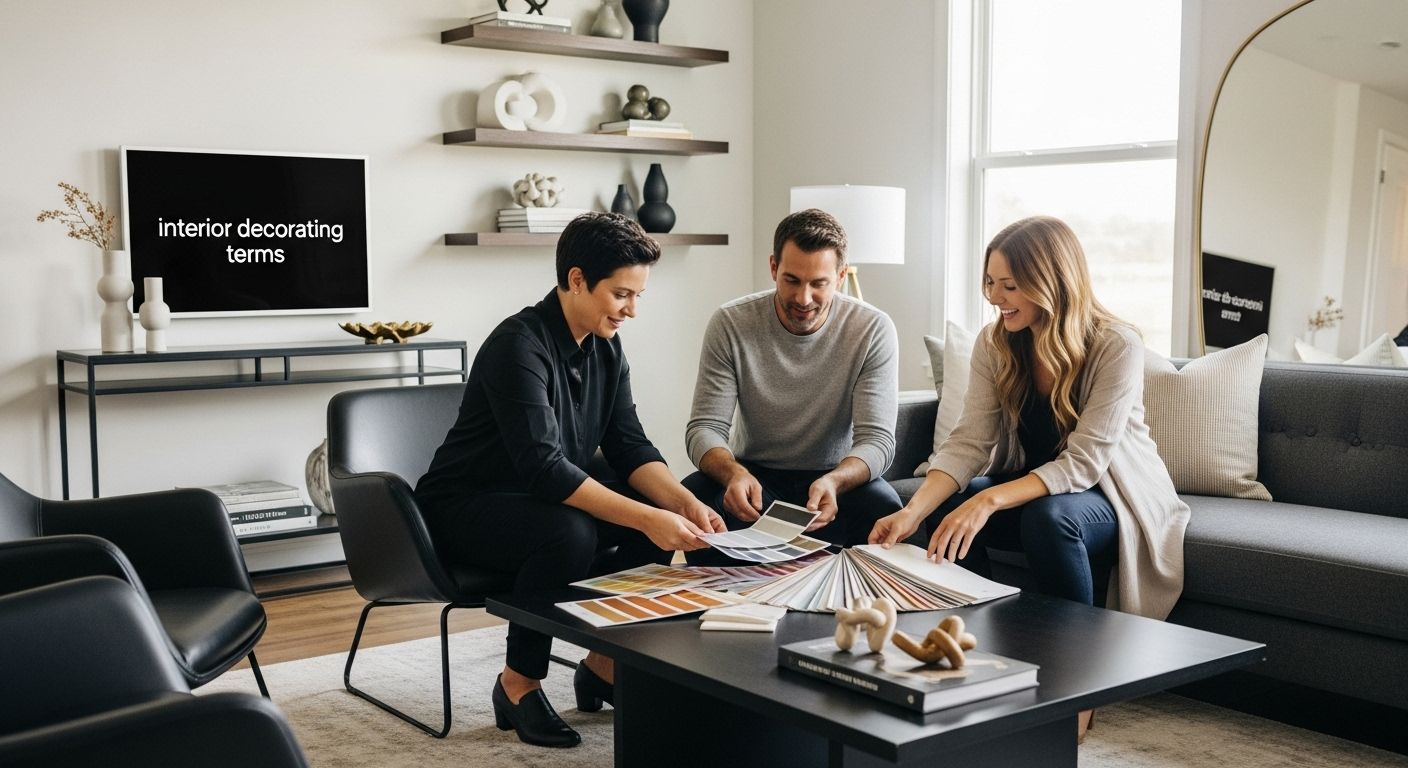
Just like doctors have medical terminology and lawyers have legal jargon, interior designers have their own specialised vocabulary. This specialist vocabulary helps professionals precisely describe visual elements, spatial relationships, and design strategies. When you learn this language, you’re not just memorising words - you’re gaining a deeper understanding of how spaces can be crafted, transformed, and optimised.
Why Terminology Matters in Interior Design
Learning the language of design enables you to:
- Communicate with design professionals
- Make more informed decisions about your space
- Understand the principles behind visual composition
- Develop a more sophisticated approach to interior design
By mastering these terms, you’ll move from being a passive observer to an active participant in design conversations. You’ll be able to articulate your preferences, understand design recommendations, and create spaces that truly reflect your personal style and functional needs.
Understanding the language of design is only the first step — discover how color psychology in interior design helps you put that vocabulary into practice when choosing colours for every room.
Core Design Concepts Every Decorator Should Know
Navigating the world of interior design requires a rich vocabulary that transforms abstract visual ideas into concrete strategies. These core concepts are the building blocks of harmonious, functional, and visually stunning spaces.
Essential Design Elements
According to University Education Resources, interior design is a complex discipline involving creative and technical solutions that enhance living spaces. The fundamental elements that form the core of design language include:
- Line: The visual path that guides the eye through a space
- Form: The shape and structure of objects within a room
- Colour: The emotional and visual energy of a space — learn more about how different shades affect mood and atmosphere in our dedicated guide to colour psychology in interior design.
- Texture: The tactile and visual surface quality of materials
- Pattern: Repetitive design elements that create visual rhythm
Principles of Spatial Composition
Beyond individual elements, interior decorating terms also describe how these components interact. Design principles like proportion, scale, balance, and emphasis explain how designers create cohesive and visually interesting environments. Proportion refers to the relationship between different elements, while scale determines how items fit within the overall space.
For instance, a large sofa in a tiny room would disrupt proportion, creating visual discomfort. Understanding these terms allows you to make deliberate design choices that transform rooms from merely functional to truly extraordinary. By learning this specialised language, you gain the ability to communicate design intentions precisely and create spaces that are both beautiful and meaningful.
Popular Interior Design Styles and What They Mean
Interior decorating styles are more than just aesthetic choices - they are visual languages that communicate personality, cultural influences, and personal narrative through design. Each style represents a unique approach to creating living spaces that reflect individual sensibilities and historical design movements.
This table compares several popular interior decorating styles discussed in the article, highlighting their defining characteristics and visual features for easy differentiation.
Once you have the vocabulary in place, the next step is understanding how art and interior design work together to give a room its character and emotional depth.
| Style | Key Characteristics | Typical Visual Features |
|---|---|---|
| Traditional | Elegant, classic designs, symmetry, refined details | Ornate furnishings, rich colours |
| Contemporary | Clean lines, minimalist, neutral palettes | Open spaces, sparse decor |
| Modern | Streamlined, functional, geometric shapes | Simple forms, limited ornamentation |
| Bohemian | Eclectic, vibrant, global influences | Mixed patterns, colourful accessories |
| Scandinavian | Minimalist, light-filled, functional simplicity | Pale tones, natural materials, cosiness |
The Spectrum of Design Styles
According to the Designer Society of America, interior design encompasses a diverse range of styles that go beyond simple visual preferences. Interior decorating terms help us categorise and understand these distinct design approaches. The primary styles include:
- Traditional: Elegant, classic designs featuring symmetry and refined details
- Contemporary: Clean lines, minimalist aesthetics, and neutral colour palettes

- Modern: Streamlined furniture, geometric shapes, and functional design

- Bohemian: Eclectic, vibrant, with mixed patterns and global influences

- Scandinavian: Minimalist, light-filled spaces with functional simplicity

Interpreting Design Themes
A design theme goes beyond style - it’s a narrative woven through spatial elements. Themes can draw inspiration from historical periods, cultural traditions, or personal experiences. For example, a coastal theme might incorporate soft blues, natural textures like driftwood and sand, and nautical elements that evoke a sense of seaside tranquillity.
Understanding these styles and themes empowers you to create spaces that are not just visually appealing, but deeply personal. By recognising the language of design, you can mix and match elements, create unique combinations, and transform rooms into true reflections of your inner world.
The Role of Colour, Texture, and Material in Design
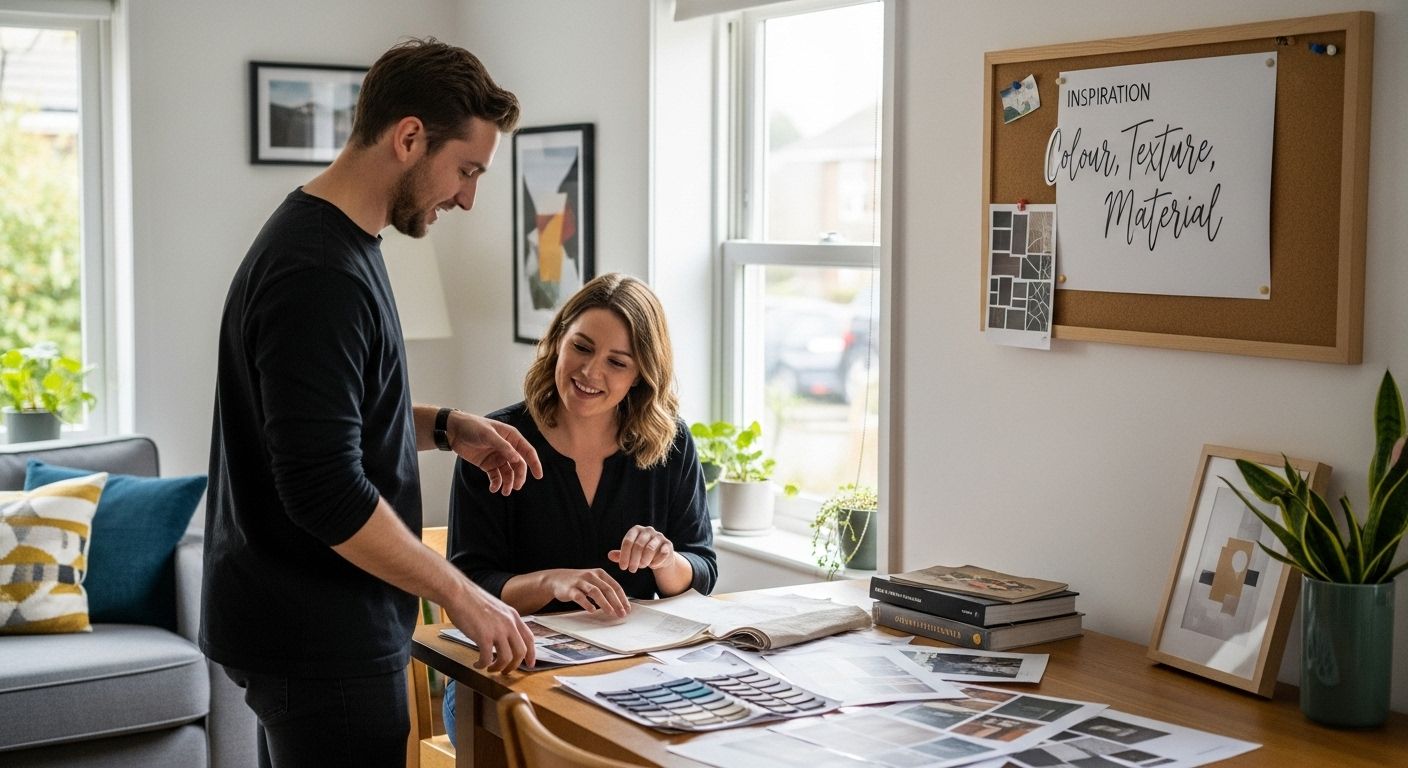
Colour, texture, and material are the sensory storytellers of interior design, transforming spaces from mere functional areas into emotionally resonant environments. These three elements work together to create visual narratives that speak directly to our subconscious perceptions and feelings.
Wall art is one of the most powerful tools for establishing a room's focal point and expressing personal style — explore how to use it in our guide to the role of art in interior spaces.

Psychological Impact of Design Elements
According to The Concrete Masonry and Hardscapes Association, design details profoundly influence our psychological experience of a space. Colour psychology reveals how different hues can dramatically alter mood and energy:
- Blue: Calming and serene, ideal for bedrooms and bathrooms
- Red: Energetic and passionate, perfect for dining areas
- Green: Refreshing and natural, excellent for home offices
- Neutral tones: Versatile and sophisticated, creating balanced environments

Texture and Material: Beyond Visual Appeal
Texture and material are not just about visual aesthetics but about creating multi-sensory experiences. Rough textures like exposed brick can add warmth and depth, while smooth marble surfaces introduce elegance and coolness. The interplay between different materials - soft fabrics against hard wooden surfaces, or plush rugs on sleek tiles - creates layers of visual and tactile interest.
By understanding how colour, texture, and material interact, you can craft spaces that are not just visually stunning. Each design choice becomes a brushstroke in the larger canvas of your personal environment, telling a unique story about who you are and how you experience the world.
How Interior Decorating Terms Enhance Spatial Awareness
Spatial awareness in interior design is about understanding how physical environments interact with human perception, movement, and emotional experience. Interior decorating terms serve as critical tools that help us decode and manipulate these complex spatial relationships with precision and creativity.
Principles of Spatial Perception
According to National Library of Medicine research, our perception of space is influenced by multiple design elements. Key spatial awareness concepts include:
- Proportion: The harmonious relationship between different design elements
- Scale: How objects relate to the overall room size
- Negative Space: The unoccupied areas that define spatial boundaries
- Visual Weight: How different elements attract or distribute visual attention
- Circulation: The pathways and movement patterns within a space
Transforming Perception through Terminology
Understanding interior decorating terms allows designers and homeowners to strategically manipulate spatial perception. For instance, terms like ‘visual compression’ can help create intimate spaces, while ‘vertical extension’ can make rooms feel larger and more expansive. By learning to speak the language of spatial design, you gain the ability to intentionally shape how people experience and move through an environment.
These terms are more than academic language - they are powerful tools for transforming spaces from mere physical containers into dynamic, emotionally responsive environments that adapt to human needs and desires.

Putting It All Together: Applying Design Principles at Home
Understanding interior decorating terms is the first step towards creating spaces that suit your taste and truly work for you. If you have ever struggled to express your vision to a designer, or felt unsure about how to tie together colour, texture, and proportion, you are not alone. Many readers of this article want to turn new design knowledge into action, making their homes feel both harmonious and personal.
Bring your newfound confidence into your living or working space with inspiring wall art that reflects your grasp of style and spatial awareness. Let your selections echo your understanding of design concepts such as balance, emphasis, and texture. Browse the curated collections at AboutWallArt.com today, where modern design meets expressive decor. Do not wait—explore the site now and let your interiors speak the professional language of design. Start your journey towards a more stylish and meaningful room with carefully selected wall art.
A Plain-English Glossary of Essential Design Terms
One of the biggest advantages competitors like Studio Designer's glossary offer is a scannable, term-by-term reference. Below are some of the most frequently used words in design conversations, explained simply.
Above finished floor (AFF): A measurement used to describe the height at which something — a light fitting, a shelf, a mirror — should be positioned above the finished floor surface.
Balance: The equal distribution of visual weight within a space. Symmetrical balance mirrors elements on either side of a central axis; asymmetrical balance achieves equilibrium through varied elements of similar visual weight.
Bouclé: A looped, textured fabric commonly used on sofas and chairs; associated with warmth and tactile comfort in contemporary and Scandi interiors.
Case goods: Furniture pieces that provide storage, such as wardrobes, sideboards, and chest of drawers — as opposed to upholstered seating.
Colour washing: A paint technique that creates a soft, translucent, layered finish on walls, giving depth and an aged, artisan quality.
Étagère: An open shelving unit or display stand used to showcase decorative objects, books, and accessories.
Grandmillennial: A design aesthetic that blends traditional, heritage-inspired elements — think chintz, floral prints, and antique accessories — with a fresh, modern sensibility.
Hygge: A Danish and Norwegian concept describing a feeling of cosiness and convivial warmth achieved through soft lighting, natural textures, and comfortable, lived-in spaces.
Scale: The size of an object or element relative to the space around it or to other objects. Getting scale right is one of the most critical skills in creating a well-proportioned room.
Vignette: A small, carefully curated arrangement of objects — typically on a shelf, side table, or mantelpiece — that tells a visual story and adds personality to a space.
Wainscoting: Decorative wood panelling applied to the lower portion of a wall, often used to add architectural interest and a sense of heritage to a room.
Window treatments: Any covering used on a window — including curtains, blinds, shutters, and roman shades — which affects both the aesthetic and the light quality of a room.
Industry Roles: Who Does What in Interior Design?
Position 2 (Articulated Design Studio) covers industry roles as a distinct section — and it is a genuine gap here. Understanding who you are working with helps you ask the right questions and get better results.
Interior designer: A qualified professional trained in both the technical and aesthetic aspects of creating interior spaces. They may manage structural changes, spatial planning, and full project delivery.
Interior decorator: Focused on the aesthetic layer — furniture selection, colour palettes, soft furnishings, accessories, and art. Decorators typically work within an existing structure rather than altering it.
Stylist: Often used in a commercial or editorial context, a stylist curates and arranges objects and furniture for photography or show-home purposes.
Procurement specialist: Manages the sourcing and purchasing of furniture, materials, and accessories on behalf of the designer and client — ensuring correct specifications, timely delivery, and budget control.
Knowing the difference means you can hire the right person for your project from the outset, avoiding costly mismatches in expectations.
WATCH: Interior Design Basics you need to know
More about
Dive deeper into interior design terminology and its practical applications, check out the National Association of Interior Designers guide
Pro Tips
Explore these helpful blogs from our Content Hub to bring your interior decorating knowledge to life:
-
10 Creative Ideas for Decorating Your Living Room Wall on a Budget – Learn how to style walls while applying design terminology.
-
Choosing the Right Art for Grey Walls Without Making the Room Feel Cold – Understand how colour and texture influence mood.
Understanding the language of design is only the first step — knowing the size of a frame for wall art is just as important when it comes to displaying pieces correctly.


